 LOCAL FIT KUMANOBack to list
Walking the Kumano Kodo solo: "guide" isn't just one thing
"I want to walk the Kumano Kodo on my own, but should I hire a guide?" We hear this question often. The key point is that a guide isn't only a person. On a solo trip, combining several kinds of "guides" by section gives you both freedom and peace of mind.
Four kinds of guides that support a solo journey
Human guides (kataribe storytellers)
Along the old road, there are local people called *kataribe* who share the area's history and faith traditions. The appeal is hearing stories that can't fit on signboards: the origins of the Oji shrines, the roadside stone Buddhas, and the connections with local villages. Availability and booking methods vary by section and season, so once your plans are set, check official websites or local tourist information centers.
Paper guides
Guidebooks and maps are companions you can read and reread at your own pace. Simply noting "the three highlights of this section" before you walk will greatly increase what you notice along the way. And they never need batteries.
Innkeepers and information center staff
Surprisingly reliable are the people at your lodging and at tourist information centers. For today's trail conditions, bus times, and weather trends, locals know best. When you arrive, say hello and ask a question or two.
Smartphones and audio guides
Maps and audio commentary are handy supplements. However, reception can be unstable in mountainous areas, so it's wise to treat them as "backup to paper."
When you're unsure whether to hire a human guide
- First time on the Kumano Kodo, and you want to learn the history and faith background → A human guide is a good fit
- Unsure about route choices due to fitness or time constraints → Hiring a guide brings peace of mind
- You want to walk quietly at your own pace → A paper guide alone is plenty
- You've walked it before and want to savor the atmosphere of the land → Walking solo without a guide will feel just right
You can also hire a guide for just part of your trip
The strength of solo travel lies in the freedom to mix and match. For example:
1. Walk the most scenic or historically rich section with a human guide
2. On other days, walk at your own pace using a paper map and trail signs
3. In the evening, ask your innkeeper about the next day's trail conditions
This way, you can balance "days for listening to explanations" with "days for quiet walking."
Walking comfortably with a guide on the day
- Share your wishes in advance: Let them know whether you want to hear about history, enjoy plants and scenery, and roughly how fast you walk
- Be honest about your condition and gear: Don't hesitate to mention knee concerns or your footwear
- Save questions for safe stopping points: On rough terrain, wait until you reach a safe spot to pause and ask
- Even on guide-free days, greet those you pass: On the old road, a simple "konnichiwa" can be the first form of guidance
Summary | Bring reliable voices with you, so you can walk freely
Walking the Kumano Kodo on your own and hiring a guide are not opposites. By choosing, section by section, which voices to bring along—a person's words, a paper map, a local's offhand remark—your solo journey becomes much richer. Start by deciding which section you'll walk, then choose one guide suited to that trail.
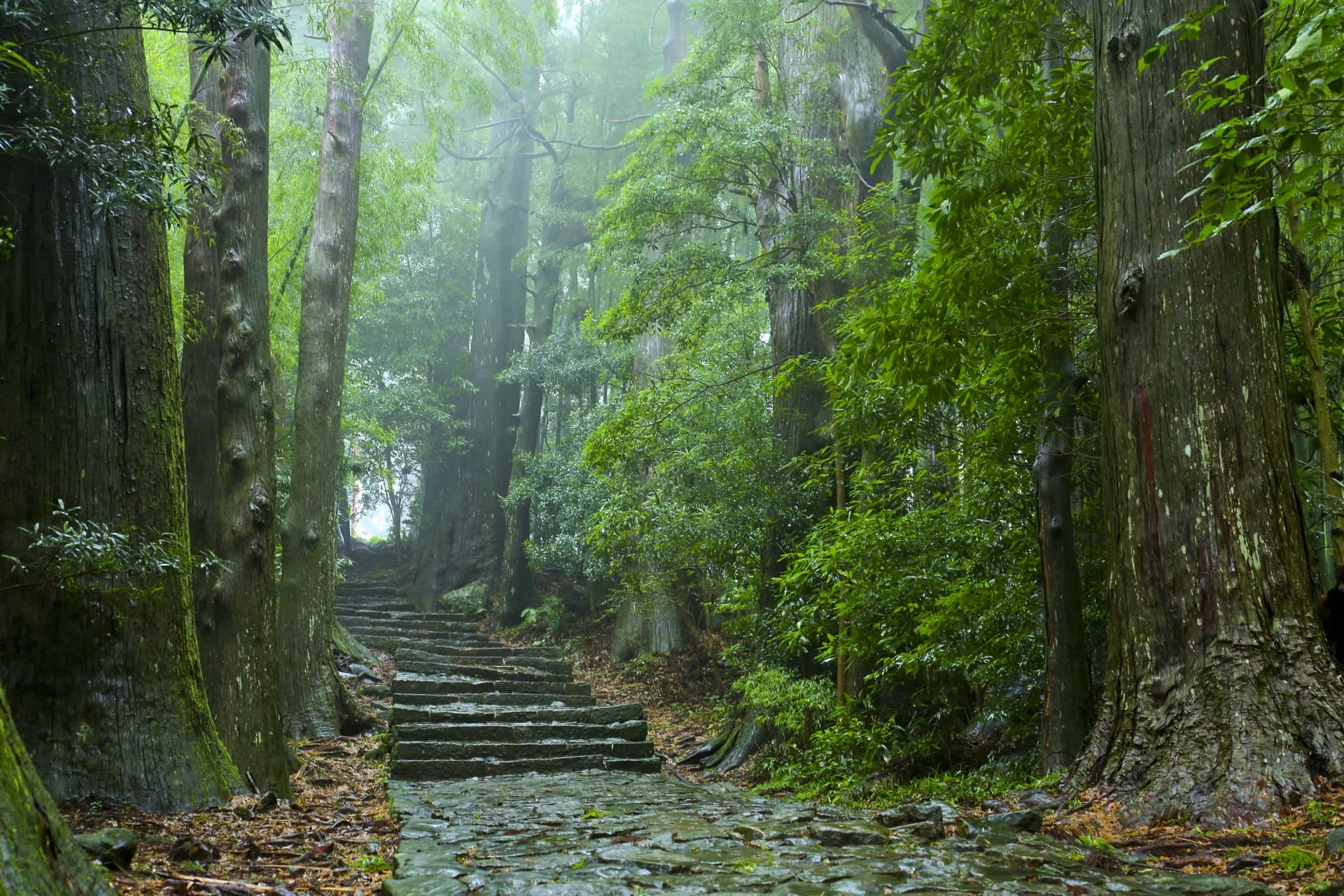
Image: 熊野古道中辺路 大門坂 (via (公社)和歌山県観光連盟)


