 LOCAL FIT KUMANOBack to list
Does Mobile Signal Reach the Kumano Kodo? What to Know First
"Does mobile signal reach the Kumano Kodo?" is a question often asked before setting out. To put it simply, there are places where it reaches, and places where it doesn't—that's the reality.
Many sections of the old pilgrimage route pass through mountain slopes, valleys, and deep cedar forests, and reception varies depending on the terrain, your carrier, and your device. You may have no problem near bus stops or villages, but things can become unstable once you head a little deeper into the mountains. We can't definitively state the exact conditions for each section here.
What matters is not counting on "whether it will reach," but rather setting out in a way that leaves you prepared even if it doesn't.
Three Preparations So You Won't Be Stuck Out of Range
1. "Save" Your Maps in Advance
It's reassuring to save the area you'll be walking in your map app for offline use ahead of time. Location services (GPS) work independently of mobile communications, so as long as you have the map data on hand, you'll be able to check your current location more easily.
- Save your route along with the surrounding bus stops and trail junctions
- Finish this before you leave, somewhere with Wi-Fi
- Carry a paper map or a route map from a tourist information center as well
Using your smartphone map and a paper map together lets you walk calmly even on days when the screen is hard to see, or when your battery dies.
2. Lock in Your Return Transport "the Day Before"
A common stumbling point when walking the old route is trying to look up bus schedules, lodging contacts, or pickup arrangements on site—only to find you can't connect and start to panic.
- Save screenshots of return bus timetables in advance
- If you need a taxi or a pickup from your lodging, note the contact details and make arrangements by the day before
- Service can change, so confirm with the official information before setting out
3. Batteries: "Conserving Power" and "Spares"
In places with weak signal, your device may keep searching for a connection, which can drain the battery faster.
- When you're not using photos or maps, turn the screen off and use power-saving mode
- You can also switch to airplane mode during times when you don't need connectivity (test beforehand that your map still shows your current location)
- Carry a mobile battery and cable in a waterproof pouch
Plan Your Communication "Assuming You Won't Get Through"
Even with companions, you can get separated along the way or lose the ability to contact each other.
- Before leaving, tell family or your lodging your walking section, planned times, and when you'll check in after descending
- Decide on a rule like "If I haven't contacted you by this time, please be concerned"
- At trail junctions, decide in advance where to wait if you get separated
Posting photos to social media or sharing your location can wait until you're back in a signal area. Try not to stop too often to post and eat into the daylight you have before sunset.
In Case of Emergency
If you feel unwell, get injured, or lose your way, don't push yourself—consider calling 110 (police) or 119 (fire/ambulance). However, since you may not be able to move to a spot with signal, it helps to avoid wandering around and instead be able to convey your location using nearby landmarks or signposts.
Especially in seasons when the sun sets early, planning to finish walking while it's still bright is the single best preparation. A headlamp or small flashlight is also reassuring to have.
Turning Weak-Signal Time Into Part of the Journey's Flavor
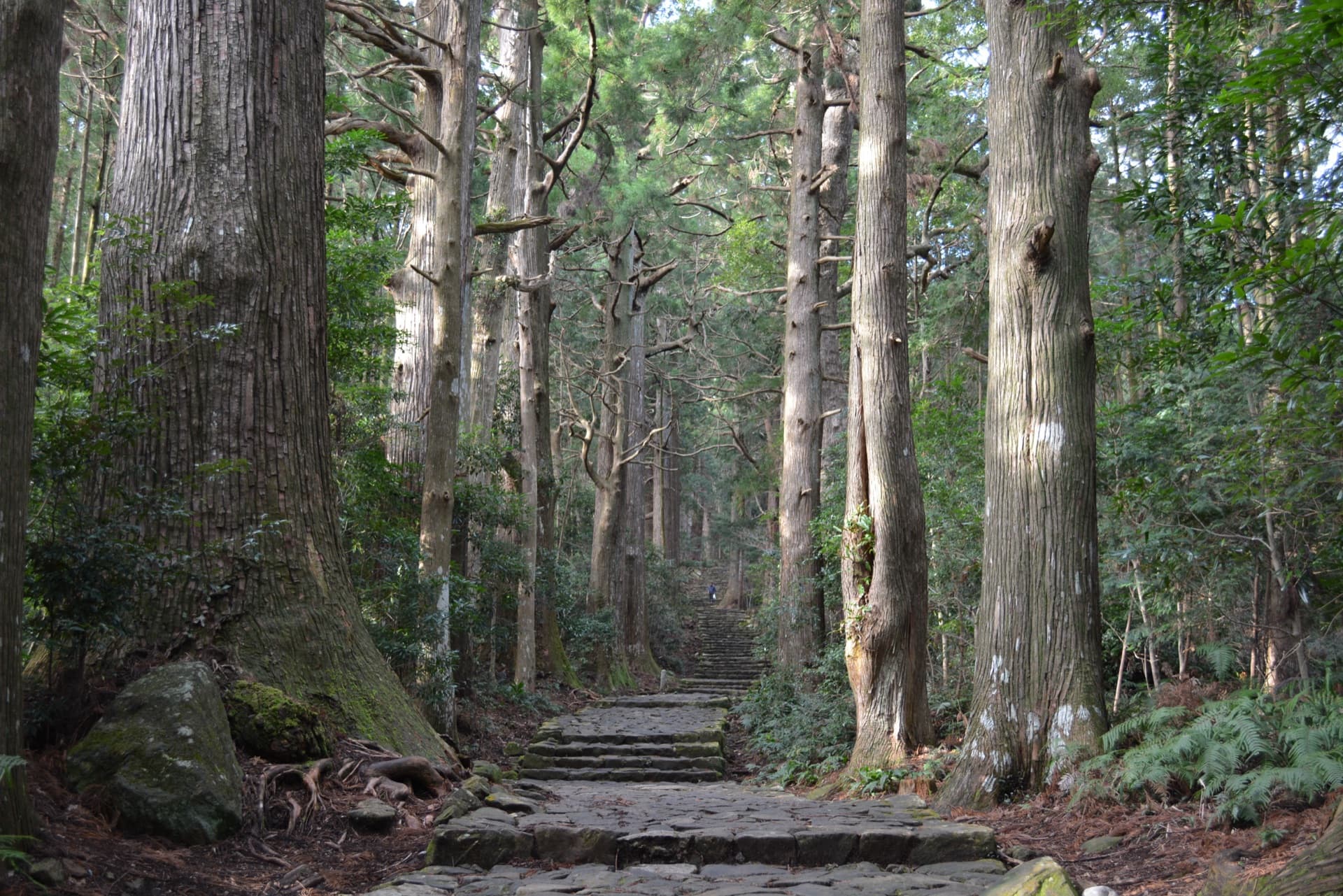
When you step back from the screen a bit, the atmosphere of the old route—the sound of your feet on stone pavements, the murmur of mountain streams, the wind passing through cedar groves—feels much closer. You might even think of the times when your connection is unstable as time to focus fully on the journey.
As long as you've prepared, your smartphone will serve its role well as a "convenient tool you don't lean on too heavily." Take care of the three essentials—saving maps, securing your return transport, and bringing a spare battery—and head out onto the Kumano roads with peace of mind.
Image: 熊野古道中辺路 大門坂 (via (公社)和歌山県観光連盟)


