 LOCAL FIT KUMANOBack to list
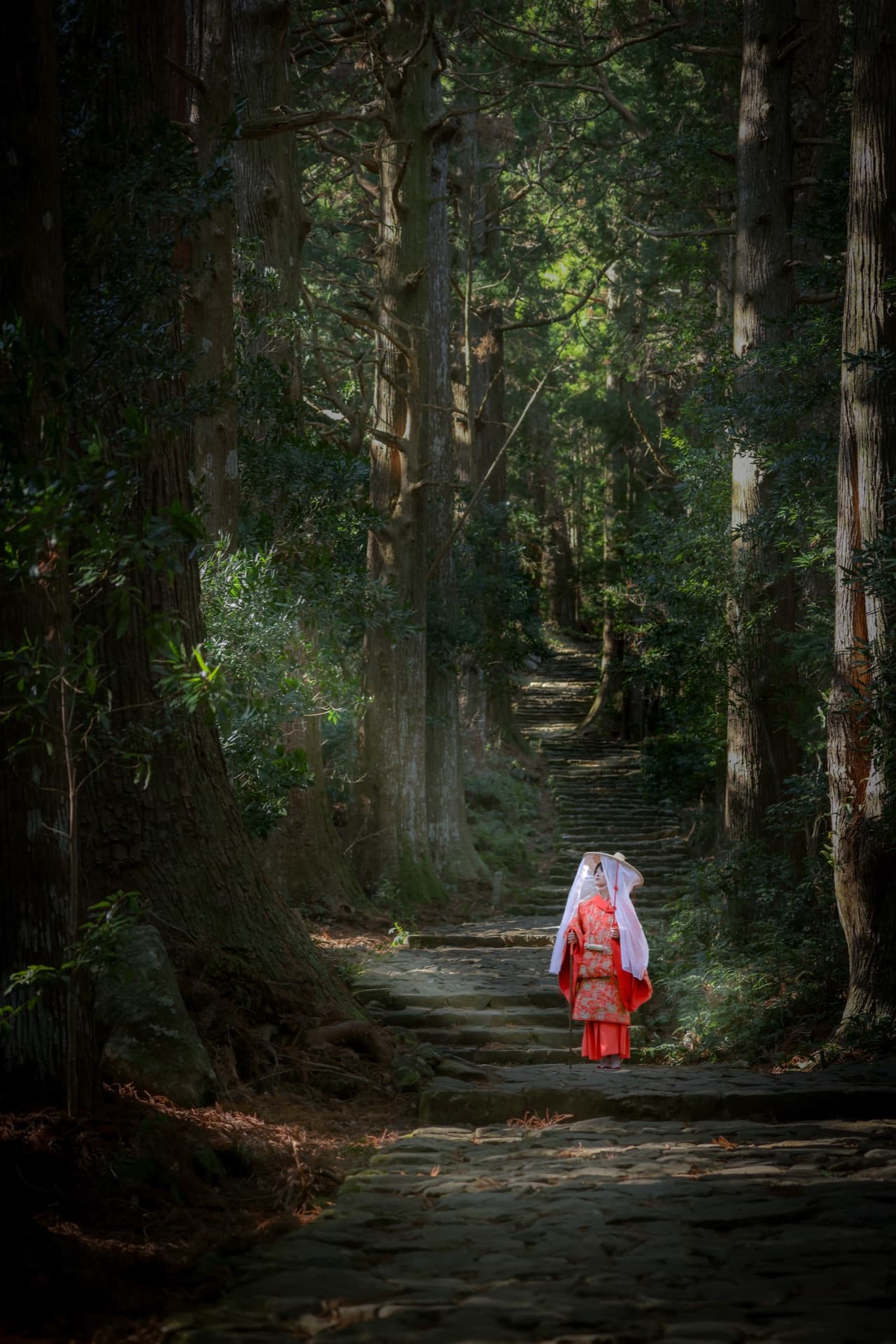
Car-free travel on the Kumano Kodo is actually well-suited to the old road
"Kumano is so vast — isn't it difficult without a car?" We hear this often. It's true that the Kumano Kodo is scattered across mountains and coastlines, so planning your transport takes a bit of thought.
But the Kodo was originally a road meant for walking. Traveling the Kumano Kodo without a car is, if anything, closer to the experience of pilgrims in centuries past. There's also a certain freedom in being able to walk straight through in one direction, without worrying about parking lots or retrieving your vehicle.
Rather than diving into detailed route schedules, this article introduces a way of thinking about your trip: building your journey around your lodging.
The three situations where going car-free gets tricky
1. Getting to the trailhead
Some trailheads sit tucked away in the mountains, a bit removed from the nearest station. Some sections you can walk to straight from the station; others require a ride to the entrance.
2. Getting back after your walk
Unlike a car trip, you need a way to return from wherever you finish walking. This is usually the biggest headache — and it affects whether you'll reach your inn before nightfall.
3. Carrying your luggage
If you change inns as you go, your bags can become a burden. Traveling light makes a huge difference on the Kodo.
Build your plan around your lodging
For a car-free trip, rather than choosing your walking section first, it's easier to decide where you'll stay, then choose walking routes nearby. Innkeepers know the local situation well.
Things to ask your inn before or after booking
- How to get there from the nearest station or bus stop, and roughly how long on foot
- Whether they offer a shuttle, or can pick you up from somewhere nearby (this varies by inn)
- Dinner times, and how to contact them if you're running late
- Whether they can hold your luggage before you set out in the morning
Don't assume "there must be a shuttle" — always confirm in advance. The smaller the inn, the more helpful it is to ask early.
Use taxis as a way to "bridge the gaps"
Where bus routes don't line up, a taxi can bridge you to a trailhead or from a trail's end. In some areas the number of taxis is limited, so it's reassuring to ask your inn the day before, or book in advance.
Don't try to walk too far in a day — deciding in advance that "I'll grab a taxi if I get tired" gives you some peace of mind.
Travel light, and leave what you can behind
When moving between inns, the basic rule is to not walk with heavy luggage. Luggage forwarding services and their conditions vary by season and area, so confirm with your inn or an information center in advance. Walking with only day-hike gear makes your steps feel dramatically lighter.
A typical car-free day looks like this
1. In the morning, leave your luggage at the inn or pack light
2. Set out early, and keep your walking to a single section
3. At midday, don't rush ahead — take a break with snacks you've brought along
4. Before the sun gets low, make sure you've secured a way back to your inn or station
The mountain paths of Kumano get dark earlier than you might expect. Securing your return route first is key to a relaxed car-free trip.
In closing: fill the gaps with conversation
The trick to traveling the Kumano Kodo without a car isn't researching every bus route to perfection. It's talking with your inn and the local people, and choosing a reasonable walking section.
Beyond the small inconveniences, you'll find conversations with locals and discoveries that only come from traveling slowly. We hope you'll experience the Kumano that only reveals itself to those who leave the car behind.
Image: 熊野古道中辺路 大門坂 (via (公社)和歌山県観光連盟)


