 LOCAL FIT KUMANOBack to list
Are There Bears on the Kumano Kodo? What You Should Know First
"I'd love to walk the Kumano Kodo, but I've heard there are bears and I'm a little worried." We hear this concern often. The short answer: Asian black bears are said to inhabit the mountains of the Kii Peninsula, and we can't say the chance of encountering one near the Kumano Kodo is zero. That said, bears are not something tourists frequently encounter on these popular pilgrimage routes — they are few in number and naturally timid animals. The best approach is to walk without excessive fear, armed with basic knowledge and preparation.
The Asian black bears of the Kii Peninsula are said to be a regional population that is subject to conservation. "If you see one, don't panic — leave it be" is the attitude that matters most, both for people and for the bears themselves.
Basic Preparations to Avoid Encountering a Bear
Make Noise to Announce Your Presence
Most bear incidents are said to occur when a person and a bear fail to notice each other and suddenly meet at close range. Carrying a bear bell, radio, or something that makes a steady rhythmic sound makes it easier to signal your presence. The quieter the mountain path, the more you'll appreciate the sound of your bell.
Be Mindful of Time of Day and Group Size
- Animals tend to be more active during early morning and evening hours. In seasons when daylight is short, plan to finish your walk while it's still light.
- Walking in a group while chatting makes you easier to notice than walking alone. If you're walking solo, be sure to use your bell actively.
- On foggy or rainy days, visibility and sound don't carry as well, so be extra cautious.
Handling Food and Trash
The smell of food attracts wild animals. Finish what you take out during breaks, and always pack out your trash. Leaving no food scraps behind isn't just a courtesy to bears — it also matters for wild boars and monkeys.
If You Do Encounter a Bear
Here are the commonly recommended responses, so you can calmly recall them if needed.
1. Don't shout, and don't run. Turning your back and running is said to trigger pursuit.
2. Keep your eyes on the bear and slowly back away to create distance.
3. If you see a cub, the mother is likely nearby. Leave the area immediately.
4. For urgent situations — such as a bear approaching or threatening — it's reassuring to check guidance from local authorities or expert organizations ahead of time.
Never approach a bear to take a photo.
Other Mountain Wildlife to Watch For
On the Kumano Kodo, you're more likely to meet other wildlife than bears. Watch out for deer and wild boar, hornets from summer into autumn, and pit vipers (mamushi) and leeches (yamabiru) during damp seasons. Long sleeves and pants, socks that cover your ankles, and a calm attitude as you pass through will reduce many risks as a matter of course.
What to Check Before Setting Out
- The latest sighting and advisory information: Conditions change with weather and season. Before setting out, check with the municipality, tourism association, or your lodging for the section you plan to walk.
- Choosing your section: Starting with a section near villages or shrines, with other walkers around, offers a greater sense of security.
- Hiring a guide: Walking with a storyteller (kataribe) or guide gives you the reassurance of someone who knows the day's conditions on the mountain.
- Share your itinerary: Let your lodging hosts or family know your route and expected return time.
Walk with Respect, Not Fear
The mountains of Kumano have long been cherished as a dwelling place of the gods. They are home not only to people but also to the lives of animals. Make a little noise, walk while it's light, and leave no trash behind. These small gestures are the best preparation for walking this thousand-year-old path with peace of mind.
*This article summarizes general guidelines. Since sighting conditions and local rules can change, please always check the latest official information.*
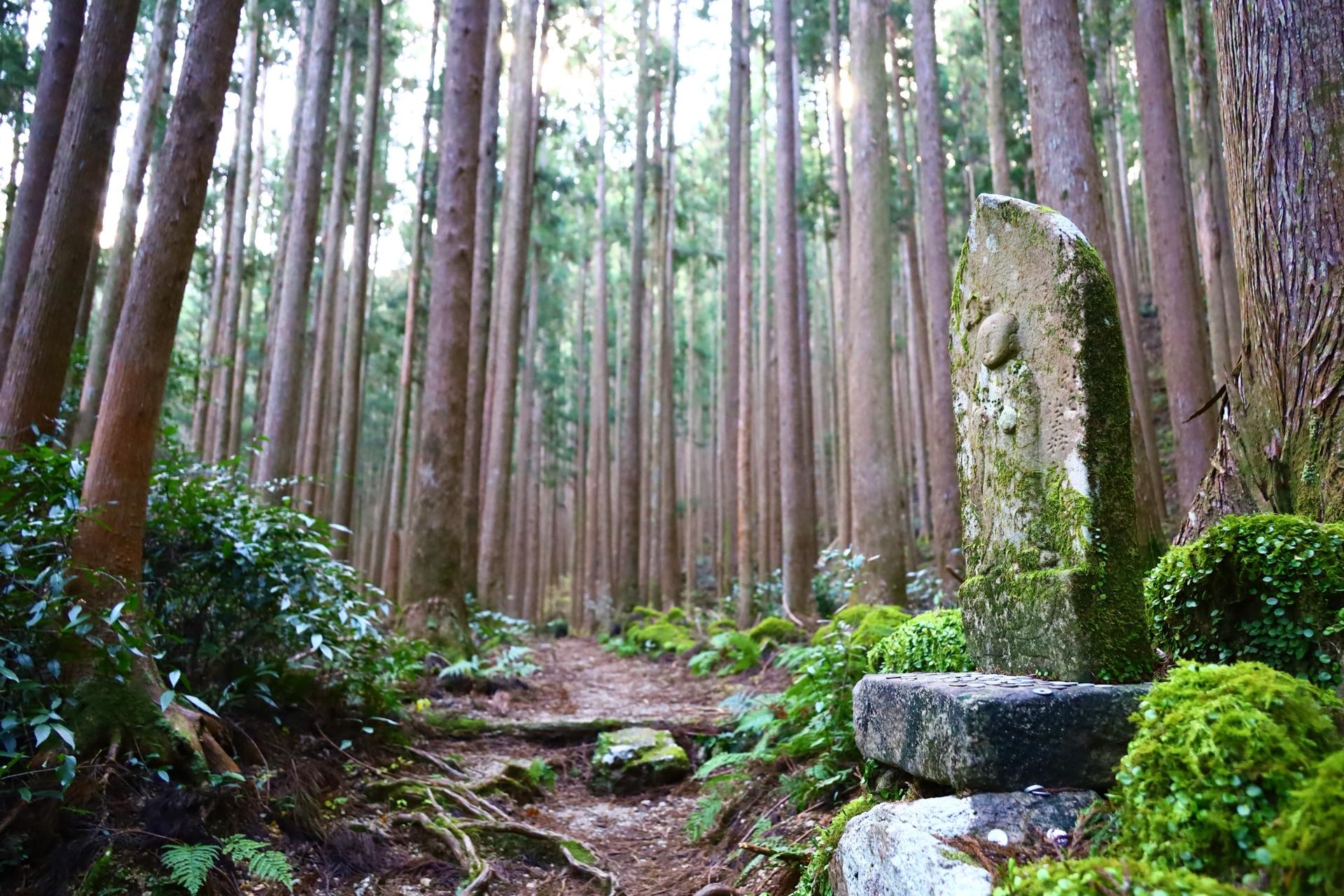
Image: 熊野古道中辺路 大雲取越 (via (公社)和歌山県観光連盟)


