 LOCAL FIT KUMANOBack to list
The First Thing to Know About Kumano Travel Is Its "Size"
Search for "Kumano travel" and you'll find an endless list of attractions — waterfalls, ancient pilgrimage routes, hot springs, shrines, fresh seafood. Lined up on a map they look close together, but in reality Kumano is a long, narrow area squeezed between mountains and sea, with winding roads throughout. It's not the number of sights but the effort of getting between them that shapes the impression of a trip to Kumano.
So instead of starting with a checklist of destinations, let's think first about what kind of pace your trip should have.
The Rhythm Changes with Sea, River, and Mountain
Dividing Kumano into three types of scenery makes planning much easier.
The Rhythm of the Sea: Walking Port Towns
Along the coast, in places like Nachikatsuura and Shingu, train stations make convenient bases, and food and the atmosphere of a working port are all within walking distance. The appeal lies in how close the wild Pacific scenery feels to the everyday life of an old-fashioned harbor town. It suits travelers who want a relaxed pace, or those visiting Kumano for the first time.
The Rhythm of the River: Following the Current
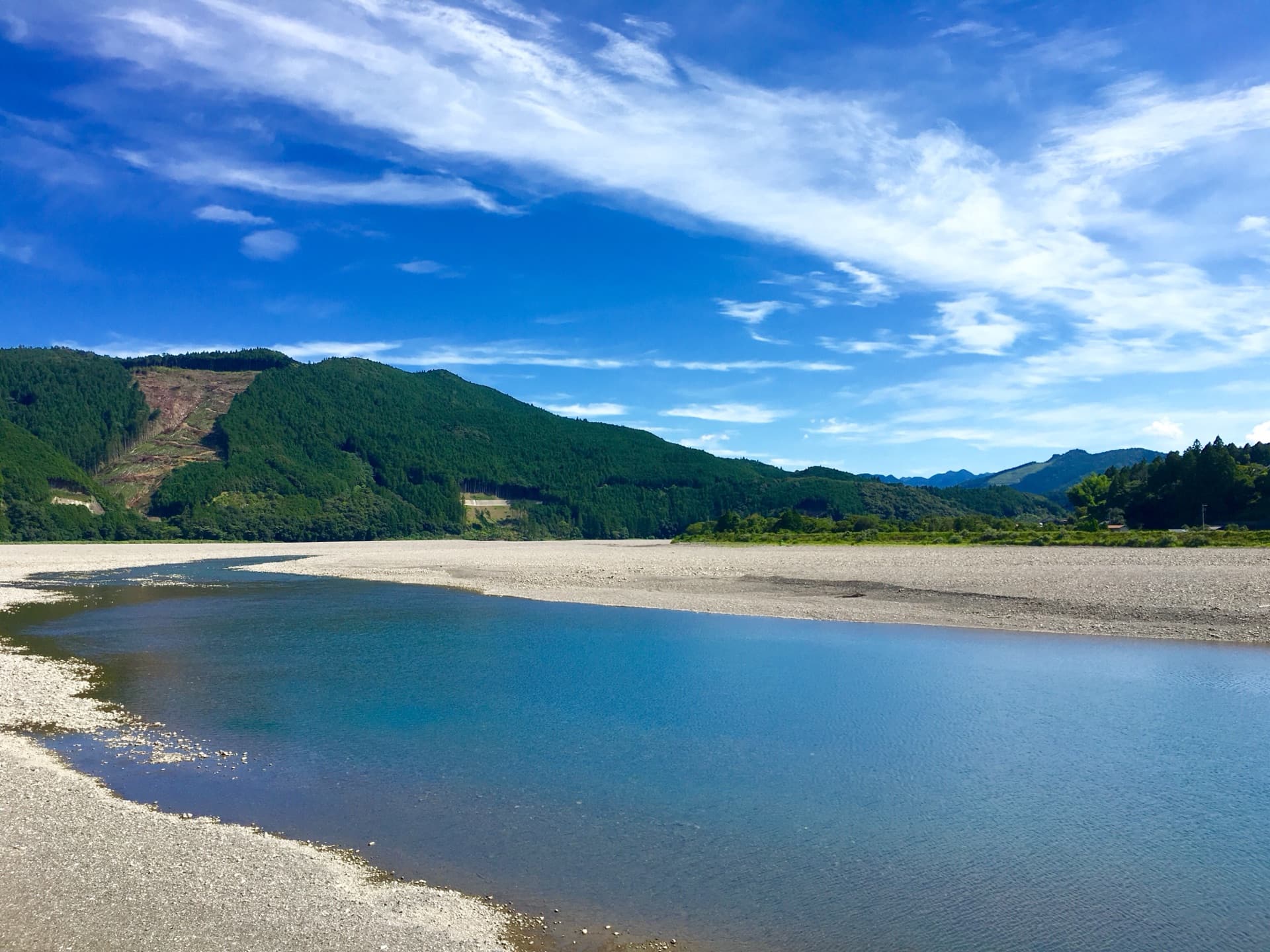
Around the Kumano and Kitayama Rivers, the river itself is the main attraction. The scenery along the water is gentle, but the roads follow every bend of the river, so every little detour adds time. If you decide, "today I'll just enjoy the river scenery," you'll come away with a quiet, lingering sense of satisfaction.
The Rhythm of the Mountains: Ancient Paths and Hot Springs, Taken Slowly
The inland mountain area, where Kumano Hongu Taisha, hot springs, and the old pilgrimage routes gather, has the most quintessentially "Kumano" atmosphere. The pace of travel feels different from the coast, and you'll want to confirm your return transport early. Rather than rushing to see things after arriving, this area is best savored by settling into one place.
Rather Than "Seeing Everything," Pick One Color
If you try to conquer sea, river, and mountain all in a limited number of days, you'll end up spending the trip inside a car or train. Here's what we recommend instead:
- For a 2-day, 1-night trip, choose either the sea or the mountains as your focus
- For two nights or more, link two areas and leave time in between to "do nothing"
- If it's your first visit, instead of trying to see everything, leave a reason to come back
Kumano isn't a place you have to finish in one trip. Visit in a different season and the same spot will look different — the volume of water, the depth of green, even the presence of people.
Three Things to Decide Before You Set Out
1. Your main scenery: Which do you most want to enjoy — sea, river, or mountain?
2. How you'll get around: Mostly by train and bus, or by car? This changes how much ground you can cover.
3. Your return route: Lock in how you'll get back to your lodging or station as early as you plan the outbound trip.
Details such as opening hours and transport schedules can change by season. Please check official websites or local tourism information for the latest details before your trip.
In Closing: A Trip with Breathing Room Suits Kumano Best
The satisfaction of a Kumano trip is decided not by how many sights you count, but by how fully your attention rests on each place you visit. Accept its scale, choose a type of scenery, and leave some empty space. A trip shaped this way resonates beautifully with the deep nature and long spiritual history of the Kii Peninsula. Start by taking your time to decide: which scenery will you go to meet first?
Image: 熊野川 (via (公社)和歌山県観光連盟)


