 LOCAL FIT KUMANOBack to list
Between 'A Place You Love' and 'A Place You Live'
Many people are drawn to the scenery of Kumano and dream of living here. But the Kumano seen through a traveler's eyes and the Kumano as a place to live have slightly different faces. In this article, we introduce three gradual steps — starting from 'an extension of travel' — to help you experience life in Kumano at a comfortable pace.
Step 1 | Add an 'Everyday Perspective' to Your Usual Travels
On your next sightseeing trip, try expanding the things you look at just a little.
- Where are the supermarkets, shops, and drugstores located?
- How far are hospitals and clinics from the area where you'd like to live?
- How do people get from the station or bus stop to go shopping?
- Does the darkness and quiet of the night feel comfortable to you?
Just glancing at these 'everyday scenes' between visits to tourist spots makes the image of living here far more concrete.
Step 2 | Stay for a Few Days to a Few Weeks, as if You Lived There
Next, stay at a local inn and create some 'everyday time.' Choose a guesthouse or a lodging that allows long-term stays, don't pack your sightseeing schedule too tightly, and work in daily routines like a morning walk, grocery shopping, and laundry.
Some municipalities offer consultation services for prospective residents or trial stay programs. Details and conditions vary by city, town, or village and may change over time, so always check the latest information directly with the official municipal office.
Step 3 | Talk with Local People
Life in Kumano is greatly supported by connections with people. Many villages have community events and shared tasks (like grass cutting or cleanups) that become part of daily life. Through migration consultation sessions, conversations with local innkeepers, or chats with storytellers (kataribe), ask about 'what kinds of people live here, and at what rhythm.'
Points to Check Unique to Kumano
Life Changes by Sea, River, or Mountain
Even within Kumano, the ease of shopping and the climate differ between seaside towns, riverside hot spring areas, and mountain villages. Deciding first which scenery you want to live beside will help narrow your search.
A Car Tends to Be Essential
Public transportation exists, but in many areas, daily transportation relies mainly on cars. Whether you'll need to drive, and how your family will get around, are important considerations.
Rain, Humidity, and Typhoon Season
The Kii Peninsula is known as a rainy region. If possible, experience daily life during the rainy season or typhoon season — it will give you peace of mind.
Work and Housing
Vacant house banks (akiya banks), regional support programs, and remote-work internet conditions vary by area. For actual properties and conditions, check directly with the municipal office or a real estate agent.
Visit Again in a Different Season
Don't decide based only on the freshness of spring — also see the humid heat of summer and the chill of winter. Then you can truly feel, 'Yes, I could live here.' Visiting twice in different seasons is the shortest path to a decision with few regrets.
Summary | Kumano Is a Place to Approach Slowly
We recommend moving to Kumano step by step: start as an extension of travel, then try a short stay, then talk with locals. As you visit without rushing, it will naturally become clear whether this land is a place for you to 'visit' or a place to 'live.'
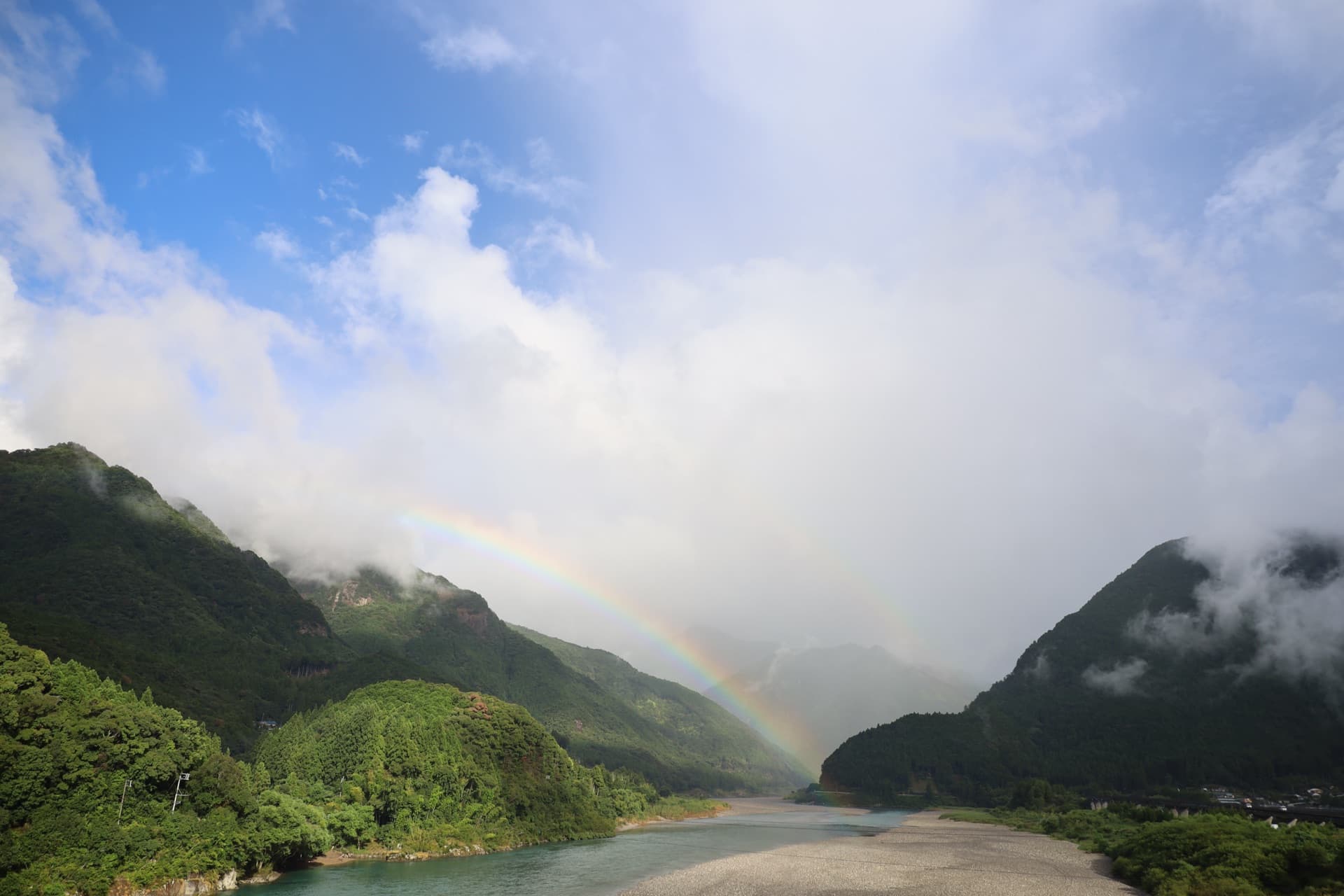
Image: 熊野川 (via (公社)和歌山県観光連盟)


