 LOCAL FIT KUMANOBack to list
Access to Kumano Hongu Taisha depends on "which gateway you enter from"
Kumano Hongu Taisha sits quietly in Hongu-cho, Tanabe City, deep in the mountains of the Kii Peninsula. Unlike coastal towns, it isn't somewhere you can simply walk to from a train station.
Search "Kumano Hongu Taisha access" and you'll find a tangle of routes, but the logic is simple. Decide which town you'll use as your gateway first, and the rest of the plan falls into place.
In this article, we'll organize things around three gateways:
- Entering from Kii-Tanabe Station
- Entering from Shingu Station
- Entering by car
Schedules and fares can change. Before you set out, always check the bus operator's latest information.
Gateway 1: From Kii-Tanabe Station (over the mountains to Hongu)
If you're coming by train from Osaka or Wakayama, Kii-Tanabe Station is your gateway. From the station, a local bus climbs the Nakahechi mountain road, following the path of the Kumano Kodo toward Hongu.
- The ride is fairly long, and buses are not frequent
- Near the end of the line, "Hongu Taisha-mae" is your landmark stop
- The last return bus departs early, so the trick is to work backwards from your return bus when deciding how long to stay
The windows frame continuous mountain scenery. If you're combining your visit with a walk on the old road, think of the bus less as transportation and more as the prologue to your journey—the length won't feel like a burden.
Gateway 2: From Shingu Station (heading north along the Kumano River)
If you're coming south on the Kisei Line limited express, or combining your trip with Hayatama Taisha and other sights in Shingu, Shingu Station is your gateway. Catch a local bus from in front of the station and head north along the Kumano River.
- You can enjoy scenery that follows the "river pilgrimage route," a World Heritage path
- As on the Kii-Tanabe side, day-trippers absolutely must confirm their return transport
- Staying overnight in Shingu makes it easier to arrive at Hongu in the morning
If you're unsure in what order to visit the three Kumano grand shrines, your choice of gateway will shift depending on whether you visit Hongu first or save it for last.
Gateway 3: By car (from the parking lot to the approach)
A car gives you the most flexibility with time, and makes it easy to stop at points along the old road or at hot spring areas. After exiting the expressway, you'll spend a surprisingly long time on winding mountain highways. Give yourself plenty of time.
- Once you arrive, first check the route from the parking lot to the entrance of the approach
- You'll climb a stone stairway to the main shrine. It's often described as around 150-plus steps, so comfortable walking shoes are reassuring
- After worshipping, many visitors walk on to Oyunohara, the former shrine grounds
On long weekends and festival days, you may have to wait for parking. Arriving in the morning makes for a more pleasant visit.
Three principles that apply to every gateway
1. Decide your return trip first: Lock in the last bus or your drive home up front, and you won't feel rushed.
2. Build in slack time: Mountain roads can become unpredictable due to weather or traffic conditions.
3. Don't shortchange your visit: Since travel takes time, make sure you still have time to walk the stone steps and the grounds unhurriedly.
A word from a local perspective
Because Hongu is "far to reach," the stillness when you finally arrive is something special. The journey over the mountains and along the river is itself part of the Kumano pilgrimage—set out thinking of it that way. Choose your gateway, confirm your return transport, and give yourself a day with room to breathe.
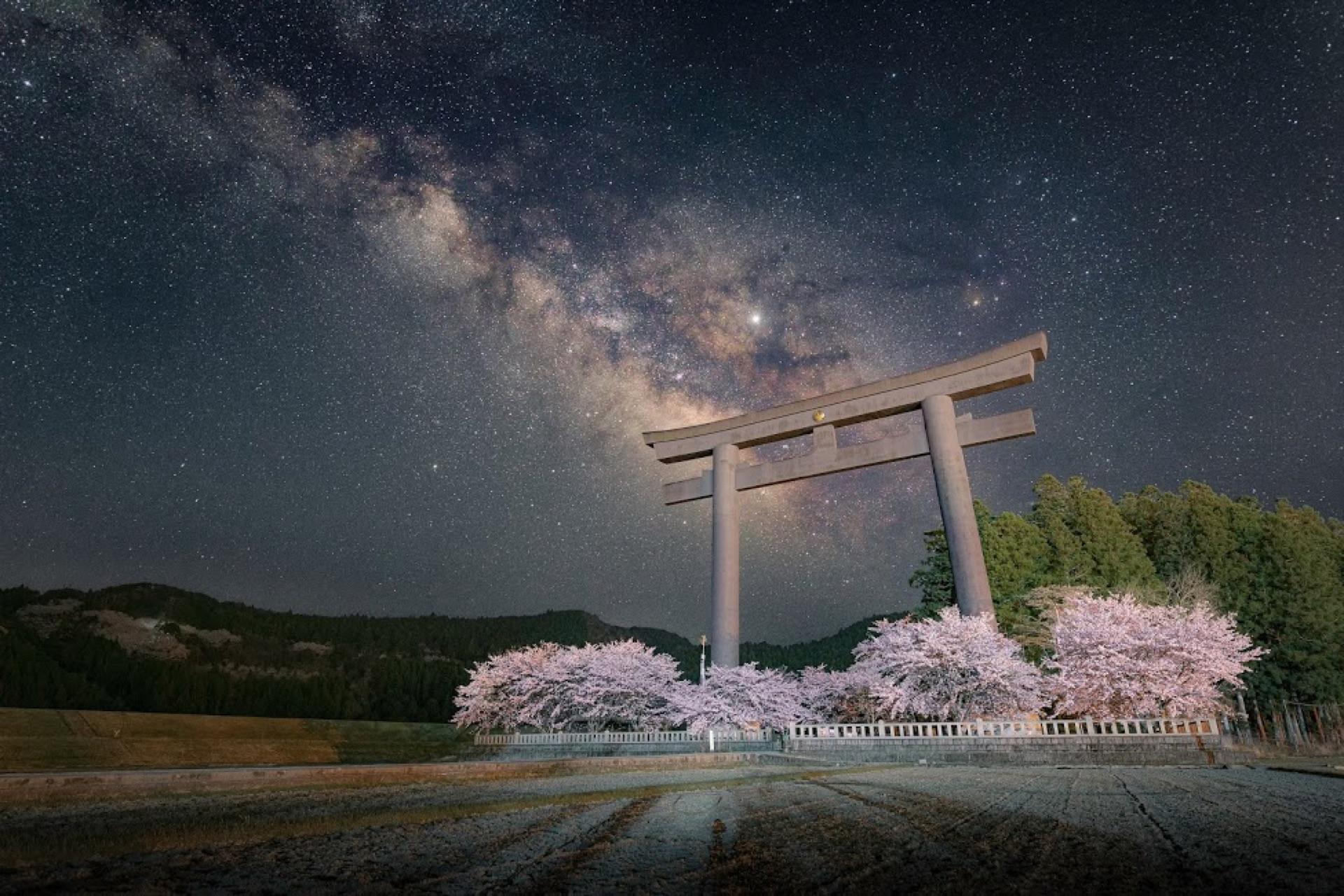
Image: 大斎原 桜 (via (公社)和歌山県観光連盟)


