 LOCAL FIT KUMANOBack to list
Oyunohara: The "Other Hongu"
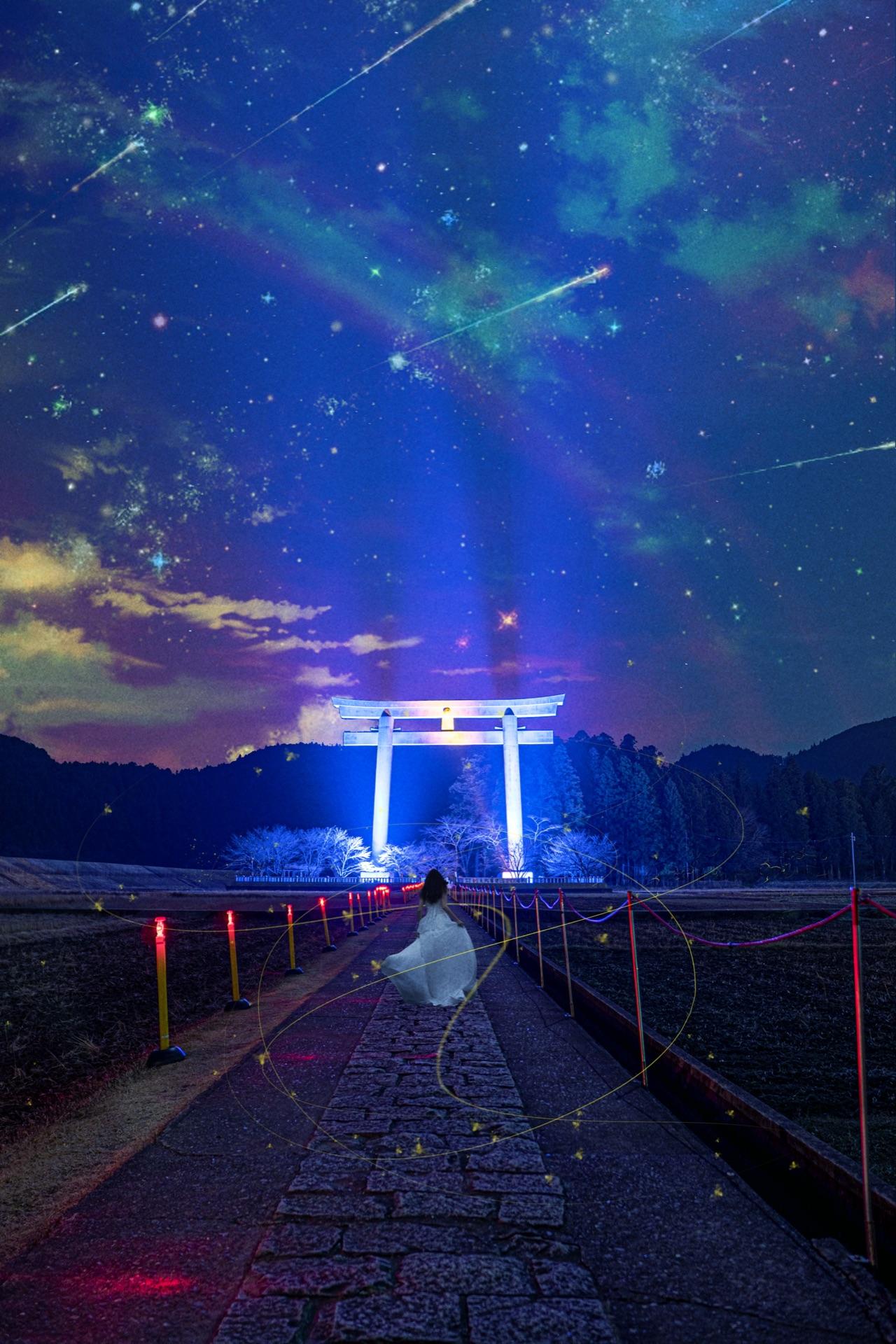
After finishing your visit to Kumano Hongu Taisha, follow the path toward the enormous black torii gate you can see across the rice fields. That is Oyunohara — the original site where the shrine buildings of Kumano Hongu once stood, long before the current shrine was built.
The torii rises more than 30 meters high and is said to be one of the largest in Japan. As you approach, it seems to frame the sky itself. Photos don't quite capture it — standing beneath it in person, it feels far larger than you'd imagine.
A Sandbank Embraced by Three Rivers
Oyunohara sits on a sandbank where the Kumano River meets two of its tributaries — the Otonashi and the Iwata. Pilgrims of old are said to have crossed the rivers on their way to Hongu, purified by the water as they went. The very fact that the site was surrounded by water made it a fitting threshold to a sacred place.
In 1889 (Meiji 22), a great flood swept through the sandbank, destroying most of the shrine buildings. The surviving structures were relocated to the higher ground where the shrine stands today. No buildings remain at Oyunohara, yet the sense that "a great shrine once stood here" lingers clearly in the land.
Three Things to Notice as You Walk
1. Pass Beneath the Torii and Soften Your Footsteps
Once you pass through the torii, the path gradually grows quieter. The crunch of gravel underfoot, trees swaying in the wind, the distant sound of the river — lower your voice as you walk, and you'll notice an atmosphere quite different from the main shrine grounds.
2. Pause at the Small Stone Shrines
Scattered across the wide grounds are small stone shrines that recall the buildings that once stood here. Without any large structures to catch the eye, these quiet traces of prayer at your feet become all the more visible. Taking your time to visit each one is well worth it.
3. Look Back Toward Today's Hongu
On your way back, turn around and you'll see the forest of Kumano Hongu Taisha halfway up the mountainside. The shrine that was washed away, and the shrine that has been preserved — moving between the two places gives you a glimpse of how the people of Kumano have lived alongside the rivers through the centuries.
A Few Things to Keep in Mind
- Morning or evening light is lovely: The black of the torii stands out against the surrounding greenery, and the quiet is more striking when few visitors are around.
- Wear comfortable shoes: The wide grounds are covered in gravel and earthen paths, which can get muddy after rain.
- Take care when water levels rise: Being close to the river, it's wise to check the latest conditions after heavy rain before heading out.
A Small Detour to Add to Your Hongu Visit
Climbing the stone steps of Kumano Hongu Taisha and seeing the Yatagarasu postbox and the main shrine is a rewarding visit in itself, but walking on to Oyunohara adds a deeper sense that "the sacred sites of Kumano have always been tied to water." Whether you visit before or after the main shrine, this small detour is sure to make your memories of the journey richer.
Image: 大斎原 ライトアップ (via (公社)和歌山県観光連盟)


