 LOCAL FIT KUMANOBack to list
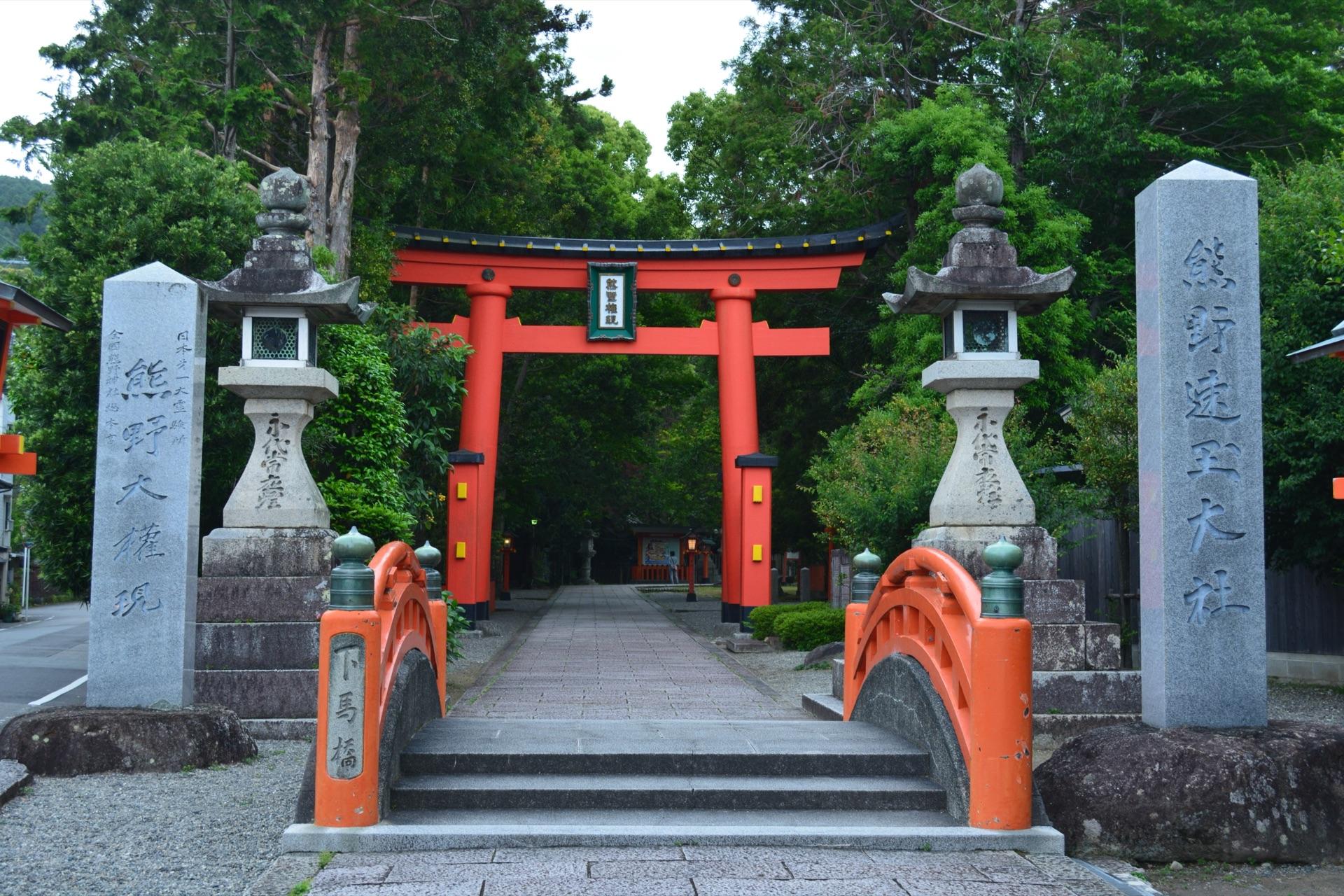
The Vermilion Kumano Sanzan That Opens into Town
When people think of the three Kumano Grand Shrines (Kumano Sanzan), many picture Hongu deep in the mountains or Nachi with its great waterfall. The third, Kumano Hayatama Taisha, stands in the middle of the town of Shingu, near the mouth of the Kumano River. Here you can meet the gods of Kumano right beside everyday life, without having to walk long mountain trails.
Pass through the torii gate and the first thing that catches your eye is the vermilion-lacquered shrine buildings. Unlike Hongu wrapped in deep green forest, or Nachi with its spray of waterfall mist, this shrine has a bright, open feel. The contrast between the blue sky and the vermilion stands out especially on clear days.
The Meaning Behind the Name 'Shingu'
The town of Shingu is said to take its name from this shrine. Kamikura Shrine, on Mt. Kamikura behind the town, has long been a place of worship, and the new shrine where the deity was welcomed down from there came to be called 'Shingu' — literally 'the new shrine'.
If you stand at Kamikura's Gotobiki Rock first and then descend to Hayatama Taisha, you can walk through the entire town while tracing the long passage of time, from the ancient faith dwelling in the rock to its shaping into a shrine building. Setting the order as 'from the mountain to the town' is a walk we recommend.
Look for the Nagi Tree on the Grounds
One thing worth pausing for on the shrine grounds is the ancient nagi (podocarp) tree. In Kumano, nagi leaves have long been treasured, and pilgrims on the Kumano Kodo are said to have carried them as charms for safe travels. The leaves are long and slender like bamboo grass, with lengthwise veins, and they resist tearing even when pulled sideways. From this, the leaves came to symbolize 'bonds that cannot be broken,' and have been linked with wishes for love and marital harmony.
How to Spot a Nagi Tree
- Look closely at the leaf shape: though it's a broadleaf tree, the leaves are not needle-like but slender ovals with veins running lengthwise.
- Look up at the trunk and branches: the figure of a tree that has weathered long years feels far more powerful in person than in a photo.
- If you'd like to take a leaf home, don't pick one up from the ground — look for a charm offered at the shrine office instead.
Tips for Your Visit
Take a Slow Loop Around the Grounds
The grounds are compact, so rather than rushing, it feels just right to walk a full loop while taking in the vermilion of the buildings, the green of the forest, and the color of the sky in turn. In front of the main hall, it's good manners to step slightly to the side when taking photos so you don't block other worshippers' paths.
Pair It with a Walk Around Shingu
After Hayatama Taisha, we recommend strolling around Shingu while taking in the flow of the Kumano River. The castle-ruin hilltop, the river-mouth scenery, old-fashioned shops — plenty of small detours await. Allowing roughly half a day centered on the shrine visit leaves you with a relaxed pace of mind.
Editor's Note
Kumano Hayatama Taisha is like a gateway, a place where you can touch Kumano's faith without crossing a steep pass. It works well both as preparation before walking the old pilgrimage trails and as the final stop after finishing a journey. Thinking of the slender nagi leaf, why not quietly reflect on the 'bonds' in your own life?
*Opening hours, available charms, and access may change. Please check official information for the latest details before your visit.*
Image: 熊野速玉大社 (via (公社)和歌山県観光連盟)


