 LOCAL FIT KUMANOBack to list
Meeting the 'Vermilion' of the Kumano Sanzan in Town
Among the three Kumano grand shrines, Hongu lies deep in the mountains, Nachi stands beside its waterfall, and Hayatama sits right in the urban center of Shingu. It's close enough to walk to from the station, and once you pass through the torii gate, the air quietly settles.
In this article, we'll walk through Kumano Hayatama Taisha focusing on two landmarks: 'vermilion' and the leaves of the 'nagi' tree.
A Clue in the Name 'Shingu'
The place name Shingu is said to come from Hayatama Taisha being called the 'new shrine' (shin-gu). So where is the 'old shrine'? Kamikura Shrine, which enshrines the sacred Gotobiki Rock on Mt. Kamikura to the northwest of town, is said to be the original shrine.
Faith once held among the steep rocks of Kamikura eventually came to be enshrined on the flatlands by the river as well. Walking with this in mind, the mountain with its steep stone steps and the calm shrine precincts begin to appear connected as a single flow.
Landmark 1: The Vermilion Shrine Buildings
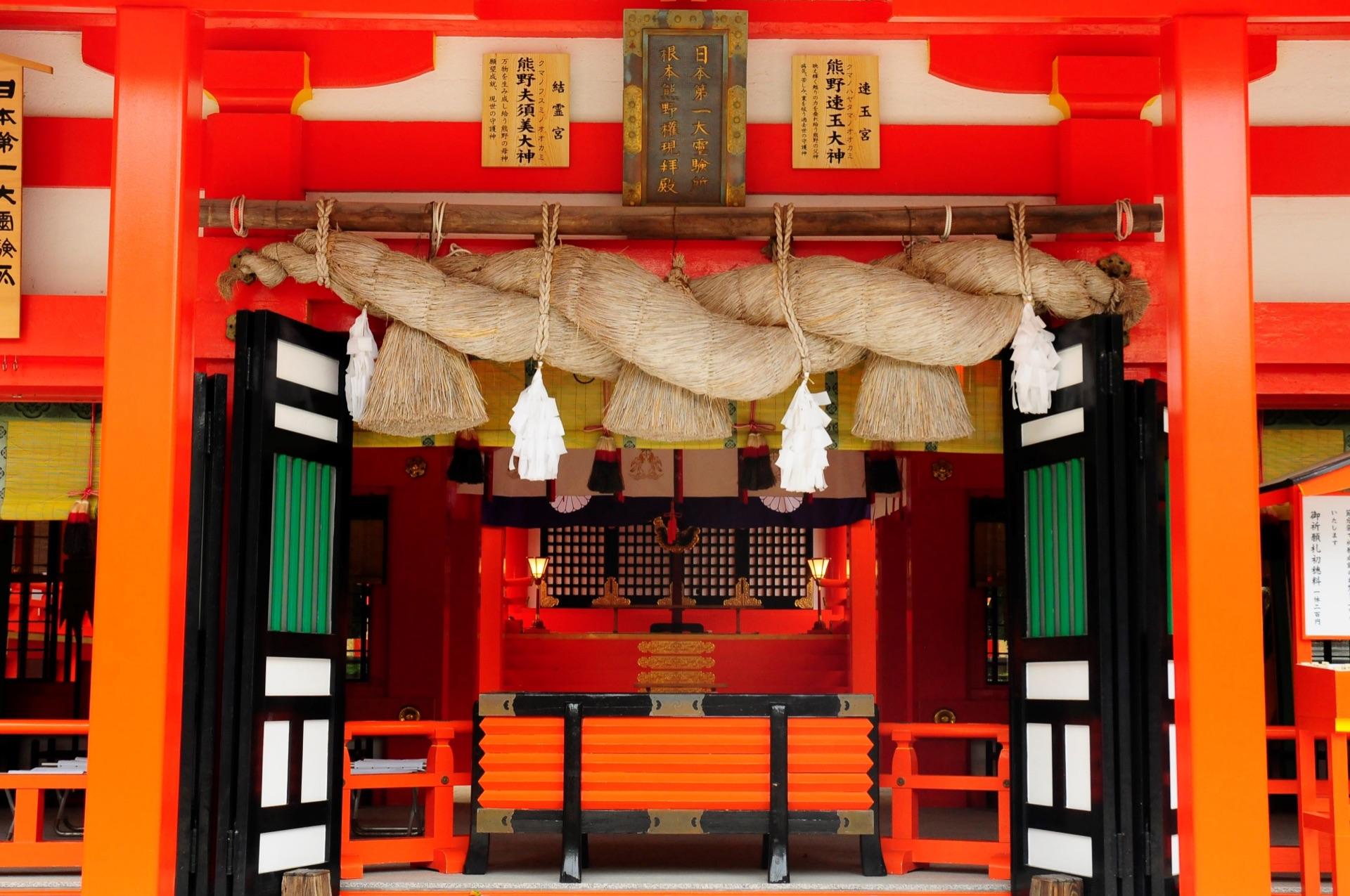
What first catches the eye as you enter the precincts are the vermilion shrine buildings set against the green trees. Many Kumano shrines have a quiet, unpainted wood (shiraki) appearance, so the vividness here stands out all the more.
Points to Look Up At
- The vermilion, and the fine color details under the eaves and along the beams
- How the depth of the vermilion looks different on cloudy and sunny days
- The sound of gravel underfoot during quieter hours with fewer visitors
If you're taking photos, try splitting them into two: first the whole building from the front, then the layered rooflines from an angle, to capture the different expressions.
Landmark 2: The Nagi Tree and Its Leaves
Within the precincts stands a nagi tree that has been treasured since ancient times. There is a tradition that it was planted by Taira no Shigemori, though it's best taken simply as a legend.
Nagi leaves are characterized by a rounded shape with lengthwise veins. Because they are difficult to tear lengthwise, they have been seen as symbols of 'unbroken bonds' and 'protection,' and it's said that pilgrims to Kumano wore them on their hats or carried them. Some of the shrine's offerings are also themed around the nagi, so if you're interested, take a look at the shrine office.
A Half-Day Stroll in Shingu
1. Climb the stone steps at Kamikura Shrine and touch the air of the original shrine (depending on your stamina and the weather)
2. See the vermilion and the nagi at Kumano Hayatama Taisha, and take your time at worship
3. Walk through the town out toward the mouth of the Kumano River and feel the presence of the water
The grand festival of Hayatama Taisha is known as a festival deeply connected to the Kumano River. Please check the dates and details each year.
A Word Before Visiting
- Since it's in town, comfortable walking shoes are all you need
- The precincts are a place of faith. Follow posted guidance on whether photography is allowed and on proper etiquette
- If you're combining the stone steps of Kamikura, allow plenty of time and plan an order that doesn't push you too hard
Not a mountain or a waterfall, but a Kumano shrine that sits within everyday life. When you walk with vermilion and nagi leaves as your landmarks, you'll notice how the lively town and ancient prayer stand right next to each other.
Image: 熊野速玉大社 (via (公社)和歌山県観光連盟)


