 LOCAL FIT KUMANOBack to list
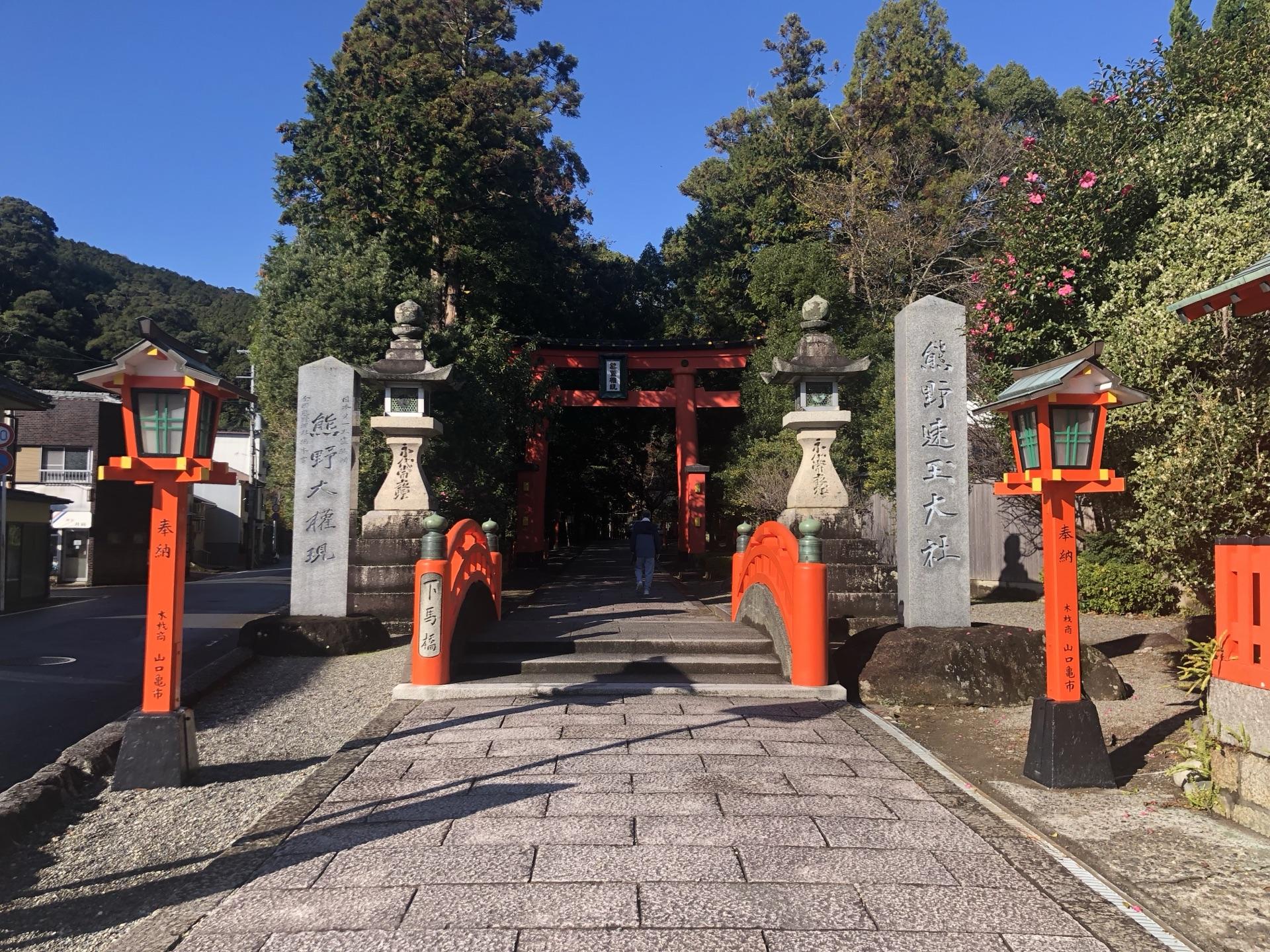
The Shrine Closest to Town Among the Kumano Sanzan
When people think of the Kumano Sanzan (Three Grand Shrines of Kumano), many picture Hongu nestled in the mountains or Nachi with its famous waterfall. The third is Kumano Hayatama Taisha, located in the town of Shingu near the mouth of the Kumano River. Rather than having to climb an endless mountain path, you can visit it as an easy extension of a stroll through town.
As you pass through the torii gate, the first thing that catches your eye is the brilliant vermilion of the shrine buildings. Unlike Hongu and Nachi, which are enveloped in deep cedar groves, here the sky opens wide and the light pours in. Even within Kumano, you can sense that this is a place "open to the river and the sea."
The Place Name 'Shingu' Was Born Here
The "shin" of Shingu is said to mean new shrine. So where is the old shrine? It's Kamikura Shrine, which rises behind the town on Mt. Kamikura and enshrines the famous Gotobiki Rock as its sacred object.
From this ancient place of worship, where a boulder itself was revered as a deity, the gods were welcomed down to a shrine built on the flatlands of the village. That, as the story goes, is how Hayatama Taisha came into being. In other words, reading Hayatama Taisha together with Mt. Kamikura adds much greater depth to the experience.
- Kamikura Shrine: the primordial worship of a deity dwelling in a mountain rock
- Kumano Hayatama Taisha: a new shrine built with its halls in the village
We'll save the story of climbing the stone steps of Mt. Kamikura for another time. For now, just keep in mind this one point: "the original shrine and the new shrine stand side by side in the same town."
Look for the Nagi Tree
If you're walking the shrine grounds, one thing you should definitely seek out is the nagi tree. It has long been treasured as a sacred tree throughout the Kumano Sanzan, and large nagi trees grow lushly on the grounds of Hayatama Taisha as well. According to tradition, it was planted by Taira no Shigemori, a Heian-period warrior.
Nagi leaves are tough and have distinctive vertical veins running through them. Because the word "nagi" echoes the word "nagi" meaning "calm (sea)," the tree has long been associated with the wish for calm waters—that is, for peace and tranquility—and has been tied to the safety of travel and sea voyages. It's a fitting belief for a town beside a river and the sea.
Rather than plucking any leaves, it's more than enough to simply pause in front of the tree and take a careful look at the shape of its branches and leaves.
Tips for Your Visit
See the Vermilion in Morning Light
The vermilion-lacquered shrine buildings show their color most vividly when the sun is high. If you're taking photos, try to be mindful of the times when the light hits the buildings from the front.
Pair It with a Town Walk
Shingu is a town where small attractions—castle ruins, sites associated with Xu Fu (Jofuku), and more—are gathered within a short distance. After visiting Hayatama Taisha, if you walk toward the mouth of the Kumano River, you can savor the feeling of a traveler who has just reached the end of the "river pilgrimage route."
In Closing
Kumano Hayatama Taisha is not a place to seek out dramatic mountain trails or sweeping vistas. It's a place where the vermilion shrine and the nagi trees quietly tell the story of a shift in faith—"from the original shrine to the new shrine." When you make the pilgrimage to the Kumano Sanzan, in addition to Hongu and Nachi, be sure to linger a little longer at this shrine in the heart of town.
*Visiting hours and information on accessible facilities may change. Please check official sources before your visit.
Image: 熊野速玉大社 (via (公社)和歌山県観光連盟)


