 LOCAL FIT KUMANOBack to list
'Hayatama-san,' Standing Near the Mouth of the Kumano River
Of the three Kumano grand shrines (Kumano Sanzan), the one closest to the mouth of the Kumano River is Kumano Hayatama Taisha in Shingu. Locals affectionately call it 'Hayatama-san.' Compared with Hongu in the mountains and Nachi by the waterfall, this shrine sits within the town and has an open, almost seaside atmosphere.
The place name 'Shingu' literally means 'new shrine.' It is said to come from the tradition that the deity who had descended at nearby Kamikura Shrine (Gotobiki Rock) was later welcomed to this site. Keeping this story in a corner of your mind before visiting helps you see the town's origins in a more three-dimensional way.
First, Take in the Vermilion Shrine Buildings
As soon as you enter the precinct, the vividly vermilion shrine buildings catch your eye. The contrast with the green of the surrounding trees and the blue of the sky is striking — many visitors will find themselves reaching for their cameras as they walk.
Unlike the subdued buildings of Hongu, Hayatama Taisha gives a bright and festive impression. Even within the same Kumano Sanzan, each location has its own expression. If you plan to visit all three, by all means compare them in person.
The Nagi Tree as a Symbol of Good Fortune
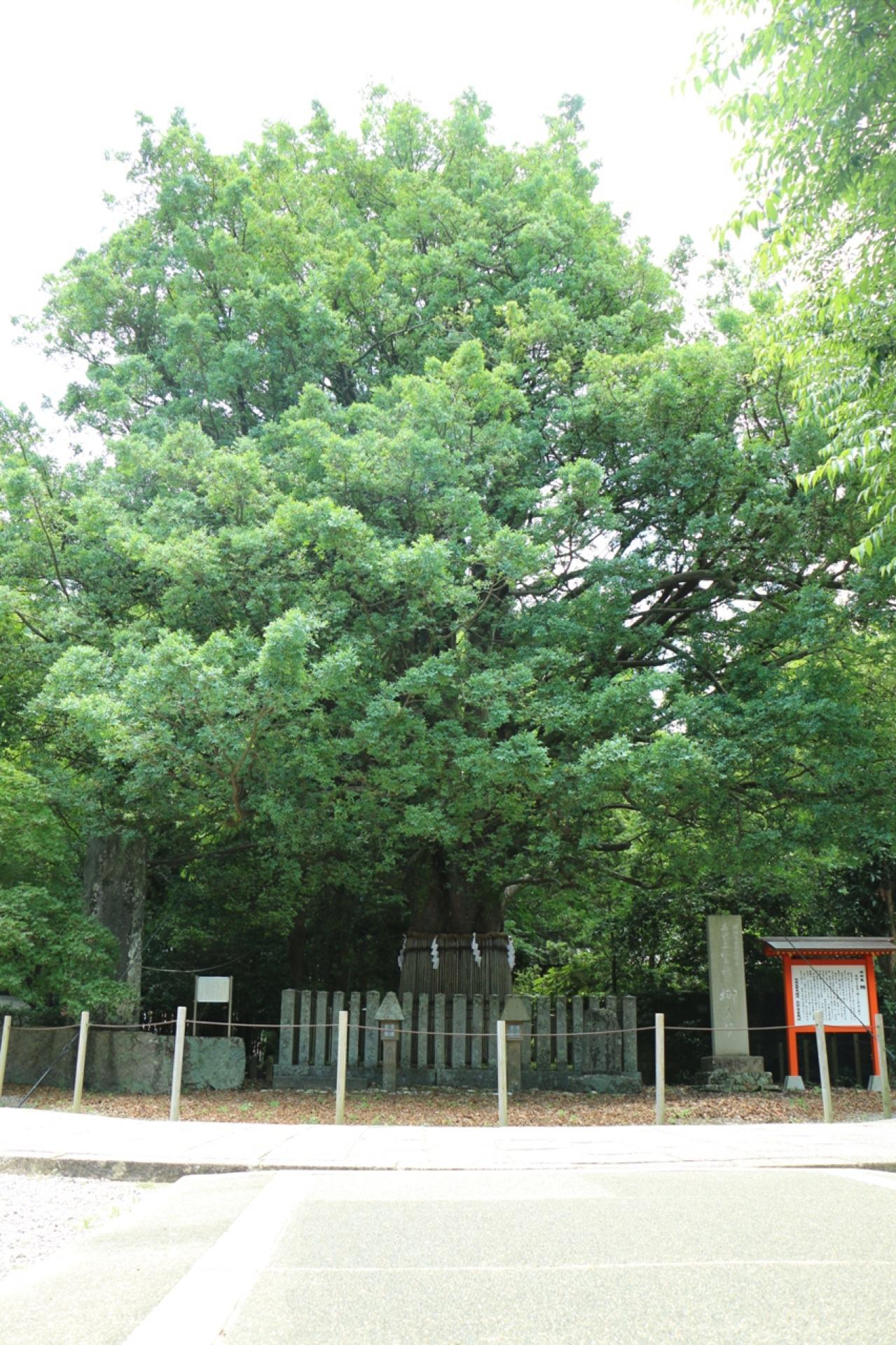
No account of Hayatama Taisha would be complete without the nagi tree. An ancient, towering nagi grows on the grounds, said to have been planted by the Heian-era warrior Taira no Shigemori.
Why the Nagi Leaf Has Been Loved
Nagi leaves are known for being remarkably difficult to tear, even when pulled sideways. For that reason, they have long been treasured as a charm for unbreakable bonds between people, and — through a play on words with the verb 'nagi-harau' (to sweep away) — as a charm that wards off misfortune. There are even accounts of travelers heading to Kumano carrying nagi leaves on their person, praying for a safe journey.
When you look up at the tree, pay attention to the shape of the leaves. Unlike typical broadleaf trees, there is no single thick central vein; instead, many fine lines run lengthwise in parallel. Seeing this, you may find yourself nodding: 'Ah, so this is the leaf that is said to be so hard to tear.'
Tips for Your Visit
- Before you go: A quick read-up on the Gotobiki Rock legend will help the meaning of 'Shingu' come into focus.
- In the precincts: It's nice to take in three things slowly and in turn — the vermilion of the shrine buildings, the great nagi tree, and the surrounding woods.
- Combine it with a town walk: A stroll to the Shingu Castle ruins or down to the banks of the Kumano River lets you experience Shingu as a town by the water.
In Closing
Kumano Hayatama Taisha is not a place that overwhelms you with spectacle; rather, it rewards the way you choose to look. Gaze at the vermilion shrine, and let your thoughts turn to the symbolism of the nagi leaf. A quiet visit like this makes for a fitting pause in a Kumano journey. For the latest information on opening hours and shrine offerings, please check the official guidance before visiting.
Image: 熊野速玉大社 (via (公社)和歌山県観光連盟)


