 LOCAL FIT KUMANOBack to list
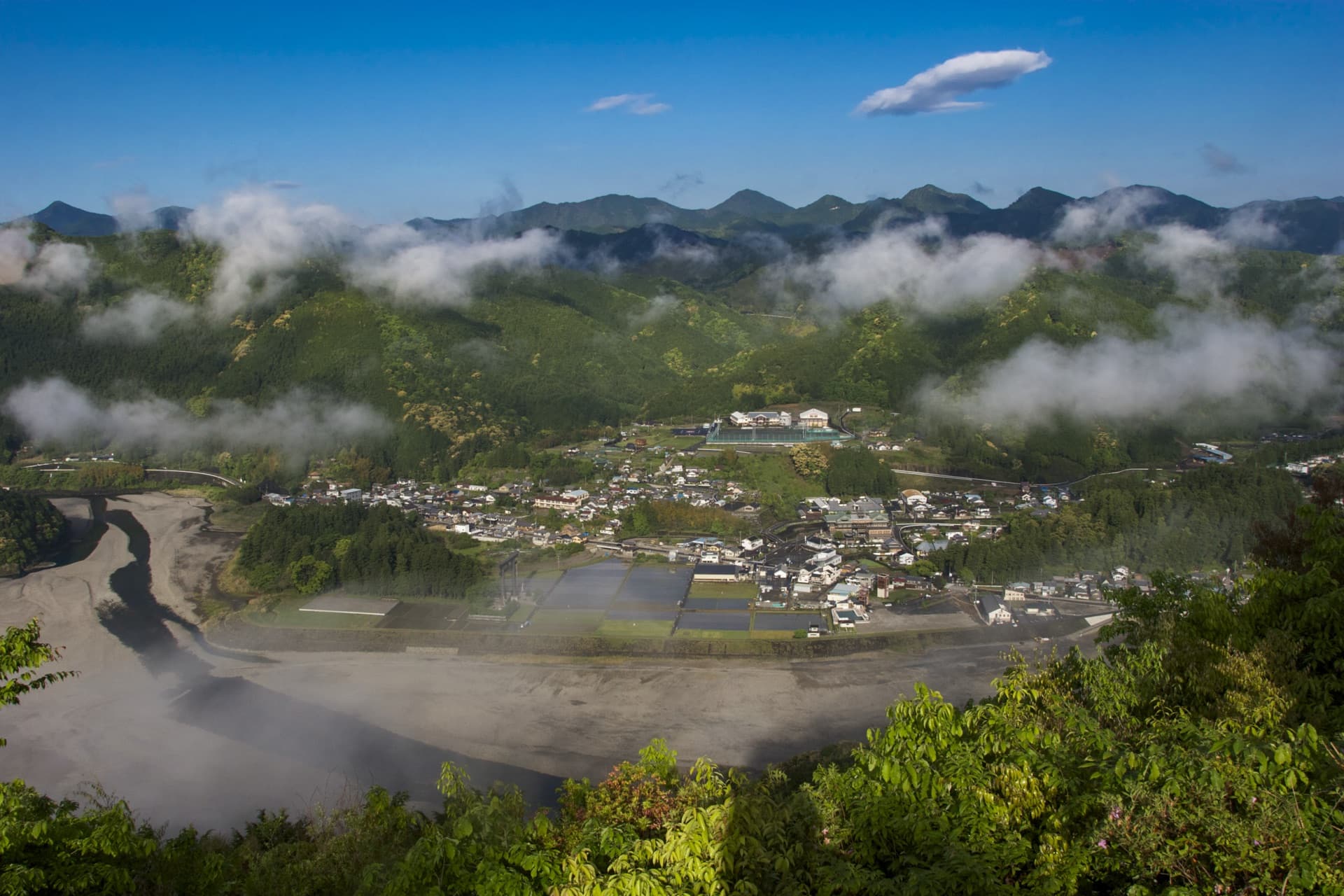
Welcomed by Vermilion at the Mouth of the Kumano River
Among the three grand shrines of Kumano, Kumano Hayatama Taisha in Shingu sits closest to the sea. Compared with Hongu, tucked deep in the mountains, or Nachi, which gazes up at a waterfall, this shrine has an open brightness that belongs to a town. Step into the precincts and the vermilion-lacquered shrine buildings leap into view first.
The more you've walked the deep green of the Kumano Kodo, the more that bright vermilion may give you a sense of relief — "ah, I've come down into the villages." Here, alongside the shrine buildings themselves, let's take a walk with attention to the "nagi" tree that breathes quietly within the grounds.
What Kind of Tree Is the Nagi?
The nagi is an evergreen tree that grows wild in the mountains of warm regions, and in Kumano it has long been treasured as a sacred tree. Its leaves are not long and narrow like bamboo grass but rounded and oval, and if you look closely you'll notice many fine lines running lengthwise along them.
A "Leaf That Won't Tear Easily" as a Symbol of Good Fortune
These leaves are said to be very hard to tear even when pulled sideways, and from this came the custom of attaching wishes to them — "a bond that cannot be severed," or "harmony between husband and wife." There's also a tale that because the name "nagi" echoes the word "nagi" (calm), the leaf came to be seen as a charm for calming the wind and waves and warding off misfortune. Travelers heading to Kumano are said to have carried nagi leaves with them as protective charms.
Three Highlights to Enjoy in the Precincts
1. Look Up at the Great Nagi Tree
Within the precincts stands a tree long known as the "Great Nagi." Legend has it that it was planted by the Heian-period warrior Taira no Shigemori — true or not, the sheer presence of a tree that has lived through such a span of time naturally stops you in your tracks. Take a slow look up at the trunk and the spread of its branches from below.
2. The Contrast of Vermilion Shrine and Green Forest
The vermilion shrine buildings strangely never feel dull, even on cloudy days, and form a sharp contrast with the green of the trees behind them. If you're taking photos, try shooting not only from straight on but also slightly from the side to include some green — you'll capture a color palette that feels distinctly Kumano.
3. Look for Charms Inspired by the Nagi Leaf
Charms and keepsakes shaped like, or using the motif of, the nagi leaf make wonderful souvenirs of your journey. Because the variety and availability can change with the season, it's best to check the information at the shrine office on-site when choosing one.
Interesting to Read Alongside Kamikura Shrine
Kumano Hayatama Taisha is said to have a deep connection with Kamikura Shrine (Gotobiki-iwa) in the town of Shingu. The story is often told that the deity who descended to the great rock on the mountain was later welcomed down to the shrine's present location — which is also why Kamikura is called the "old shrine" (Motomiya) and Hayatama Taisha the "new shrine" (Shingu).
If you stand before the rock one day and then, a little later or on another day, make your way to the vermilion shrine, you can feel how the story of the same deity flows from "rock" to "shrine building."
The Lingering Feeling After Your Walk
Once your visit is done, it's lovely to stroll leisurely through the town of Shingu, letting the breeze from the mouth of the Kumano River brush past you. With the small blessing of the nagi leaf in your heart, try making "a journey of lasting bonds" the theme of your trip — your usual sightseeing rounds may feel just a little more special.
*The contents of charms, the opening status of the precincts, and visiting hours may change. Please check the official information for the latest details before your visit.
Image: 熊野川 (via (公社)和歌山県観光連盟)


