 LOCAL FIT KUMANOBack to list
Why Are Kumano Hayatama Taisha and Kamikura Shrine Always Mentioned Together?
If you're visiting Shingu, we recommend touring Kumano Hayatama Taisha and Kamikura Shrine as a set. The reason lies in their connected relationship: one is "the place where it all began," and the other is "the shrine to which the deity was later moved." Kamikura Shrine is considered a subsidiary shrine (sessha) of Hayatama Taisha, serving as the "original shrine" (motomiya) that preserves an ancient form of worship.
Hayatama Taisha stands at the center of downtown Shingu, while Kamikura Shrine sits atop a mountain overlooking the city. Walking between the two in sequence lets you physically feel how Kumano's faith evolved from "awe of nature" into "prayer at shrine halls."
Getting to Know the Character of Each Shrine
Kamikura Shrine | A Simple, Powerful Place of Prayer Facing a Massive Rock
On the slopes of Mt. Kamikura stands a massive boulder called Gotobiki-iwa. It is said to be the very spot where the Kumano deities first descended to earth, and the rock itself has long been worshipped as the sacred body of the god. To reach it, you must climb steep stone steps on your own two feet. The view of the boulder that greets you at the top, together with the townscape of Shingu spread out below, is a sight reserved for those who make the climb.
Kumano Hayatama Taisha | The "New Shrine" in Town, with Vibrant Vermilion Halls
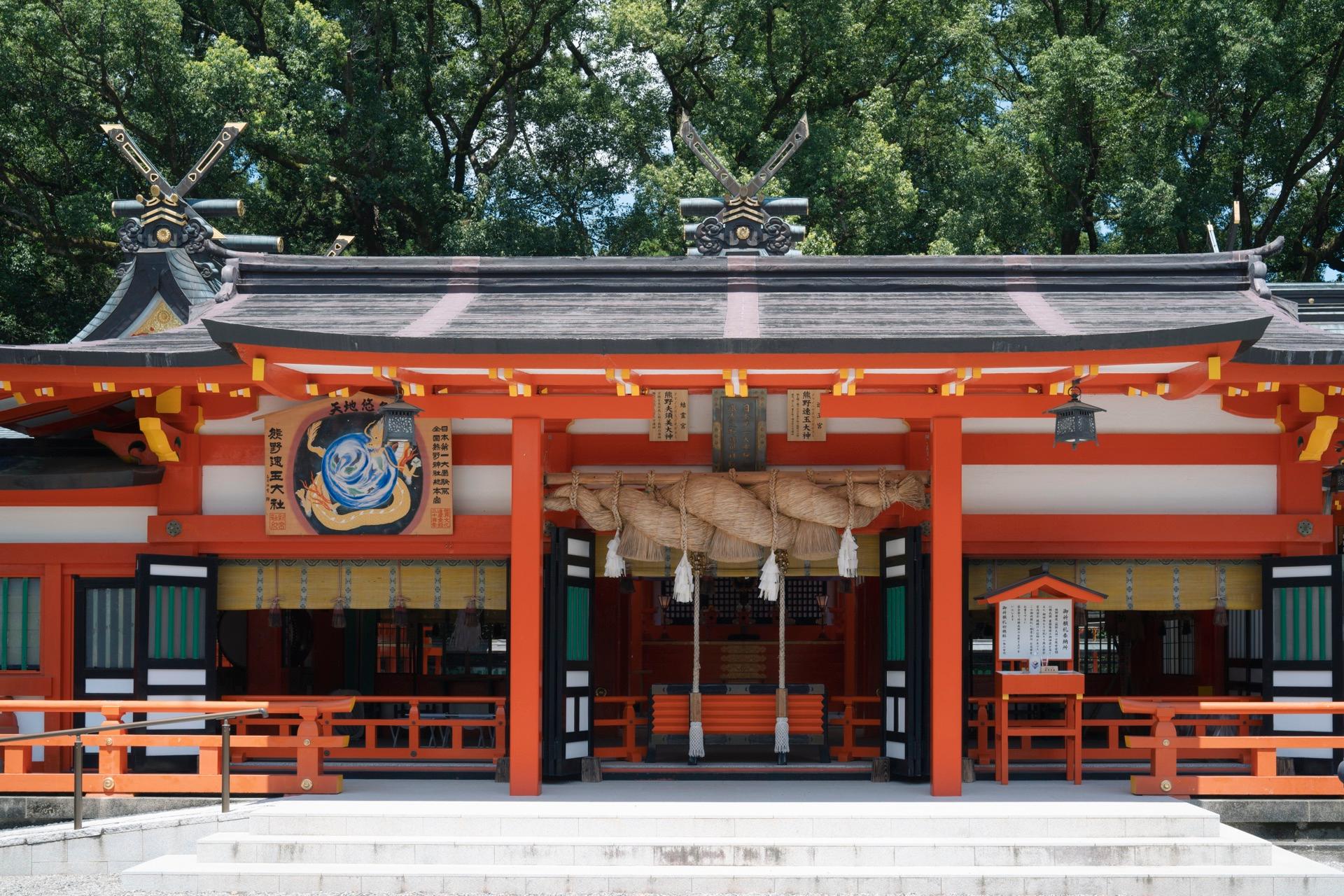
Hayatama Taisha is known for its striking vermilion-lacquered shrine buildings. Within its grounds stands a nagi tree that has been cherished since ancient times. The deity was welcomed down from Mt. Kamikura and enshrined on the flat land of the town — in other words, a "new shrine" (shingu). This is said to be the origin of the place name "Shingu."
The Recommended Order: Kamikura Shrine → Hayatama Taisha
We recommend visiting the original shrine, Kamikura, first, followed by the new shrine, Hayatama Taisha.
- The stone steps at Kamikura Shrine are steep and uneven, so it's safer to tackle them in the morning while you still have energy.
- Descending from the source to the town naturally traces the relationship between the two shrines.
- After coming down, you can take your time worshipping at the vermilion halls below.
In seasons with shorter daylight, going to Kamikura Shrine first is especially wise, so you can finish the steps while it's still bright out.
A Half-Day Model Itinerary (Approximate)
1. From JR Shingu Station, head to Kamikura Shrine within walking distance.
2. Climb the stone steps at a relaxed pace, pausing at Gotobiki-iwa.
3. After descending, walk through town to Hayatama Taisha.
4. Worship at the grounds, admiring the nagi tree and the vermilion halls.
5. If time allows, stop for lunch or a break in town.
The two shrines are close enough to connect on foot, so you won't lose time to transport. That means you can settle into each shrine properly — which is the real beauty of this pairing.
Preparation and Mindset Before You Walk
- Footwear: The stone steps at Kamikura Shrine are uneven and slippery after rain, so wear shoes with good tread.
- Luggage: Pack light in a backpack so both hands are free.
- Drinks: Prepare a drink before you start climbing.
- Mindset: If you get out of breath, don't push yourself — rest along the way.
For specific information such as opening hours and worship etiquette, please check each shrine's official guidance before visiting.
Walking Both, Touching Kumano's "Beginning"
The boulder on the mountaintop and the vermilion halls in town. Though they look contrasting, they share the same root. A half-day spent visiting Kumano Hayatama Taisha and Kamikura Shrine together also serves as a quiet primer for appreciating the Kumano Sanzan more deeply. When you stop by Shingu, be sure to connect the two along a single thread.
Image: 熊野速玉大社 (via (公社)和歌山県観光連盟)


