 LOCAL FIT KUMANOBack to list
What is Kumano Gongen? Starting with the Name
If you spend time researching Kumano, you'll often come across the term "Kumano Gongen." To put it simply, Kumano Gongen is the name given to the deities enshrined at the Three Grand Shrines of Kumano (Kumano Sanzan), based on the idea that they are manifestations of Buddhas. It is a name from an era when Shinto and Buddhism were deeply intertwined, and you can still find it today on old signs, in place names, and in local legends.
What Does 'Gongen' Mean?
The character "gon" (権) means "provisional" or "temporary," and "gen" (現) means "to appear." In other words, a gongen is "a Buddha who has temporarily taken on the form of a Japanese deity (kami) in order to save the people."
This idea is based on the concept of honji suijaku, which spread around the Heian period. It held that the true form (honji) was a Buddha, and that Japanese kami were their temporary manifestations (suijaku). Rather than separating kami and Buddhas, people embraced them together as part of a single spiritual world.
The Three Gongen and Their Original Buddhist Forms
The deities of Kumano are enshrined at three shrines — Hongu, Shingu (Hayatama), and Nachi — and are collectively known as the Kumano Sansho Gongen (Three Gongen of Kumano).
Kumano Hongu (Ketsumiko-no-Okami)
The original Buddhist form is said to be Amida Nyorai (Amitabha), the Buddha who guides souls to the Pure Land. This fits beautifully with Kumano's image as a "land of death and rebirth."
Kumano Hayatama (Kumano Hayatama-no-Okami)
The original Buddhist form is said to be Yakushi Nyorai (the Medicine Buddha), who heals illness.
Kumano Nachi (Kumano Fusumi-no-Okami)
The original Buddhist form is said to be Senju Kannon (the Thousand-Armed Kannon). This connection is often spoken of in relation to Nachi Falls and the tradition of mountain ascetic practice.
The pairings between the enshrined deities and their original Buddhist forms can vary slightly depending on the era or the source. Checking the signs and explanatory notes at each shrine during your visit will deepen your understanding.
Why Kumano Gongen Spread Across Japan
During the medieval period, retired emperors and aristocrats made repeated pilgrimages to Kumano, and the practice gradually spread to common people as well. Alongside this came the custom of "kanjo" — inviting the deities of Kumano to be enshrined in one's hometown. There are said to be countless shrines across Japan bearing the name "Kumano Shrine," so if you spot the name "Kumano" on your travels, it can be a delight to trace the connection back.
How Did the Name Change After the Meiji Era?
With the separation of Shinto and Buddhism in the Meiji era, there was a movement to remove Buddhist elements from shrines, and the term "gongen" became less used in official contexts. Even so, the affectionate name "Kumano Gongen-san" still lives on today in the conversations of local people, in old documents, illustrations, and folklore.
Three Things to Look Out for on Your Visit
- Quietly compare the three shrines: Take in the differences in atmosphere and feeling at each precinct.
- Watch for the words 'gongen' and 'honji' on signs: You'll find traces of the fusion of Shinto and Buddhism.
- Walk the stone steps and ancient paths with imagination: Picturing how people of old walked these paths to meet kami who were manifestations of Buddhas can change how the road itself appears to you.
In Summary
Kumano Gongen is the name given to the deities of Kumano, based on the belief that "Buddhas appear in the form of kami." Knowing the meaning behind the word makes a pilgrimage to the Three Grand Shrines all the more meaningful. Rather than overthinking it, simply feel that "this is a land where both kami and Buddhas have long been cherished together," and let yourself breathe in the air of Kumano.
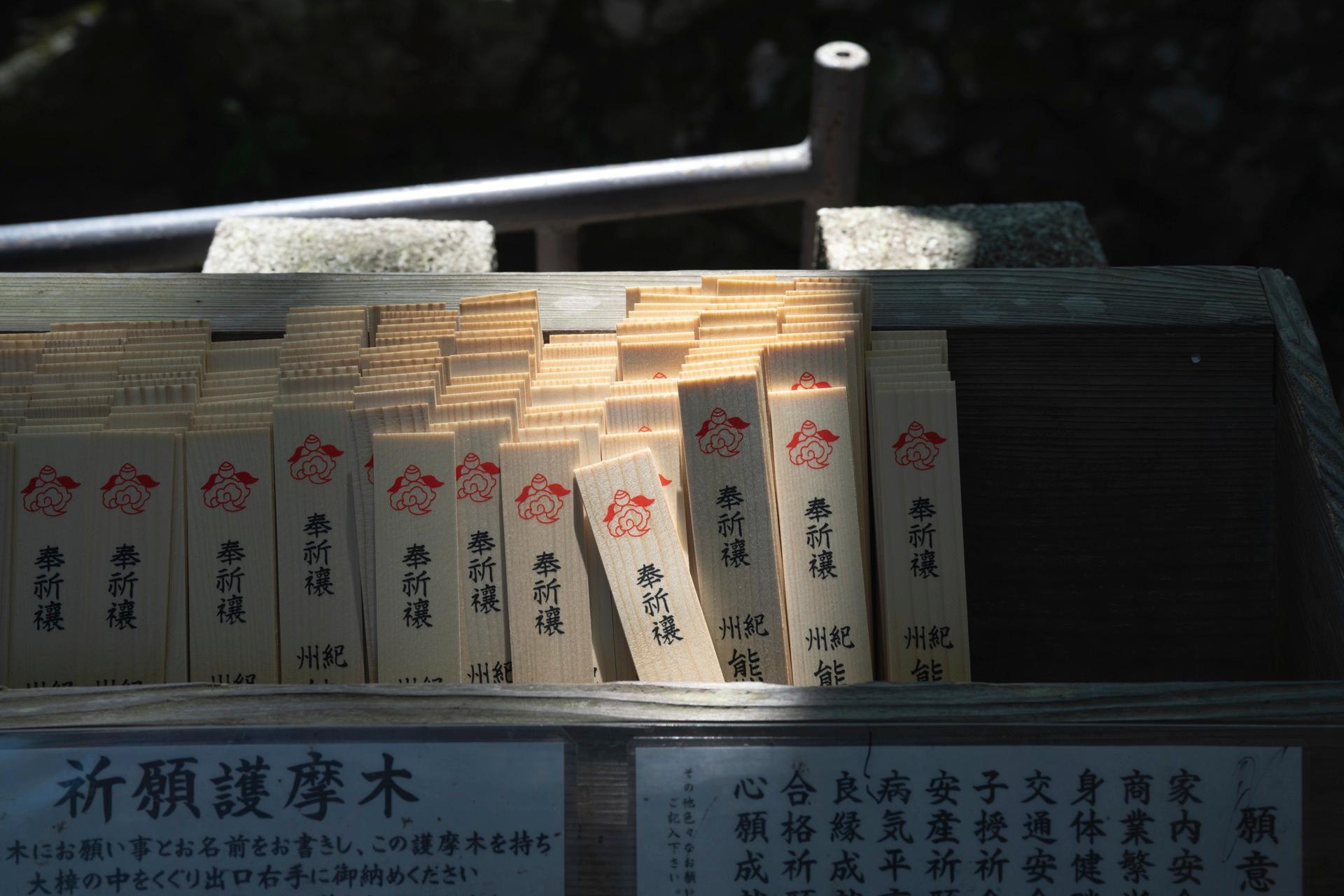
Image: 熊野那智大社 (via (公社)和歌山県観光連盟)


