 LOCAL FIT KUMANOBack to list
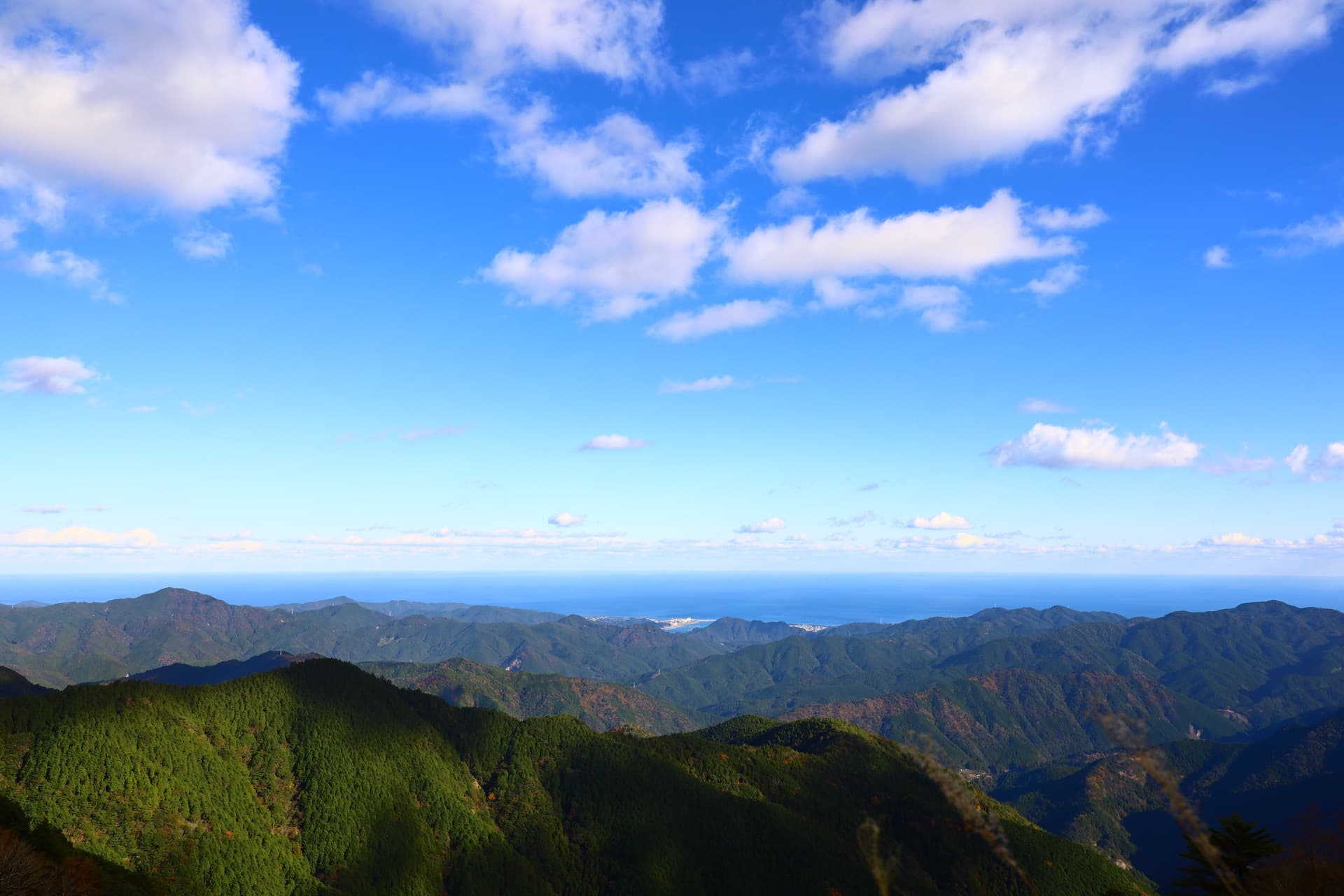
When people think of Kumano, many imagine deep forests, waterfalls, and rising steam from hot springs. But the same Kumano also has a rugged coastline where the waves of the Pacific have been carving the rocks for ages. Oniga-jo ("Ogre's Castle") and Shishi-iwa ("Lion Rock") in Kumano City, Mie Prefecture, are representative examples. Let's head out to see the seaside face of Kumano, so different from its mountainous side.
Oniga-jo: A "Corridor of Rock Carved by Waves"
Oniga-jo is a long rock wall facing the Kumano-nada Sea. It is said to have been formed by a combination of marine erosion and tectonic uplift, and its surface bears holes, hollows, and horizontal stripes that suggest the power of the waves.
Observing the Rock Up Close
As you approach the rocks, the first thing that catches your eye is the rough texture of the walls. In some places, small holes line up like a honeycomb; in others, caves open wide like gaping mouths. Looking up at the rocks from your feet is far more overwhelming than any photo can convey.
On the flat part of the rocks there is an expanse known as "Senjojiki," from which the sea opens up with a full, wide horizon. The sound of the crashing waves will resonate deep in your body.
The Origin of the Name "Oni" (Ogre)
According to legend, an ogre made the rocky cave its stronghold and ran wild until it was eventually slain. The details of such stories vary from region to region. Please check the on-site information boards and exhibits to learn more about the origins. When you see this rugged terrain, it's easy to imagine why people came to associate it with ogres.
Shishi-iwa: The Pleasure of Viewing from Afar
A short way along the coast from Oniga-jo, you'll find Shishi-iwa. The rock looks as if it has lifted its head toward the sea, and because it resembles a lion roaring, it is said to have earned this name.
You can certainly approach to feel the rock's presence up close, but it's also worth stepping back and viewing it together with the sea and sky in the background. In the morning and evening, the shadows on the rock sharpen and its expression changes.
Tips Before You Walk
- Prioritize waves and weather above all. Do not approach the rocks on days when the sea is rough or the wind is strong. The accessible areas may vary from day to day.
- The footing is slippery. Wet rocks are more slippery than you might expect. Wear comfortable walking shoes and proceed slowly, without rushing.
- For children and those unsure on their feet. Choose routes with handrails or fences, and don't push yourself to go too far in.
- Check the latest information. Before heading out, please check visiting hours and local conditions with the Kumano City tourist information services.
Seeing the Sea After the Mountains of Kumano
After spending quiet time on the Kumano Kodo or at the shrines, listening to the roar of the waves at Oniga-jo and Shishi-iwa makes you truly appreciate the breadth of this land called Kumano. The stillness of the forest and the power of the sea—knowing both adds great depth to your journey through Kumano.
Between other Kumano excursions, we highly recommend taking a detour to these seaside rocks.
Image: 熊野灘 (via (公社)和歌山県観光連盟)


