 LOCAL FIT KUMANOBack to list
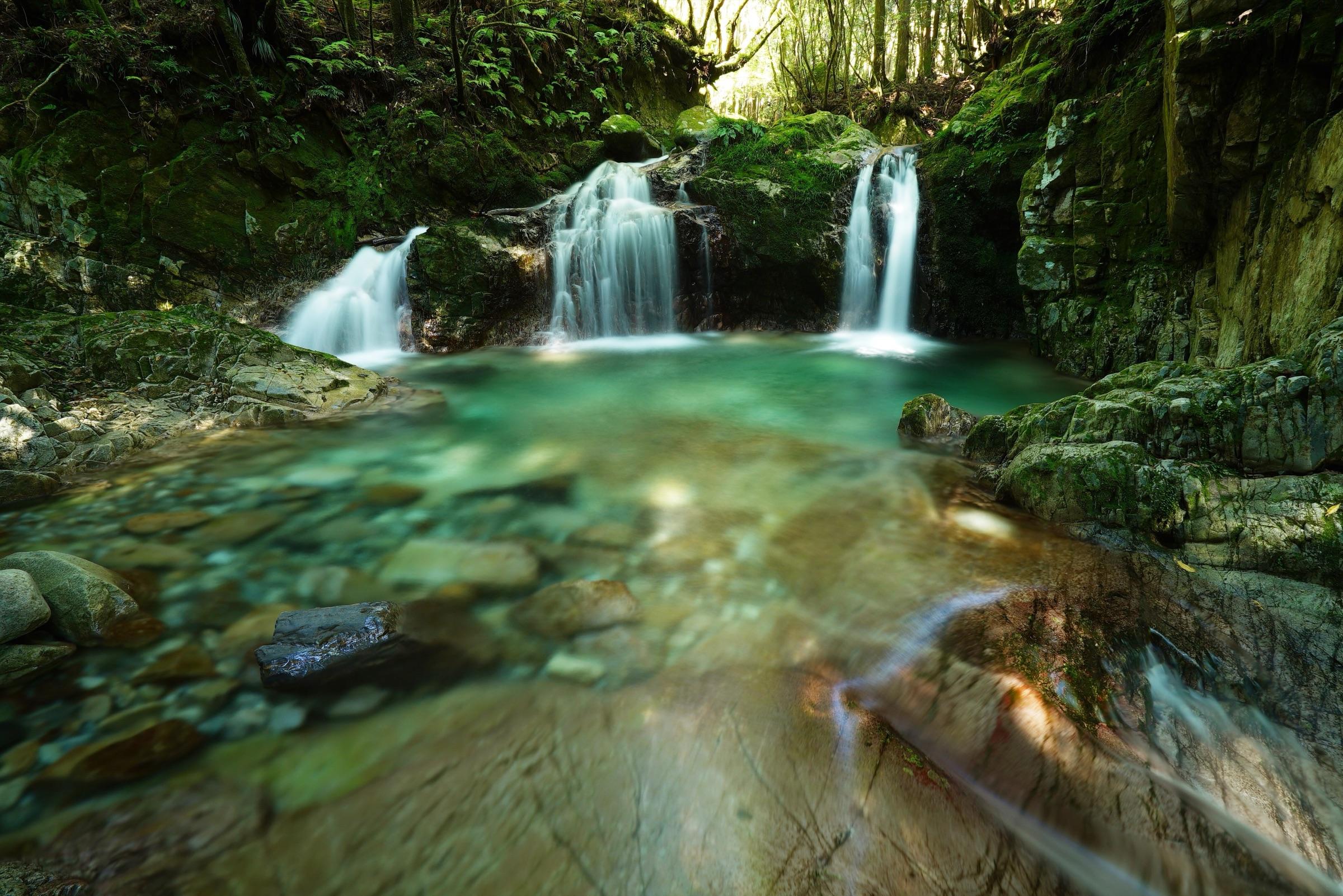
Mushikui-iwa in Kozagawa: A Side-Trip Spot to Meet a "Rock Full of Holes"
Along the clear streams flowing through the town of Kozagawa, you'll find not only vast monolithic cliffs but also smaller yet strikingly memorable rock formations. One of them is Mushikui-iwa (literally, "insect-eaten rock"), named for the many small holes lined up across its surface.
From a distance, the rock looks as if insects have nibbled at it, but of course no bug is responsible. It is a work of landform art, carved patiently by nature over immense stretches of time.
The Holes of Mushikui-iwa Are a Weathering Feature Called "Tafoni"
The honeycomb-like holes that form in rock are known in geology as tafoni. They are generally explained as the result of moisture and salts seeping into the rock, combined with repeated cycles of wetting and drying, which gradually erode the weaker parts.
Even in the same rock, the harder sections remain while the more fragile parts are worn away. That contrast appears as differences in the size and arrangement of the holes. Walking here with the perspective of the Nanki-Kumano Geopark in mind makes the rock face far more intriguing.
Three Points to Watch For
- Compare the shapes of the holes: Look for differences among round holes, horizontally elongated holes, and overlapping ones.
- Be aware of the angle of light: When the sun strikes the surface at an angle, the shadows inside the holes become sharply defined.
- Step back and view the whole: After moving close to count the holes, step back and see the surface as a pattern—the impression changes.
Facing an Unusual Rock: "Making a Wish" as a Small Ritual to Steady the Heart
The massive and unusual rocks along the Koza River have stirred people's imaginations since long ago. Seeing a rock pierced by so many holes, some may feel that "wishes could slip inside," or that "something might dwell there."
That said, we have not been able to confirm reliable information about any established wish-making custom specific to Mushikui-iwa. For that very reason, we recommend a quiet wish of your own making.
1. Take a deep breath in front of the rock, and silently put into words just one thing you hope for right now.
2. Choose one hole as your "marker for the day," and look at it steadily.
3. On your way back, decide on one small action you can take tomorrow toward that wish.
Please avoid placing objects on the rock, throwing stones into the holes, or damaging the surface in any way. We think a wish is best when it's something you "carry home with you."
Safety and Etiquette to Know Before You Visit
- Do not climb the rock face, and avoid getting too close to loose, crumbly footing.
- Along the road, watch for passing cars and bicycles, and only stop in safe locations.
- The surrounding area is also where people live. Please keep your voices down, take your trash with you, and enjoy the scenery quietly.
- After rain or on windy days, there is a higher risk of falling rocks and unstable footing. Don't push yourself to visit—check the weather and road conditions in advance.
- Access to viewing areas and parking availability may change, so it's reassuring to check the latest information with the town's tourism office before setting out.
Travel Reflections: The Scale of Time Taught by a Small, Unusual Rock
Mushikui-iwa is not a flashy tourist attraction. Yet standing before its countless holes, it's impossible not to think of the tens of thousands of years that wind and water have spent polishing the stone.
On your trip through Kozagawa, take a moment to pause not just for the grand vistas, but also for small wonders like this. A few quiet minutes spent gathering your wishes before a hole-pocked rock may just add a little more depth to the memories of your journey.
Image: 古座川 (via (公社)和歌山県観光連盟)


