 LOCAL FIT KUMANOBack to list
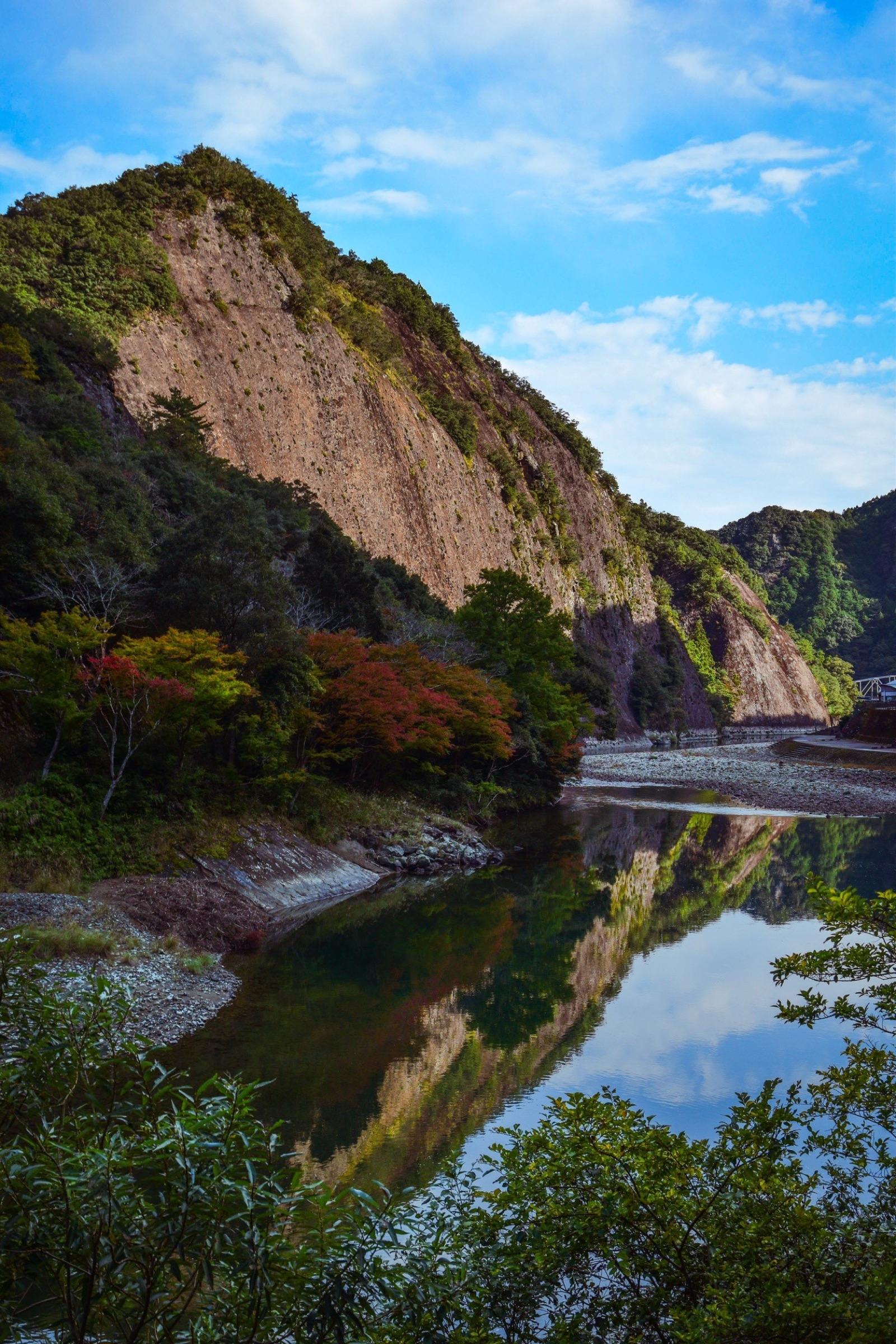
Another Face of Nanki, Deep Beyond the Coast
When you mention Kushimoto, many people picture seaside scenery like Hashikui-iwa or Cape Shionomisaki. But if you drive inland from the mouth of the Kozagawa River, following it upstream, the landscape gradually shifts to the quiet of the mountains. Along the way, suddenly appearing in your field of vision is Kozagawa's Ichimai-iwa (literally, "single slab rock").
Across the river rises a huge rock face, bare of trees. First-time visitors usually stop their car and look up, wondering, "Where does the rock end?" Travels in Kumano tend to focus on shrines and ancient pilgrimage routes, but places like this—where nature itself is the star—help balance the rhythm of a trip.
What Kind of Place Is Ichimai-iwa?
Ichimai-iwa is part of the "Kozagawa Arc-shaped Dike," which stretches along the Kozagawa River basin, and is designated a National Natural Monument. It's often described as rock formed by ancient volcanic activity, revealed over long ages of erosion.
For exact figures on its scale, it's best to check the information boards or the town's official sources. But when you actually stand before it, what strikes you is how it presses in on you as a sheer "surface"—far more than any photograph can convey.
It's Not Just About the Rock
- The Kozagawa River flowing in front: In shallow spots you can see straight through to the riverbed, and the transparency of the water contrasts beautifully with the gray of the rock
- The surrounding green mountains: The colors framing the rock change with each season
- The silence: Once the sound of cars fades, you can clearly hear the water and the birds
Its Expression Changes by Time of Day
The rock face looks completely different depending on how the light falls on it.
1. Morning: Soft light brings out gentle shadows on the rock
2. Midday: The rock appears bright and whitish, while the river's surface sparkles
3. Evening: It takes on a slight reddish tint, with a calm, mountain-valley atmosphere
There's no single "right" time, but if you're heading out from an inn in Kushimoto or Nachikatsuura, arriving in the early morning gives you more leeway on the return trip.
Things to Know Before You Go
Getting There Essentially Requires a Car
Public transportation in the Kozagawa basin is limited, so it's reassuring to arrange transportation—rental car, taxi, or shuttle from your lodging—ahead of time. Some stretches of the mountain roads are narrow, so give yourself plenty of time.
Don't Get Too Close to the Rock or the River
Beneath the rock face and along the riverbank, footing can be wet, and there's a possibility of falling rocks. Follow the posted guidance and enjoy the view from safe vantage points. If you plan to play in the river, check the water level and weather beforehand, and don't push your luck after rain.
Treat It as a Casual Stop
Ichimai-iwa isn't a place to squeeze into a packed itinerary. Linger on a bench or at the roadside, listen to the river. That alone is enough to feel satisfied—it's that kind of quiet scenery. Combined with coastal sights around Kushimoto like Hashikui-iwa or Cape Shionomisaki, you can enjoy the contrast of "sea and river" in a single day.
In Summary
Kumano has a strong image as a land of pilgrimage, but deep in Nanki there's also time simply to face a great rock and clear waters. Kozagawa's Ichimai-iwa is just the right place when you want to slip a deep breath into your travels.
For access, viewing rules, and nearby stops, check the latest information from Kozagawa Town or the local tourism association before heading out.
Image: 古座川 一枚岩 (via (公社)和歌山県観光連盟)


