 LOCAL FIT KUMANOBack to list
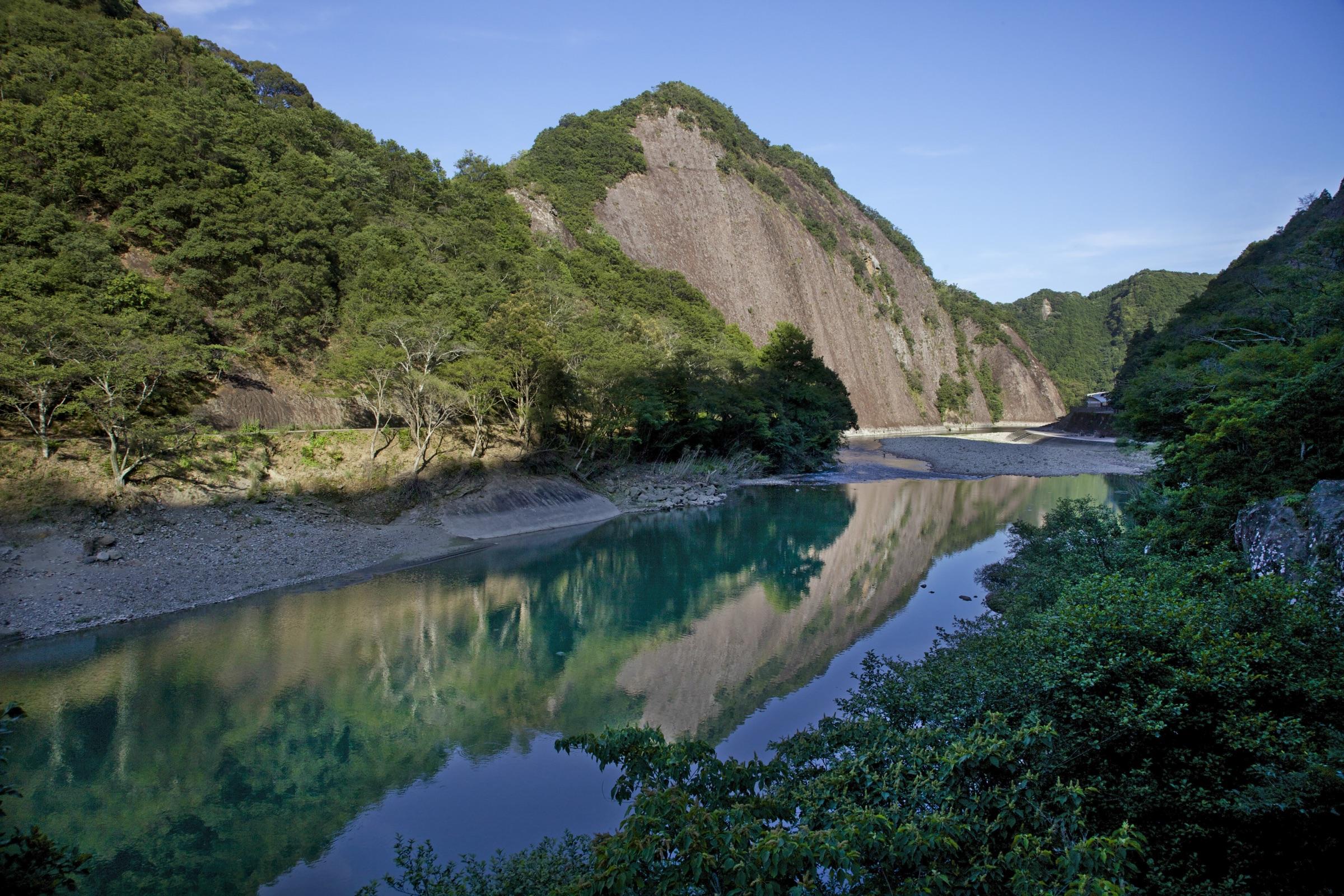
From the sea into the mountains, upstream along the Kozagawa
When people think of Kumano, many picture Nachi Falls or the ancient pilgrimage routes. But if you leave the Kushimoto coast and head inland along the Kozagawa River, you'll meet a different side of Kumano: clear-flowing water and towering, whitish rock walls rising from the mountain valleys.
In this article, we focus on two highlights of the Kozagawa basin — Ichimai-Iwa (the "One-Rock" wall) and Mushikui-Iwa (the "Insect-Eaten Rock") — and share how to spend a leisurely half-day of driving and side trips.
Ichimai-Iwa: a rock wall that leaves you speechless the closer you get
Ichimai-Iwa is a massive rock wall that rises on the far side of the Kozagawa River. Even if you've imagined it from photos, when you look up at it in person, the rock seems to stretch all the way to the edge of your field of view.
Tips for viewing
- Stand back a little from the front: If you get too close, you can't take in the whole wall. Viewing it from a slightly distant spot along the river lets you take in the full sweep of the rock face.
- Be aware of the angle of the light: In the morning and evening, the shadows on the rock face deepen; at midday it looks whitish and bright. The same spot shows different expressions throughout the day.
- Look at the river at your feet, too: The contrast between the imposing rock and the calm river flowing in the foreground is quintessential Kozagawa scenery.
This rock is said to have been formed by ancient volcanic activity. Gazing at it while thinking, "something that happened millions of years ago is standing right in front of me as a wall," shifts your sense of time a little.
Mushikui-Iwa: a mysterious rock full of holes
In contrast to Ichimai-Iwa, Mushikui-Iwa is pocked with countless holes, big and small. It's sometimes likened to a beehive. The patterns were carved over long stretches of time by wind and rain, and the impression changes depending on where you stand.
If you're with kids, try asking them, "Why do you think the holes are there?" It's a place where you can observe nature's sculpting work just as it is.
How to plan a half-day stroll
1. Start by seeing the sea at Kushimoto: Take in coastal scenery at places like Hashigui-iwa before heading into the mountains — the contrast between sea and river adds to the fun.
2. Drive slowly along the Kozagawa: Just driving while watching the river is a pleasant road. Find places to pull over and take frequent breaks.
3. See Ichimai-Iwa and Mushikui-Iwa: For both, the mood is less about lingering long and more about gazing quietly.
4. Head back while it's still light: In the mountain valleys, it gets dark quickly once the sun tilts, so plan your return with plenty of time to spare.
Before you set out
- Some sections of road are narrow: Watch for oncoming cars and signs of falling rocks, and keep your speed modest.
- Be careful of the river's condition after rain: The river rises easily. Don't force your way close to the water's edge.
- Mobile reception can be weak in places: Check your map in advance, and it's reassuring to top up on gas and drinks early.
- For business hours and road conditions, check the latest information at local tourist information centers before you set out.
A word from the editors
Because a Kumano trip tends to be strongly associated with shrines and ancient paths, slotting in places where nature itself is the main character softens the overall rhythm of the journey. The giant rocks of the Kozagawa are places not for "doing" something, but simply for "looking up." When you're tired from walking, try adding a slice of time like this to your trip.
Image: 古座川 一枚岩 (via (公社)和歌山県観光連盟)


