 LOCAL FIT KUMANOBack to list
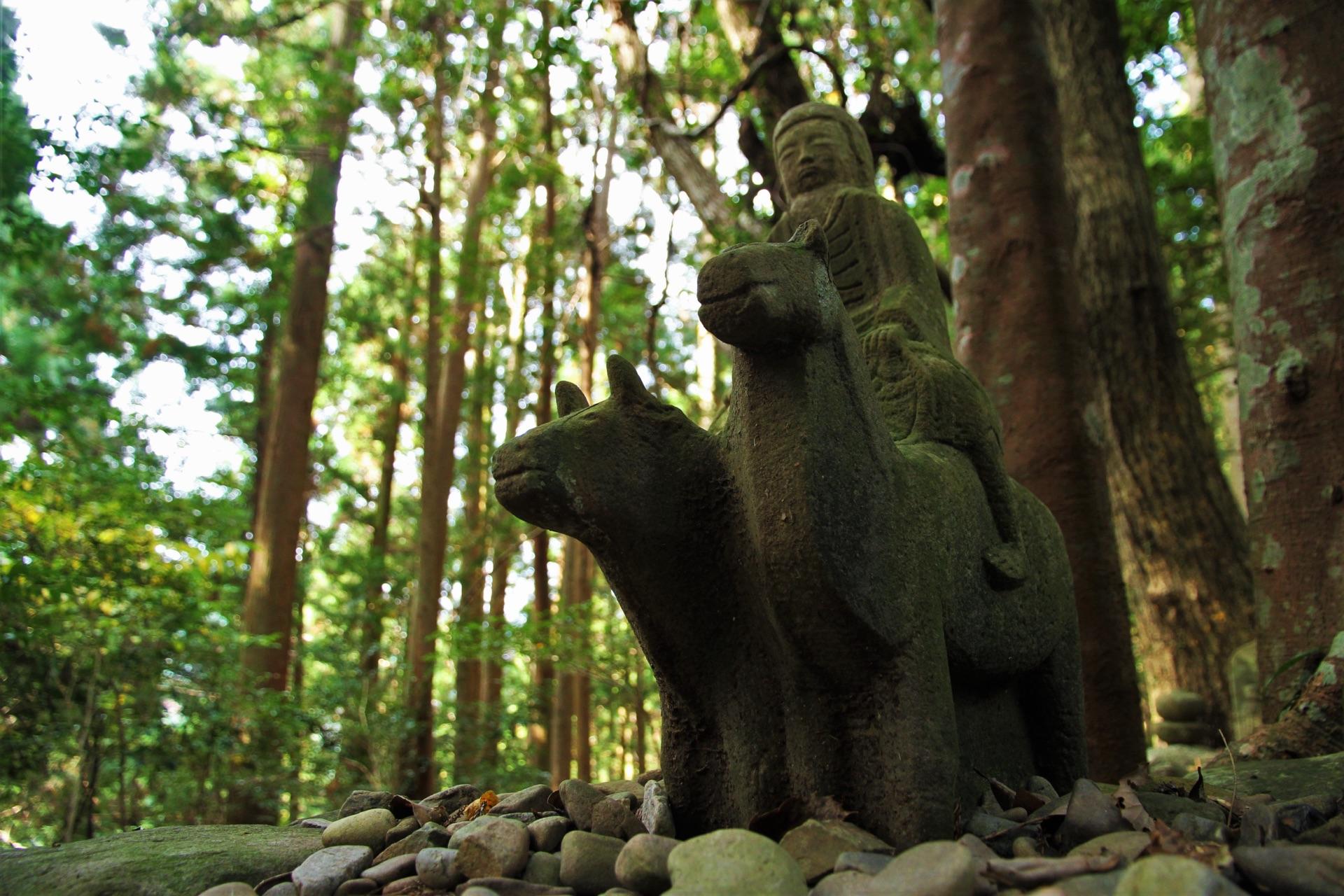
A Small Traveler You Meet by the Roadside at the Pass
Walking the Kumano Kodo Nakahechi, you come across 'small encounters' that feel a little different from the grand shrine halls and great trees. One of the most beloved is the Gyuba Doji (literally, 'ox-and-horse child'), a small stone statue standing near Hashiori Pass in Nakahechi-cho, Tanabe City.
The statue is quite tiny, looking as if it is sitting quietly by the side of the path. Its simple, endearing expression has made it a classic photo spot for Kumano Kodo walkers.
What is the Gyuba Doji? The Legend of Emperor Kazan
The Gyuba Doji is said to depict Emperor Kazan (Kazan Hoo) of the Heian period on his pilgrimage to Kumano. Because the figure appears to be a child traveling on horseback, it came to be known by this affectionate name.
The statue itself is thought to have been made in the modern era rather than in ancient times. However, since there are various theories about its exact origin, it's best to enjoy it while reading the on-site information board.
A Story Behind the Name 'Hashiori Pass' Too
The name of the pass itself also carries a story tied to the emperor. According to legend, when he was about to eat a meal and had no chopsticks, he broke off nearby kaya (miscanthus grass) stems to use as substitutes—hence 'Hashiori' (broken chopsticks) Pass.
The true origin can't be pinned down to a single source, but one of the charms of the Kumano Kodo is how layers of stories cling even to a single place name.
The Pleasure of Setting Out from the Village of Chikatsuyu
A favorite starting point for meeting the Gyuba Doji is Chikatsuyu, a village nestled in the mountains along the Nakahechi. After paying respects at Chikatsuyu-oji and taking in the atmosphere of the village, you set off toward the pass. Little by little, the main character of the walk shifts from 'signs of daily life' to 'forest and ridgeline.'
Things to Prepare Before You Walk
- Check trail conditions: The ground can become muddy after rain. Check the latest information before heading out.
- Plan your transportation: Buses are infrequent in this area, so arranging both your outbound and return transport in advance brings peace of mind.
- Wear shoes you're used to walking in: The route mixes paved roads and dirt paths, so non-slip footwear is best.
- Bring water and light snacks: Once you leave the village, places to restock become scarce.
Pause for a Moment in Front of the Statue
Rather than a bustling famous site, the Gyuba Doji is a place where passing travelers quietly pause. Take a breath in front of the statue first. If other walkers are around, a friendly 'after you' exchange makes for a pleasant moment.
A Small Note on Etiquette When Taking Photos
Please don't touch or climb on the statue. This stone figure is a precious presence that has weathered wind and rain over many years. In the soft light of early or late day, its expression comes out looking warm in photographs.
In Summary
Among the sites along this World Heritage route, the Gyuba Doji is one you can meet with a relaxed heart. Keeping the story of Emperor Kazan and the name of Hashiori Pass in a corner of your mind as you walk will enrich what might otherwise feel like a simple satoyama stroll. From the village of Chikatsuyu up to the pass, savor this one scene of the Nakahechi at your own pace.
Image: 熊野古道中辺路 牛馬童子 (via (公社)和歌山県観光連盟)


