 LOCAL FIT KUMANOBack to list
Gotobiki-iwa Is a Place to Savor Through the Time You Spend Walking
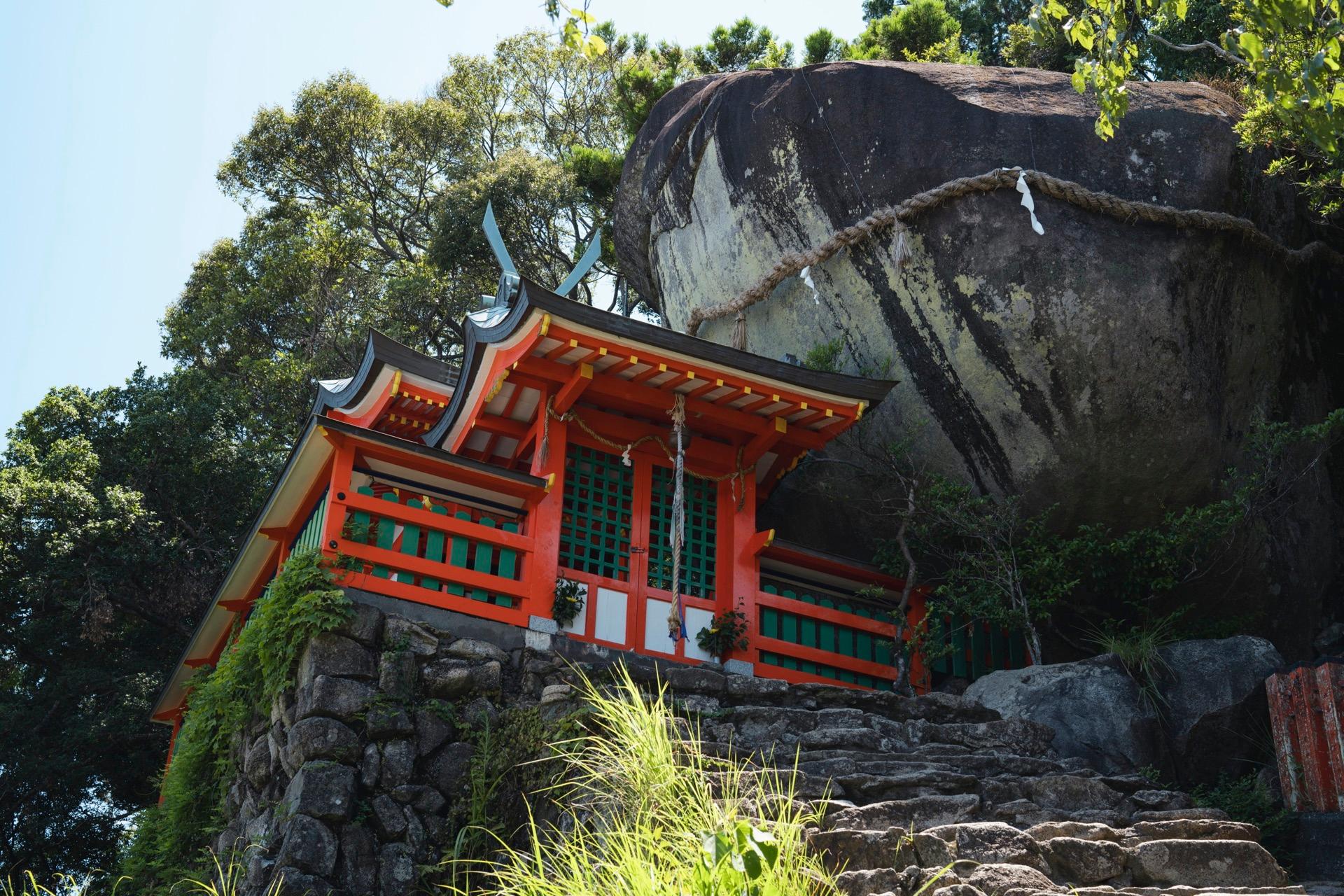
Just behind Shingu's downtown, rising from the mid-slope of Mt. Kamikura, stands Gotobiki-iwa. "Gotobiki" is the local word for toad — the massive, squatting boulder has long been likened to a crouching toad, which is how it earned its name. Enshrined as the sacred body (go-shintai) of Kamikura Shrine, the rock has been an object of worship since ancient times.
To answer the most common question up front: allowing around 40 minutes to 1 hour for the round trip plus time spent in front of the rock is a safe estimate. That said, the actual time varies greatly depending on your fitness, the crowds, and the weather, so treat this only as a rough guide.
Thinking About the Time in Three Parts
① The Ascent | Almost Entirely Stone Steps
To reach Gotobiki-iwa, you pass under the torii gate and climb a steep flight of stone steps that look as though natural rocks have simply been stacked. There are said to be over 500 steps, and the incline is notoriously steep. If you plan to take your time and rest along the way, budgeting about 20–30 minutes will keep you from feeling rushed. When you're out of breath, don't hesitate to stop and turn around. The further up you climb, the more the townscape of Shingu opens up below.
② In Front of the Rock | About 10–15 Minutes
At the top of the climb, the great rock waits quietly. First catch your breath, press your hands together in prayer, and take in the texture of the stone and the surrounding trees. The view spreading out below is another highlight. Allowing 10–15 minutes for the view and a moment of prayer lets you enjoy the spot without feeling hurried.
③ The Descent | As Careful as the Climb
The descent takes more time than many expect. Because the steps vary in width and height, you'll want to watch your footing on every step, so plan on about 15–25 minutes to give yourself some breathing room. If your knees are a concern, build your plan around the descent rather than the climb.
Situations Where It Takes Longer
- After rain or in the morning dew: Wet stone steps become slippery, and your pace will naturally slow.
- During busy periods: Especially around the annual Oto Matsuri (Fire Festival) in February, the way the shrine handles visits and access to the mountain may differ from normal. Please check the latest official information from Shingu City or the shrine in advance.
- When taking photos: The scenery is so inviting that it's easy to linger.
Tips for the Day
1. Work backward from sunset: There is little lighting on the stone steps. To be sure you finish descending while it's still bright, we recommend starting your climb at least 1.5 hours before sunset.
2. Wear easy-to-walk-in shoes: Avoid sandals or dress shoes; non-slip sneakers are the safest choice.
3. Keep your hands free: Travel light, and use a backpack or shoulder bag so both hands are free.
4. Bring a little water: Even on a short route, the steep climb will have you sweating.
Fitting It into Your Shingu Itinerary
Even though Gotobiki-iwa takes only about an hour, the physical effort is real. Placing it at the very beginning or end of your day's plans — with time to rest before or after — works best. We cover getting here from the station and combining the visit with Kumano Hayatama Taisha in other articles.
The time spent climbing is itself part of the preparation for standing before the rock. Rather than fixating on the numbers, go one step at a time at your own pace, and visit this "original sacred site" of Shingu.
Image: 神倉神社 (via (公社)和歌山県観光連盟)


