 LOCAL FIT KUMANOBack to list
Before asking "how many minutes," decide "who you're going with"
Kamikura-jinja Shrine rises above the town of Shingu, and at the top of its stone steps sits the great sacred boulder known as Gotobiki-iwa. Many people search for the "time required," but the truth is, even on the same path, the time needed varies considerably from person to person.
Numbers are only a guideline. Between a sure-footed adult going up and back without a break, and someone climbing slowly to take in the views, it wouldn't be surprising if the times differed by nearly double. What matters is not "what's the shortest time possible," but "how much time should we allow for ourselves."
Know the character of these stone steps
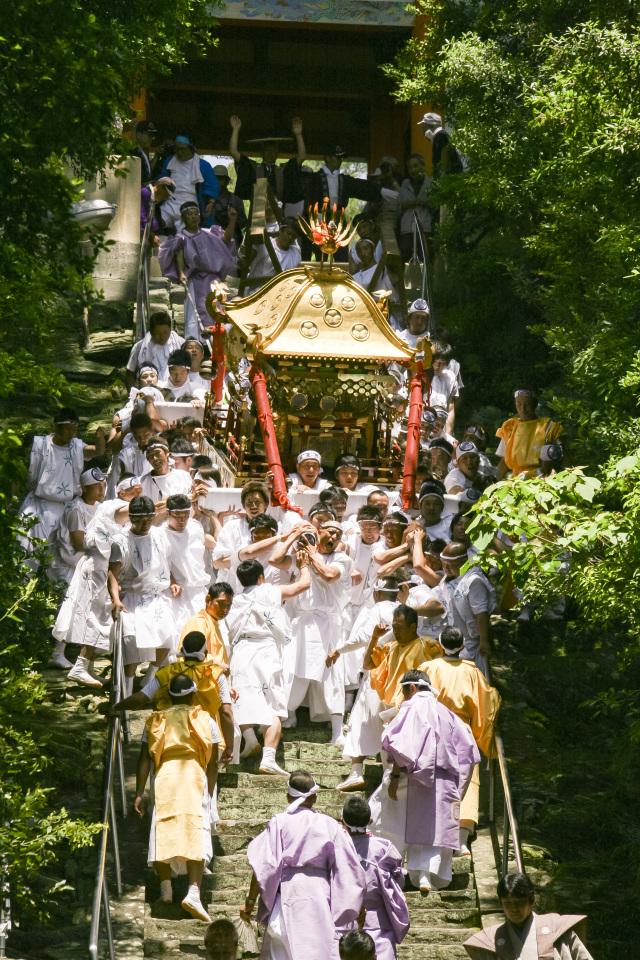
The approach to Kamikura-jinja is made of rustic steps built from natural stones stacked together. They're said to number over 500, and in places the height and width of each step are uneven. If you approach them as you would a flat sidewalk, your legs will feel it more than you expect.
In return, the view from the top is extraordinary. The townscape of Shingu and the sweep toward the Kumano Sea are worth savoring — including the time it takes to catch your breath. It would be a shame to rush up, snap a photo, and head straight back.
Estimating time for different situations
Adults confident in their legs
Even with a few breaks, allowing around 30 to 45 minutes for the round trip plus time at the boulder gives you some breathing room. That said, this assumes dry steps.
Visiting with senior parents
Assuming several stops along the way, setting aside one hour to an hour and a half will put everyone at ease. The descent in particular tends to strain the knees, and people often become more cautious going down than going up. Rather than fixing "reaching the boulder" as the only goal, share with your family from the start that turning back at a scenic spot partway up is also a valid choice.
With small children
Kids climb energetically, but the large step heights and uneven footing are concerns. You'll want to be in a position to hold hands, so again plan on more than an hour. A baby carrier or stroller isn't practical for this visit. Make reasonable judgments based on the child's age and stamina.
Rainy days and after rain
The stones become slippery when wet, and extra care is needed on days with fallen leaves or moss. Allow about 1.5 times your usual time, and depending on conditions, have the courage to postpone.
Preparing not to "shorten" time, but to "protect" it
- Shoes: Wear sneakers with good tread or other shoes you're used to walking in. Avoid sandals and dress shoes.
- Water and restrooms: Taking care of these before you start climbing gives you peace of mind.
- Keep your hands free: Pack belongings into a small backpack so you can grip the handrail or steady yourself on the steps.
- Start early in the evening: The steps grow dark quickly as the sun lowers. Plan to be back down while it's still light.
Decide in advance on signs to turn back
"Can't catch your breath." "Knees shaking." "Your companion has gone quiet." When these signs appear, that's the moment to turn back. Gotobiki-iwa is a place where people have gathered their prayers over a long history. Thinking of the visit as complete only when you've safely descended, choosing to turn back partway is a fine decision in its own right.
Leave "breathing room" in your schedule before and after
So that unexpected time on the steps doesn't throw off your plans, the trick is not to pack your schedule too tightly. A little room — say, stopping for something warm in town after the climb — is what gives your travel memories a gentle shape.
Please note that on days of special events, the rules for visiting Kamikura-jinja may change. As your visit date approaches, check the latest information from Shingu City or the shrine before you head out.
Image: 和歌山フォトライブラリー (via 和歌山フォトライブラリー)


