 LOCAL FIT KUMANOBack to list
Kumano's Prayers Also Had a 'Path Toward the Sea'
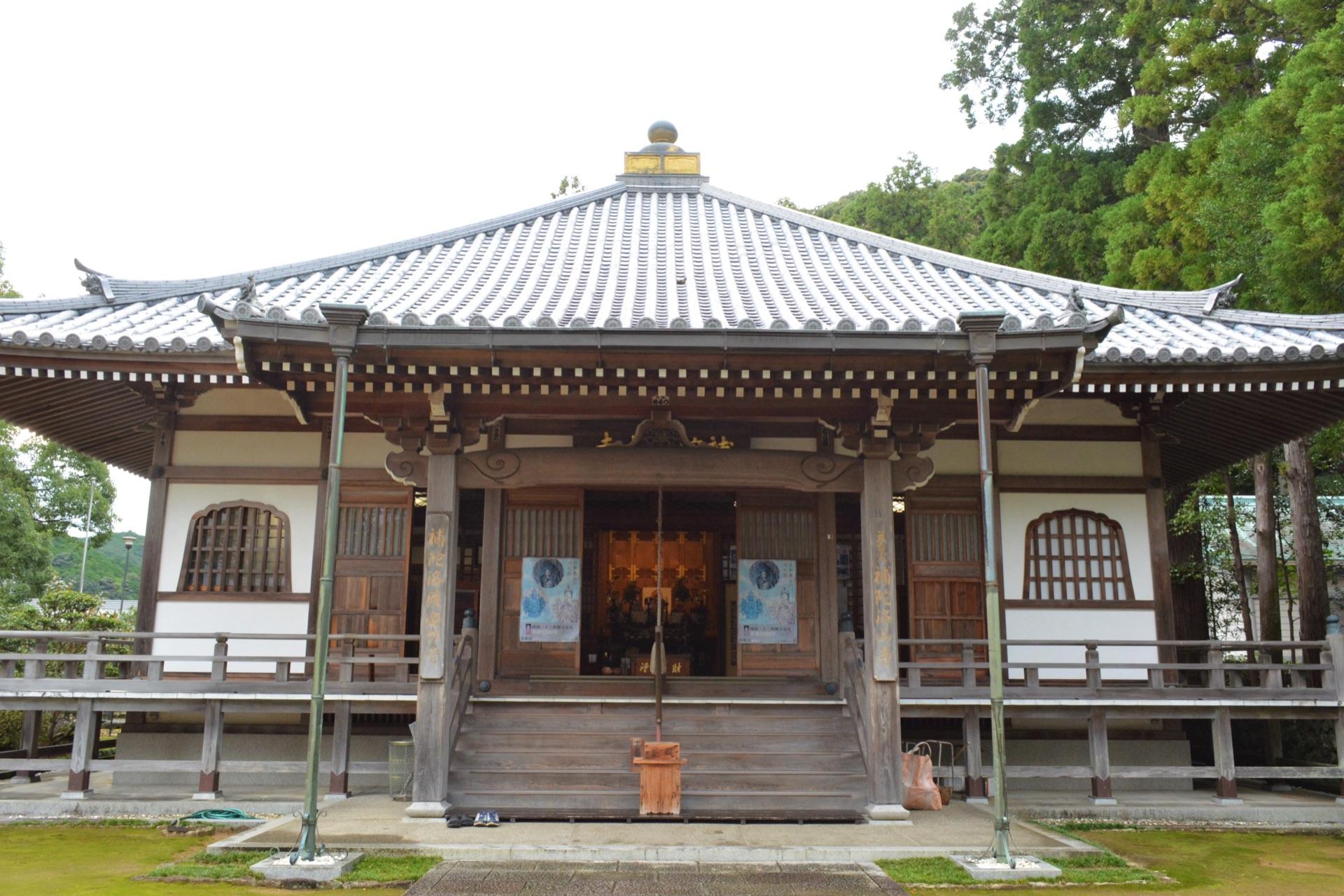
When people think of Kumano, many picture 'mountain scenery'—ancient cedar-lined trails, waterfalls, and hot springs. But when you stand at Hama-no-Miya in Nachikatsuura, you realize that Kumano's faith also opened out toward the sea. The place that tells us this is Fudarakusan-ji Temple, one of the component assets of the World Heritage site 'Sacred Sites and Pilgrimage Routes in the Kii Mountain Range.'
The sound of waves reaches close to the temple, which lies a little apart from the bustle of the main tourist areas. It has just the right stillness for a day when you feel like walking slowly.
What Is Fudaraku Tokai?
'Fudaraku' refers to the Pure Land of Kannon Bodhisattva, said to lie far across the southern sea. Believing this Pure Land lay beyond the Kumano Sea to the south, monks would row out in small boats in a practice known as 'Fudaraku Tokai' (crossing the sea to Fudaraku).
According to tradition, the vessel was a small boat topped with a cabin-like shelter. Once the monk boarded, it was sealed from the outside and sent off toward the open sea. It must have been both a rigorous ascetic practice and an act of profound prayer. Around the temple you can also find memorial stones related to the monks who undertook this crossing, quietly conveying the memory that this very beach was their point of departure.
Things to Look for on the Grounds
- The reconstructed crossing boat: Seeing how small the boat actually was makes it easier to imagine the contrast with the vast ocean.
- The main hall: Modest rather than showy, it has a calm atmosphere shaped by years of coastal wind and weather.
- Memorial stones for the crossing monks: Pay attention to the names and inscriptions, and the story slowly comes to life.
Opening hours and viewing conditions may change depending on the season, so it's a good idea to check the official information before visiting.
The Neighboring Hama-no-Miya Oji, and Tips for Your Walk
Right next to Fudarakusan-ji stands Kumano Sansho Omiwa Shrine, considered to be the site of Hama-no-Miya Oji. It is said that pilgrims who once arrived by sea would purify themselves here before heading up to Nachisan—making it, in a sense, the 'seaside gateway.' Walking from the temple to the shrine, you can feel how the prayers of sending off and the prayers of welcoming overlapped on this same beach.
A Little Preparation Before You Walk
1. Bring an extra layer for the sea breeze: Even in summer, the beach can be windy.
2. A short visit is enough: The grounds are not large, so it's nice to pair it with a leisurely walk along the beach.
3. Read a bit about the history beforehand: A little background changes the way you see the small boat.
Take Time to Gaze at the Sea, Before or After Nachisan
After a journey of 'going upward' at Nachi Falls or Daimon-zaka, descend to the beach and gaze out at the horizon. Arranging your trip this way lets you feel, with your whole body, how Kumano's faith spanned both mountain and sea.
What were the people who sent those boats off thinking as they looked at this sea? There is no clear answer, but perhaps the time spent pondering while listening to the waves is itself the greatest gift this place has to offer.
Image: 補陀洛山寺 (via (公社)和歌山県観光連盟)


