 LOCAL FIT KUMANOBack to list
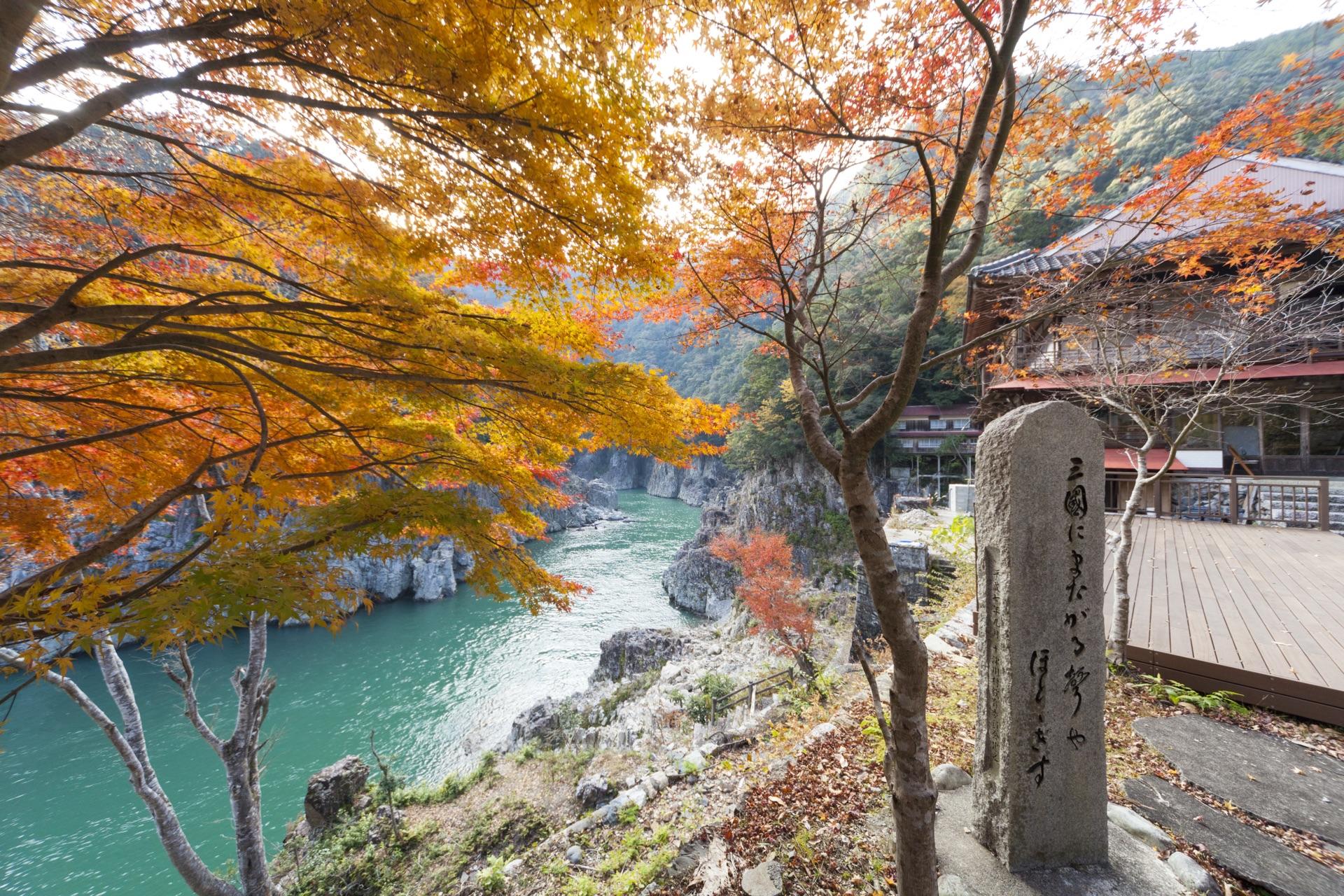
Dorokyo: The Kumano You See "From the River"
When people think of Kumano, many picture the ancient pilgrimage trails, shrines, and temples. But venture just a little further, and you'll encounter another side of Kumano—a gorge carved by the Kitayama River, which flows along the prefectural borders: Dorokyo Gorge.
Straddling the three prefectures of Wakayama, Nara, and Mie, this scenic area has been designated a National Place of Scenic Beauty and Natural Monument. The word "doro" (瀞) refers to a place where a river's flow slows and deepens into stillness. True to its name, the gorge features stretches where the water's surface lies calm as a mirror.
The Highlight: The Stillness of Dorohatcho
The heart of Dorokyo is a section called Dorohatcho. Sheer rock walls rise on both banks, and deep green water flows gently between them.
Three Pleasures of Viewing from the River
- The expressions of the rock faces: The vertical cliffs are all the more striking when viewed from below.
- The color of the water: It shifts from bluish green to deep, rich tones depending on the weather and angle of light.
- The quietness: Aside from the boat's engine, you'll mostly hear water and birdsong. The stillness of the mountain valley stands out all the more.
Unlike viewing from the road, when you're out on the river, the rock walls seem to loom overhead. That sense of being "enveloped" by the scenery is a charm unique to Dorokyo.
Part of Kumano's "River Journey" Tradition
Rivers have long been vital to travel in Kumano. Timber cut in the mountains was floated down the rivers, and people, too, moved along the waterways. The Kitayama River eventually joins the Kumano River downstream.
In nearby Kitayama Village, the history of log-rafting is still passed down today. Gazing at Dorokyo while imagining how this river sustained life in the mountains makes the landscape look just a little different.
Things to Know Before You Go
Dorokyo lies deep in the mountains and isn't a place you can just drop by. Keeping the following in mind will help you enjoy your visit with peace of mind.
1. Check Boat Operations in Advance
River boat services vary depending on the season, weather, and water levels. They are especially likely to be affected after typhoons or heavy rain, so be sure to check the latest information before setting out.
2. Allow Plenty of Travel Time
Since you'll be driving mountain roads from the Shingu area, it takes longer than the map distance suggests. There are many curves and some narrow stretches. Planning to arrive by mid-morning is a safe bet.
3. Dress for the "River Breeze"
It feels cooler on the water than on land. Even in summer, a light layer is reassuring. In winter, dress warmly. Also bring a hat or sun protection to guard against glare reflecting off the water's surface.
4. Mobile Phone Signal Is Weak
Reception can be unstable in the valley. Save your maps and reservation details in advance for peace of mind.
A Day to Pair with Your Pilgrimage Trail Walks
Rather than combining it with a day of walking the Kumano Kodo, we recommend setting Dorokyo aside as a day to slowly savor the scenery. Resting your tired feet and letting yourself be carried along by the river views brings a quiet shift to the rhythm of your journey.
The "Kumano of prayer"—its shrines, temples, and ancient trails—and the "Kumano of nature"—its rivers and cliffs. Experiencing both deepens your understanding of this land immensely.
In Closing
Dorokyo is not a bustling tourist destination. That is precisely why the quiet water's surface and towering cliffs leave such a lasting impression. After checking boat operations and the route carefully, why not set out to meet the river's face of Kumano?
Image: 瀞峡 紅葉 (via (公社)和歌山県観光連盟)


