 LOCAL FIT KUMANOBack to list
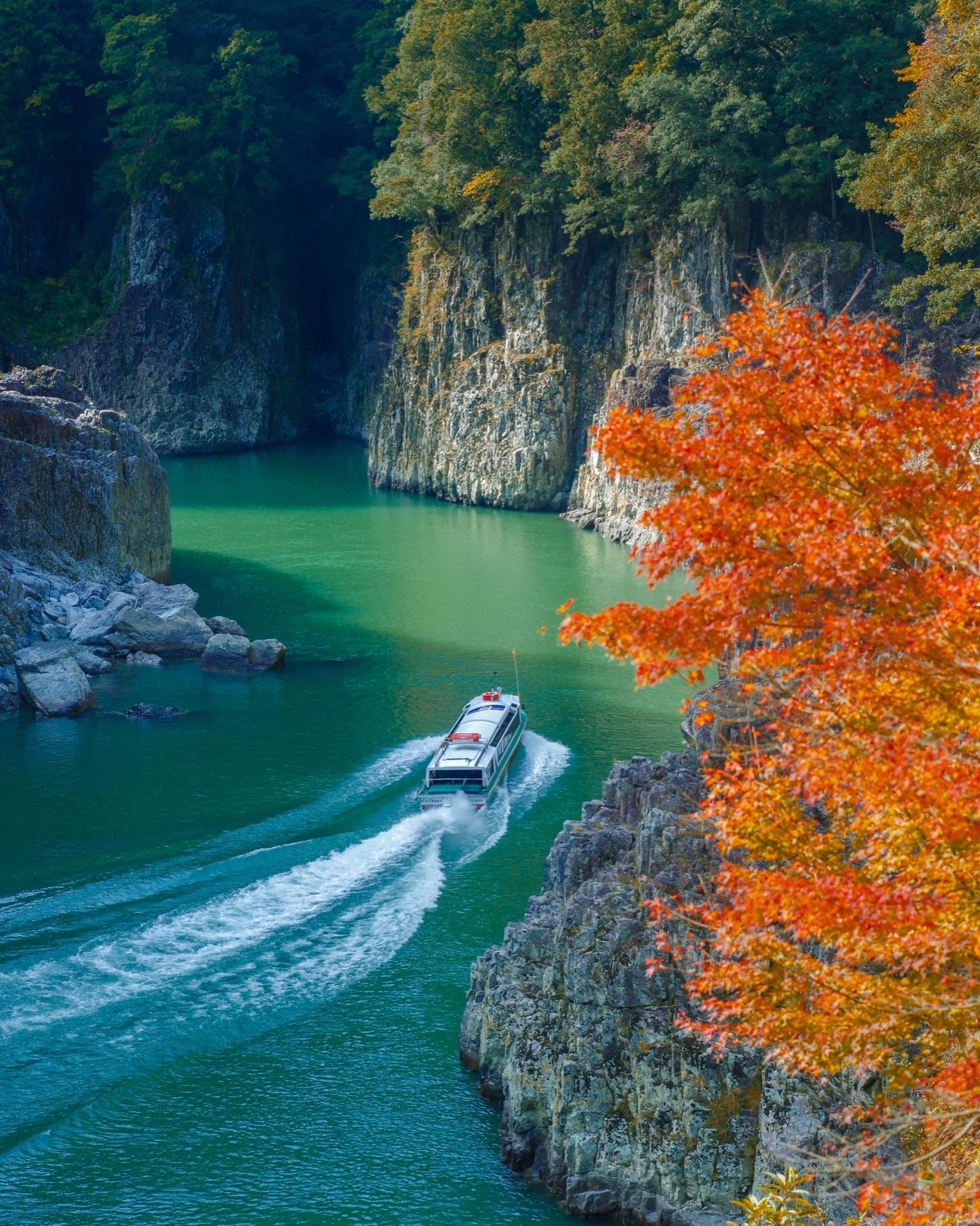
Between Kumano's "mountains" and "sea," a quiet pool
When people hear "Kumano," many picture stone-paved ancient trails or Nachi Falls. But if you head a little way inland along the rivers, you'll meet a completely different face of the region. That place is Dorokyo, a scenic gorge on the Kitayama River. It lies in the mountains where the three prefectures of Wakayama, Mie, and Nara meet, and the stretch where the current seems to come to a complete stop has long been called Dorohatcho.
The word "doro" (瀞) refers to a place where water is deep, slow-moving, and clear. True to its name, what stays with visitors here is not the sound of rushing rapids but the stillness. Designated a national Place of Scenic Beauty and Natural Monument, Dorokyo offers something different from the Kumano journeys that involve climbing mountains on foot — it gives you time to receive the landscape from the surface of the water.
What changes when you see it from a boat?
Looking up at the cliffs, and the greenery reflected on the water
The stars of Dorokyo are the sheer rock walls on both banks. Rather than viewing them from the shore, looking up from close to the water lets you truly appreciate the height of the stone and the trees that seem to cling to the rock faces. The sky and mountains are mirrored on the river's surface, and on windless days it can become as smooth as a mirror.
Reading it together with the Kumano River's "river road"
In Kumano, rivers have long been routes for people as well. The pilgrimage down the river from Hongu to Shingu is famous, and in the upstream village of Kitayama, people once made a living by lashing timber into rafts and floating it downstream. As you take in Dorokyo, imagining how "this water once carried the bounty of the mountains and the people themselves" adds a little depth to what you see.
Three things to check before you go
1. Water levels and weather change how the boats run
River sightseeing is easily affected by rain and rising water. Whether boats operate, and at what times, can depend on rainfall and water levels from the preceding days. Rather than only checking the forecast right before departure, it helps to keep a loose eye on the weather for a few days ahead. For the latest operating status, always check the official announcements of the boat operator or the local tourist information center.
2. On the water, it's colder than you think
On the river, you feel the wind more than on land, and in shaded valleys the perceived temperature drops further. Even in summer, a light outer layer is reassuring; in spring and autumn, layering is even more important. Hats are easily blown off by the wind, so ones with a chin strap or that can be tucked into a pocket work best.
3. Pack on the assumption that things may get wet
For cameras and smartphones, a waterproof case or strap will protect against drops and splashes. For your feet, choose shoes that don't slip easily when wet. The footing when boarding and disembarking calls for a different kind of care than the stone pavements of the old trails.
Tips for planning your trip
Dorokyo is a little removed from Kumano's main areas such as Shingu and Kumano Hongu. Including travel time, giving yourself enough room to "set aside half a day for the river" will let you enjoy it without feeling rushed. One good approach is to schedule it for the day after an ancient-trail hike, as a day to rest your body while savoring the scenery.
Resting legs tired from walking, while taking in Kumano's nature from a different angle — Dorokyo is just the place for that kind of "quiet day." Let yourself slowly listen to the sound of the wind crossing the surface of the water.
Image: 瀞峡 紅葉 (via (公社)和歌山県観光連盟)


