 LOCAL FIT KUMANOBack to list
What Is the Daimonzaka Trail? The Approach to Nachisan Along the Kumano Kodo
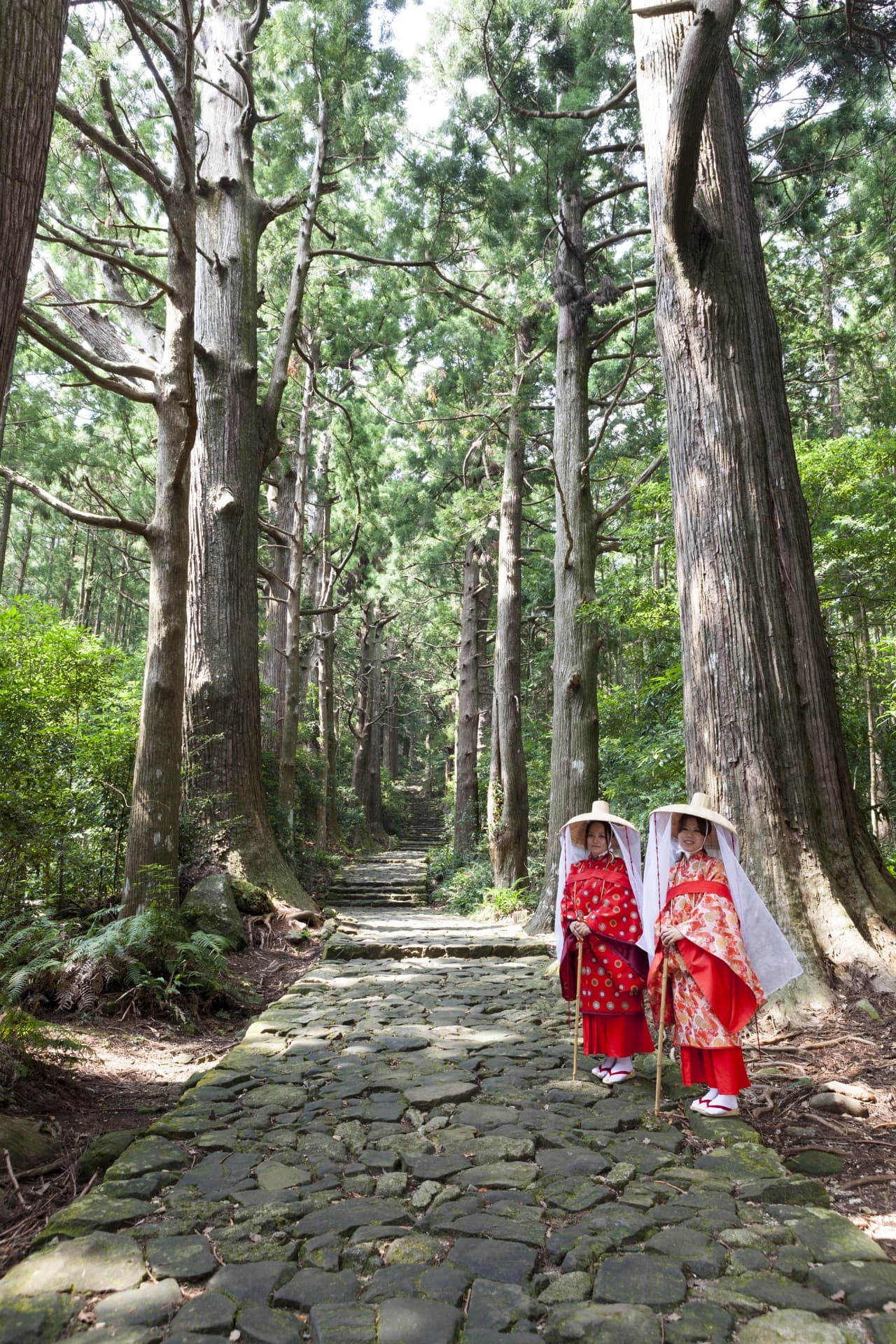
Most people searching for "daimonzaka trail" are probably picturing that moss-covered stone-paved path leading to Nachi Falls and Kumano Nachi Taisha. In Japanese, it's called Daimonzaka (大門坂). It lies near the end of the Nakahechi route of the Kumano Kodo and forms part of the World Heritage "Sacred Sites and Pilgrimage Routes in the Kii Mountain Range."
The name "Daimon" (Great Gate) is said to come from a gate that once stood here, marking the entrance to the sacred precincts of Nachisan. In other words, this slope is not merely a scenic path, but an "entrance road" leading from the secular world into a sacred realm. Walking it with that awareness changes the way the scenery feels.
Practical information such as walking times and bus access is covered in other articles, so here we'll focus purely on "how to savor the trail itself."
The Highlights of the Daimonzaka Trail, in the Order You'll Walk Them
1. The Meoto Sugi (Couple Cedars) Near the Entrance: Stop and Look Up First
Shortly after you start walking, you'll encounter the striking presence of the "Meoto Sugi" — two cedars standing close together as if leaning on each other. They are associated with stories of marital harmony and matchmaking, so this is a good spot to pause and take a deep breath. If you're taking photos, don't rush ahead — step back a little and shoot upward from a distance to capture the massive trunks.
2. The Cedar Grove: Notice Where the Sound Changes
The cedars towering on both sides of the path are all ancient giants that have lived through countless years. Their branches canopy the sky, so even on sunny days the dappled light is soft, and on rainy days the sound of rainfall seems to be gently absorbed into silence. That moment when the sounds of the town fade away is the greatest luxury this path offers.
3. The Moss-Covered Stone Pavement: The Ground Itself Is the Star
The gently sloping stone path carries the weight of generations of travelers. Damp stones have a beautiful atmosphere, but they're also slippery. Don't get so absorbed in taking photos that you lose track of your footing — always stop walking before you shoot.
4. Oji Shrine Sites: Look for the Markers of the Ancient Route
Along the Kumano Kodo, you'll find small shrines called "Oji" scattered throughout, where pilgrims once offered prayers. There are Oji sites around Daimonzaka as well, so if you spot an information sign, take a moment to stop. These are places where you can truly feel that "this, too, has long been a path of prayer."
For Those Searching in English or Walking with Friends from Overseas
For international travelers, the Daimonzaka Trail is known as "a path where you can experience the atmosphere of Japan's ancient pilgrimage routes in a short distance." When introducing it to your companions, these three points are usually well received:
- The Kumano Kodo is a pilgrimage route where reverence for mountain deities overlaps with both Buddhism and Shinto
- The stone pavement and cedars are not "tourist decorations" but part of a path that is still carefully preserved today
- At the end of the trail await Kumano Nachi Taisha, which enshrines Nachi Falls itself as its sacred object of worship, and Seiganto-ji Temple
Some signs and information boards include English, but not everything is multilingual. Checking the readings of place names in advance will put you at ease.
A Few Small Tips for the Walk
- Wear non-slip shoes: Even when the stones look dry, the mossy sections can be slippery.
- Walk quietly: This is a path of prayer, so keep loud conversation and music to a minimum.
- Take your trash with you: This is a place where nature and faith are one.
- Give yourself plenty of time: If you want to truly savor the highlights, don't pack your return schedule too tightly.
In Closing
The Daimonzaka Trail may not be long, but it concentrates the stillness of the cedars, the texture of the stone pavement, and the history of prayer into a single path. Rather than rushing to reach the falls, try to enjoy the sensation of "stepping from the entrance into a sacred realm." When you finish the walk and arrive at Nachisan, the sight of the falls will surely linger in your heart more deeply than usual.
Image: 熊野古道中辺路 大門坂 (via (公社)和歌山県観光連盟)


