 LOCAL FIT KUMANOBack to list
The Trick: Don't Judge Daimonzaka's Time by the Slope Alone
When researching the Kumano Kodo's Daimonzaka, the first question that usually comes to mind is, "How many minutes does it take to walk?" The short answer: the slope itself is relatively brief, but you'll find yourself stopping often among the towering cedars, so your actual time there tends to run longer than planned. This article organizes walking times by pace and shows how to build in time for shrine visits and breaks.
Estimated Walking Time for Daimonzaka Itself
Daimonzaka is an ancient path flanked by moss-covered stone paving and giant cedar trees. It's often described as roughly 600 meters long with close to 270 stone steps. Though short in distance, it's a continuous gentle uphill climb.
Rough Guide by Pace
- Brisk walkers: around 25 minutes
- Average pace: 30–40 minutes
- Slow walkers taking photos: 45–60 minutes
These are general estimates only. Times vary with the season, crowds, your fitness, and trail conditions, so it's wise to build in some buffer.
Think in Additions: A Half-Day of Daimonzaka + Nachisan
Most people who walk Daimonzaka continue on to Kumano Nachi Taisha and Seigantoji Temple. Here's how to add up the time:
1. Walking up Daimonzaka: about 40 minutes
2. Visiting Nachisan and exploring the grounds: 40–60 minutes
3. Viewing the area around Nachi Falls: about 30 minutes
4. Buffer time for breaks, meals, and transit: 30–60 minutes
In total, plan on roughly 2.5 to 4 hours for a half-day visit. If you're including lunch, add even more cushion.
Where Your Time Tends to Stretch
Along Daimonzaka, people often pause at the following spots:
- Photographing the giant trees near the entrance, such as the Meoto Sugi (Husband-and-Wife Cedars)
- Picture-perfect sections where sunlight filters through onto the stone path
- Stopping to read oji shrine markers and interpretive signs along the way
- Brief rests to catch your breath
Mornings on sunny days are especially beautiful, and you'll naturally find yourself stopping. If photography is your goal, estimate about 1.5 times the standard time to avoid feeling rushed.
Adjusting for Who You're With
Seniors or Those Less Confident in Their Fitness
Plan on taking it slow and stopping every few dozen steps. If you want to shorten the walk, you can skip Daimonzaka and head up to Nachisan by car or bus. You don't have to walk the entire section to enjoy the journey fully.
Families with Children
The stone steps have noticeable rises, so a child's stride will slow the pace. Make it a game by counting the steps together ("Which number are we on?") to keep little ones engaged.
Rainy Days
Wet stone paving can be slippery. Allow more time than usual and wear shoes with good grip. The cedar forest in the rain has a quiet, moist atmosphere all its own — a different kind of beauty from sunny days.
Work Backward From Your Return Time
There are times of day when public transport around Nachisan runs infrequently. If you're making a round trip by bus, decide your return bus first and work backward to set the time you'll start walking Daimonzaka — that way you can walk without rushing. Schedules can change, so check official sources for the latest information before you set out.
Summary: A Plan with Breathing Room Suits Daimonzaka Best
At an average pace, Daimonzaka takes about 30–40 minutes, but once you add shrine visits and breaks, it's realistic to plan for a half-day outing. Don't watch the clock too closely — leave yourself space to savor the atmosphere of the stone path and cedar forest. That's the secret to walking this ancient trail most comfortably.
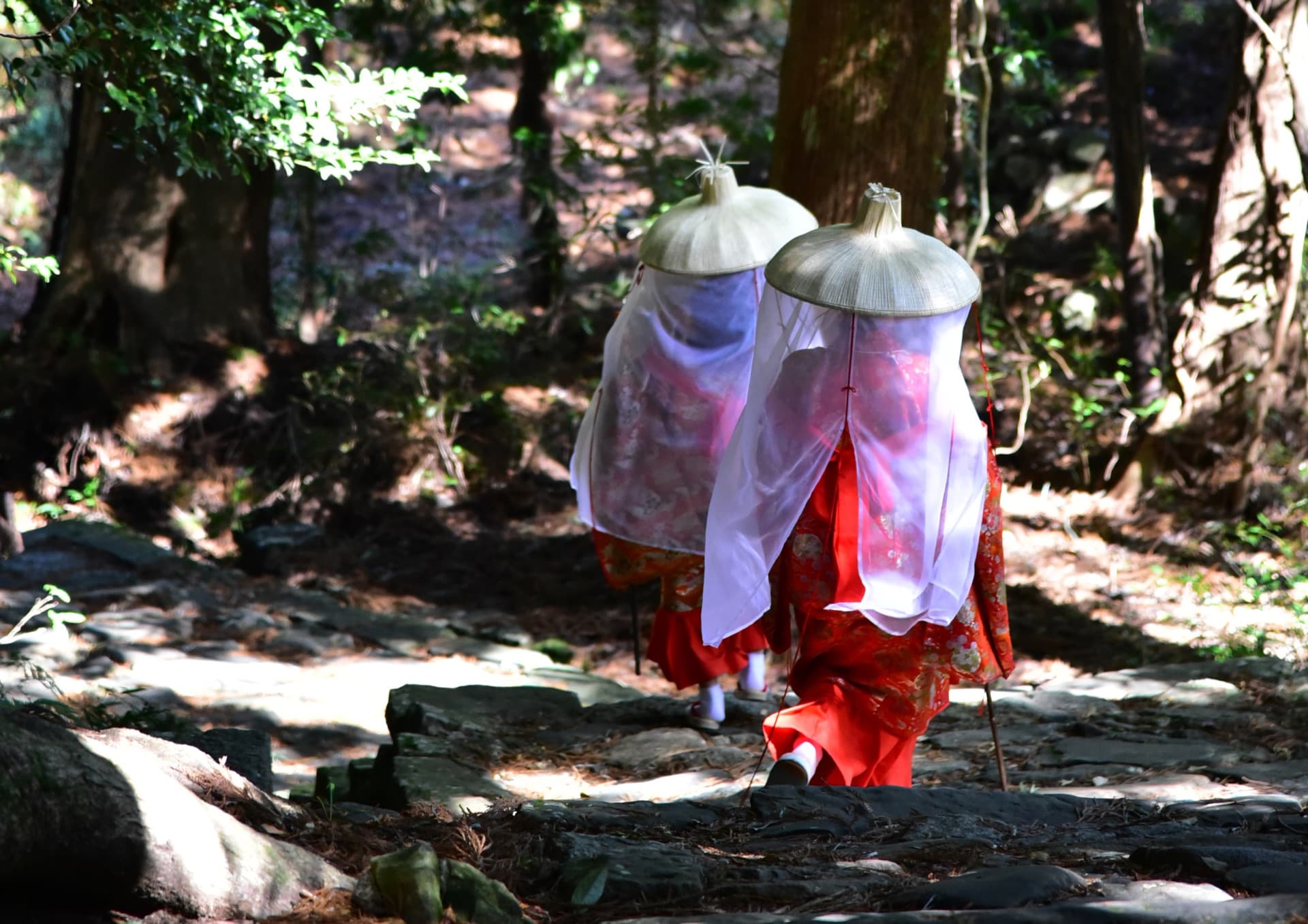
Image: 熊野古道中辺路 大門坂 (via (公社)和歌山県観光連盟)


