 LOCAL FIT KUMANOBack to list
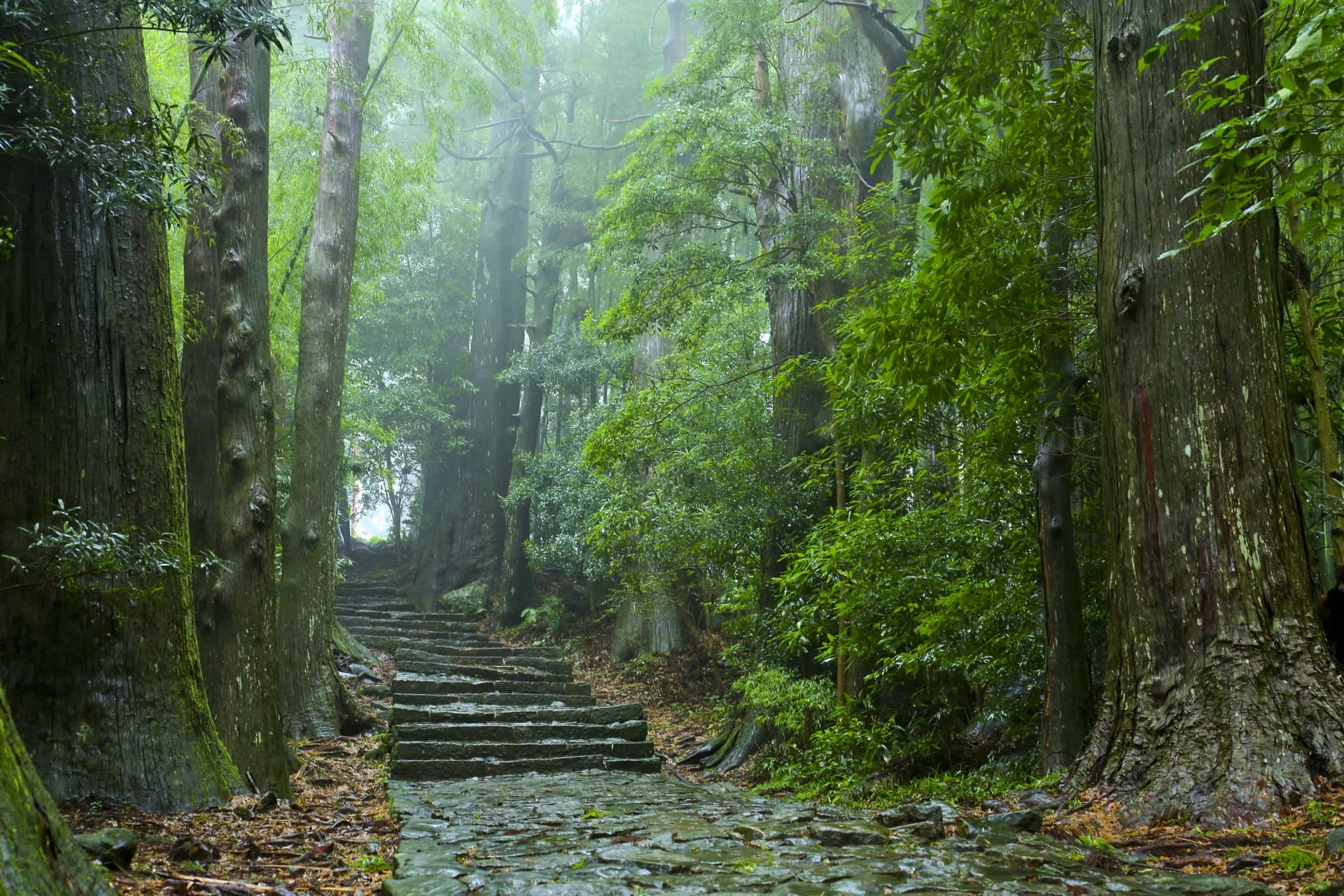
Is Daimonzaka Really Tough? The Short Answer First
Most people searching "Daimonzaka tough" are worried — they're not confident in their fitness, or they want to walk the path with children or older parents. Here's the short answer: the distance is short, and if you take it slowly, almost anyone can make it up. That said, because the stone steps and paved slope climb without a break, many people end up saying, "I got more out of breath than I expected."
Daimonzaka is the entrance to the Kumano Kodo trail leading up to Nachisan, and the stone-paved path runs for about 600 meters. Among the Kumano Kodo routes, it's on the shorter side — but it's uphill the entire way, which is why it tends to feel tough.
Three Reasons It Can Feel Tough
1. Few Flat Spots to Rest
Once you start climbing, the path heads steadily upward through a grove of cedar trees. It's hard to find a flat place to catch your breath, so you naturally end up pausing mid-step on the stairs.
2. The Stone Steps Are Uneven
The heights and widths of the old stone steps aren't uniform. Even if you're used to stairs, you have to think about where to place each foot, which makes it more tiring than an ordinary staircase.
3. Wet Days Demand Extra Focus
Sunlight barely reaches the floor of the cedar grove, so stones and moss stay damp. Just after rain, the path can be especially slippery — and the tension of watching your step can tire you out more than the climb itself.
Three Walking Tips to Ease the Climb
- Take smaller steps: Shorten your stride step by step. You'll find it easier to keep your breathing steady.
- Use the sights as rest stops: Pause at places like the Meoto-sugi (Husband-and-Wife Cedars) or the old ōji shrine sites, taking in the scenery while you catch your breath. Stopping isn't slacking — it's how this trail is meant to be enjoyed.
- Keep your hands free: Pack your belongings into a backpack so both hands are free. Being able to balance yourself is safer than reaching out to grab nearby stone walls or cedar trunks.
The Option of Not Climbing — or Not Climbing the Whole Way
If you're really worried, there's no need to force yourself to climb the whole thing from the bottom.
- Take the bus up to Nachisan and walk down the slope: It's lighter going than climbing up, but descending stone steps is hard on the knees. A trekking pole or walking stick will give you peace of mind.
- Climb partway and turn back: You can get a good feel for the cedar-lined atmosphere just by walking a little way in from the entrance.
- Go at your companions' pace: If you're with children or elderly family members, deciding in advance "we'll go this far" takes the pressure off.
Bus schedules and stops change by season, so check the latest information before you set out.
Gear Up for Stone Steps
- Shoes: Sneakers or trekking shoes with good tread. Avoid sandals or shoes with worn-out soles.
- Water and a towel: Even over a short distance, you'll sweat in summer.
- Rain gear: Rainwear that leaves both hands free is better than an umbrella.
- A change of clothes or a light layer: Your body warms up on the climb, and you can cool off quickly when you stop.
More Stone Steps Await at the Top
After you finish climbing Daimonzaka, the path connects to the Nachisan approach, where more stone steps lead on to the shrines and temples. The trick to enjoying the whole day is not to use up all your energy on Daimonzaka itself. Leave yourself some time and stamina to spare, and take breaks along the way.
Summary
Daimonzaka is short, but it has a real sense of climb to it. Whether it feels tough depends a great deal on the walker's pace and preparation. Take smaller steps, watch your footing, and don't push too hard. Then, at your own speed, take in the quiet of the moss-covered stones and the cedar grove.
Image: 熊野古道中辺路 大門坂 (via (公社)和歌山県観光連盟)


