 LOCAL FIT KUMANOBack to list
For Those Searching "Daimon-zaka Tough" — A Few Things to Know First
Among the trails of the Kumano Kodo, Daimon-zaka is often introduced as an "easy section for tourists." Yet many people say that once they actually walk it, they end up more winded than expected.
To get straight to the point: the toughness of Daimon-zaka comes not from its length, but from its continuous steps and uphill stretches. Because the distance itself is short, it's a path you can enjoy comfortably as long as you pace yourself well.
Three Reasons It Can Feel Tough
1. The Stone Steps and Pavement Climb Without a Break
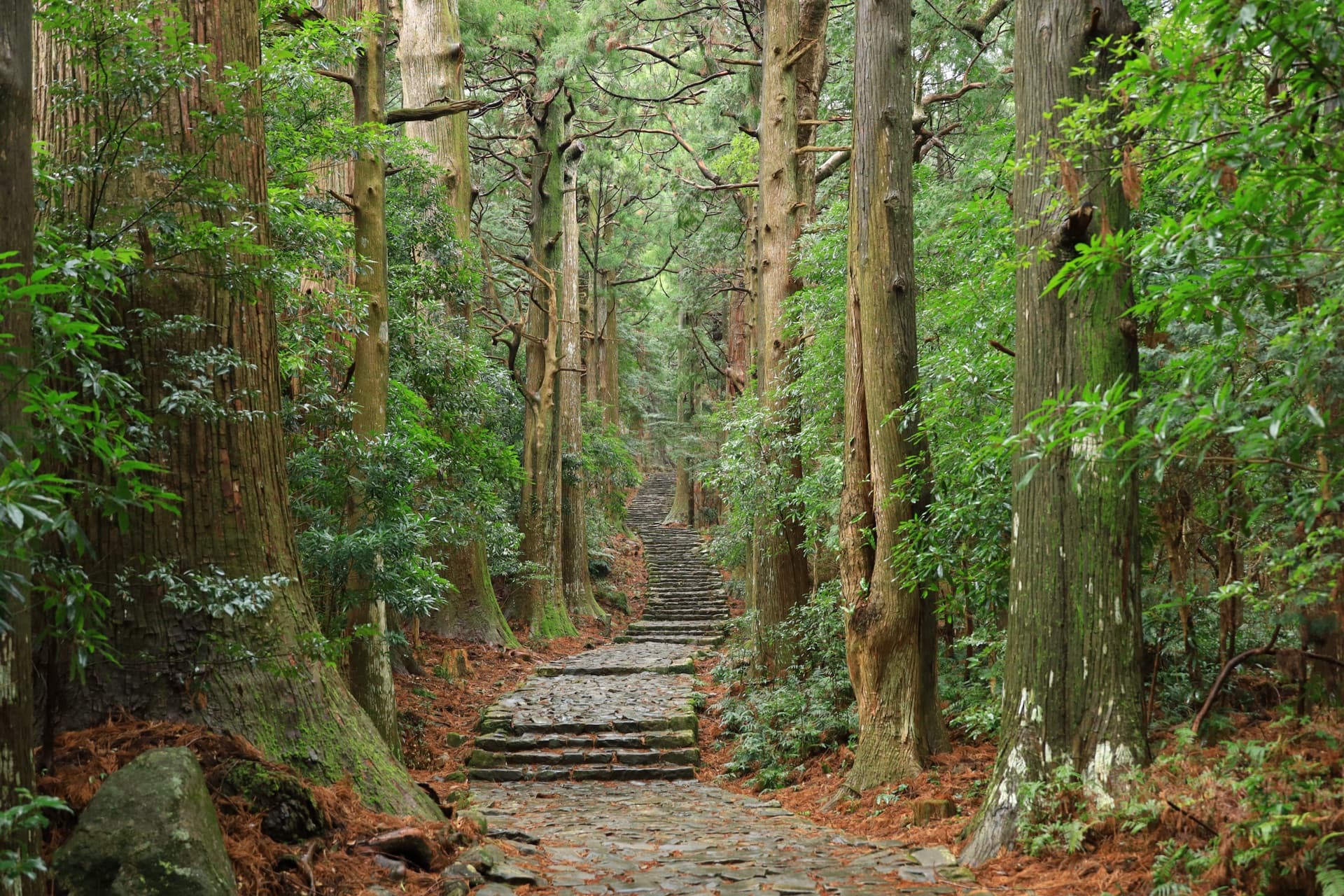
Daimon-zaka is a pilgrimage path lined with moss-covered stone pavement and stairways. There are few flat spots where you can catch your breath, and the climb begins before your body has had a chance to warm up. For this reason, many walkers find the first few minutes to be the hardest.
2. Wet Stones Are Slippery
Sunlight barely reaches through the cedar groves, so the stones stay damp after rain or in the early morning. Some people tire out from focusing on their footing before their stamina gives out. In other words, the "toughness" is often tension, not leg strength.
3. More Steps Await After You've Finished
At the top of the slope, more stone stairways lead up to the shrines and temples of Nachisan. If you use up all your energy on Daimon-zaka, you won't have enough left to enjoy what you actually came to see.
Three Choices That Change How Tough It Feels
Climb Up, or Walk Down?
If you're not confident in your stamina, you can take a bus or car up first and walk the path downhill instead. Going down is easier on your breathing, but it puts strain on your knees and ankles, so be mindful of landing your steps gently.
Time of Day and Weather
In summer, even the shade feels humid and you'll sweat. In winter, the days are short and the stones get cold and slippery. Choose a cool time of day, and don't push yourself on rainy days — that judgment matters too.
Shoes and Luggage
Shoes make the biggest difference. Choose comfortable walking shoes with good tread on the soles. Keep your belongings in a small backpack so your hands are free — you'll feel much safer on the handrails and steps.
Tips for Walking Without Running Out of Breath
- For the first few minutes, walk at half your usual pace. Pick up the pace once your body has warmed up.
- Use "a speed where you can still hold a conversation" as your guide. If you're too out of breath to speak, it's time to stop.
- Mark your breaks by scenery. Deciding in advance to pause at points like looking up at the cedars or stopping in front of the Meoto Sugi (Husband-and-Wife Cedars) keeps resting from feeling like giving up.
- Sip water a little at a time. Rather than gulping it down, just wetting your mouth during the climb feels easier.
Who It Suits, and Who Might Want to Reconsider
- With children: Elementary-age kids can often walk it, but they may get bored on the steps. Little games like "Which cedar is the thickest?" can keep them moving.
- For seniors: Decide from the start that it's okay to turn back partway — it takes the pressure off. Walking only the downhill portion is a perfectly good choice too.
- Strollers and wheelchairs: Because stone pavement and steps continue the whole way, you'll need to check in advance how to approach it.
The Scenery Waiting Beyond the "Toughness"
Daimon-zaka is popular because, in exchange for the effort, you get time wrapped in the height of the trees and the stillness. The green of the moss, the dampness of the stones, the cedar trunks rising overhead — once you're standing there and your breath has settled, what stays in memory is the scenery, not the toughness.
More than reaching the top, the real trick is to walk at your own pace, pausing as you go. That's the most pleasant way to enjoy Daimon-zaka.
*For specifics like bus schedules and parking, please check the latest information before you head out.
Image: 熊野古道中辺路 大門坂 (via (公社)和歌山県観光連盟)


