 LOCAL FIT KUMANOBack to list
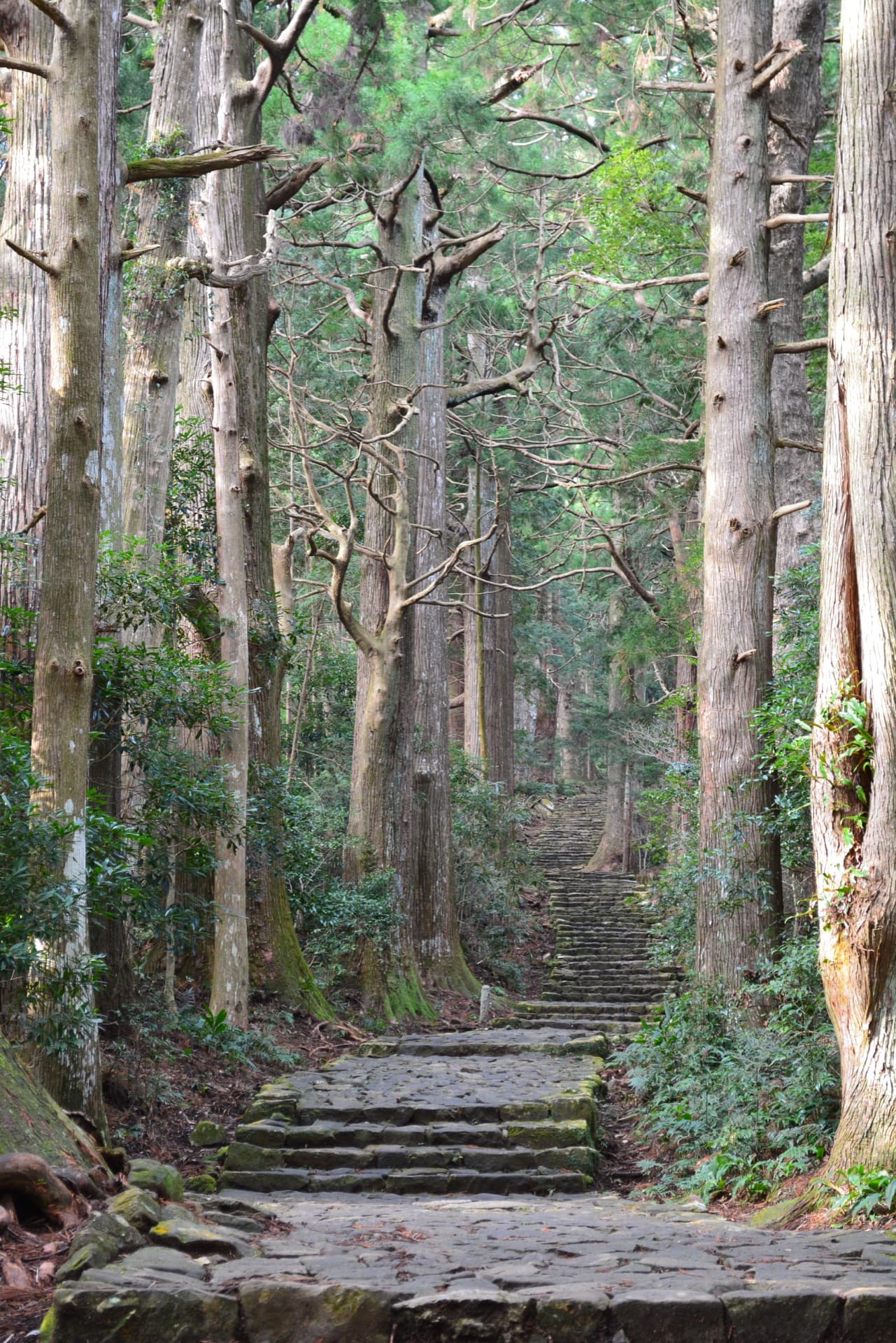
A Stone-Paved Slope Leading to the "Entrance" of Nachisan
When heading for Nachi Falls, Kumano Nachi Taisha, or Seigantoji Temple, you can take a bus or car all the way up to the mountaintop. But if you take just a little detour and walk Daimon-zaka, your impression of Nachisan deepens significantly.
Daimon-zaka is part of the ancient road once traveled by Kumano pilgrims on their way to Nachisan. The name "Daimon" (Great Gate) is said to come from a gate that once stood at the entrance to Nachisan. In other words, this is the sacred approach leading to the gateway of a holy site.
A Cedar Avenue That Forms a "Quiet Tunnel"
As you step onto the slope, the first thing that catches your eye is the massive cedars towering on both sides. Between their trunks, which stretch straight up to the sky, a moss-covered stone pavement continues onward.
Once you start walking, the sounds of town gradually fade away, and what you hear instead is your own footsteps and the rustling of the trees. The moisture in the air and the slightly cool touch of the stones are things unique to this path.
Meoto-sugi and the Small Sights Along the Way
Near the entrance stands the Meoto-sugi (Husband and Wife Cedars), two cedars joined at the roots and leaning close together. True to their name, the sight of them standing side by side is striking, and many visitors stop to look up at them.
Along the way, there is also a site said to be the ruins of an old Oji shrine. Oji were small shrines that served as waypoints along the Kumano Kodo. Walking while thinking, "people long ago prayed here too," transforms what might just be a stroll into a path filled with story.
Tips for Walking
Different Flavors Going "Up" or "Down"
- From bottom to top: You can feel the atmosphere of the mountain grow deeper step by step, as if tracing a pilgrimage approach.
- From top to bottom: After worshipping at the shrines and temples, you enter the forest carrying the lingering impression—a quiet time.
Both directions have their appeal, but if you're worried about stamina or short on time, choose a direction and section that won't strain you.
Footwear and Attire
The stone pavement becomes wet and slippery after rain. Choose comfortable shoes with grooved soles, and keep your steps small where there are no handrails. When taking photos, it's best to stop at the edge of the path.
Nachisan as You See It After the Walk
The shrines and temples you meet at the end of the slope, and Nachi Falls visible in the distance—even the same scenery feels somehow a little more special after walking up the stone-paved slope.
When people hear "Kumano Kodo," they often picture a long mountain trail, but even on a short section like Daimon-zaka, you can fully savor the atmosphere of the ancient road. If you're visiting Nachisan, please consider adding time to "enter on foot" to your travel plans.
*Local trail conditions and walking times vary with weather and season. Before visiting, please check the latest information with the local tourism association.
Image: 熊野古道中辺路 大門坂 (via (公社)和歌山県観光連盟)


