 LOCAL FIT KUMANOBack to list
Nachi Falls and Kumano Nachi Taisha can be reached fairly close by bus or car. Even so, if you find yourself thinking, "Since I'm here, I'd like to walk at least a little of the old road," Daimonzaka is a natural choice. In this article, we'll think about how to walk this path, framing it as a "run-up" to the falls.
What kind of path is Daimonzaka?
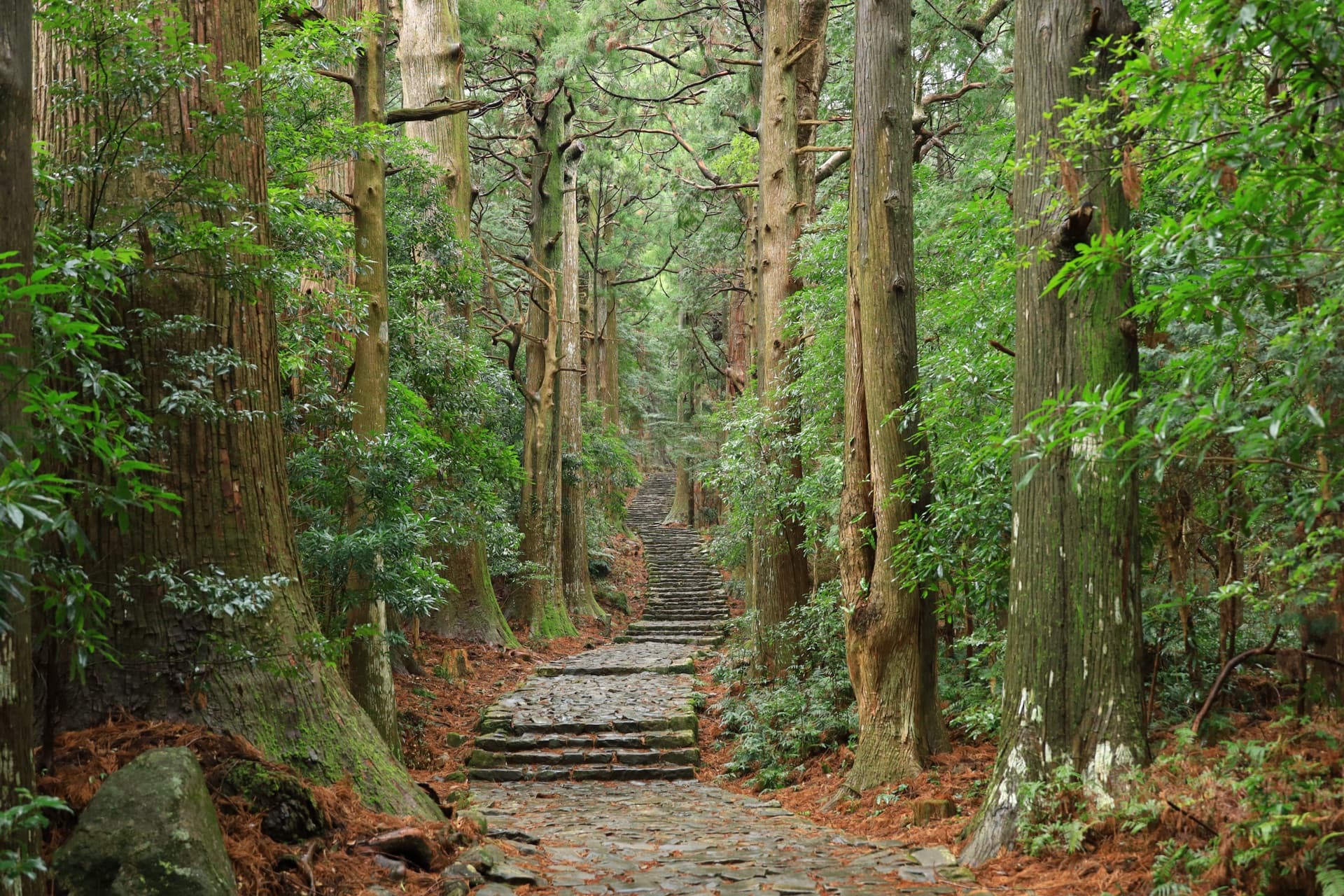
Daimonzaka is one section of the Kumano Kodo that serves as the approach to Nachisan. Tall cedars line both sides, and moss-covered stone paving stretches underfoot. Even at midday it feels dim, and the cool air is the first impression the path leaves.
The name "Daimon," meaning "Great Gate," is said to come from a gate that once stood near the foot of the slope. Passing through the gate, you cross from the everyday world into the sacred realm. Thinking of it that way, you may find your posture straightens a little from the very entrance.
Near the entrance stand the Meoto Sugi ("Husband and Wife Cedars"), leaning gently toward each other. Many visitors pause here. Don't rush ahead — first, look up.
Walk up, or walk down?
Walking up: easing into a change of mindset
Heading up from the foot of the slope toward Nachisan follows the same direction as the pilgrims of old. The stone steps continue and will leave you breathless, but that steady climb sets your walking rhythm, and there's a real sense of accomplishment when you reach the top. You can also enjoy how the sky gradually brightens between the cedars as you ascend.
That said, stamina varies from person to person. Watching your companions' pace and planning for breaks along the way is the safe approach.
Walking down: enjoying the scenery, but watching your step
Many people also walk from Nachisan down to the foot of the slope. The climb is easier on your body, and you can take in the cedar grove as you walk. On the other hand, damp stones are slippery, and the descent puts strain on your knees. Take small steps, and be especially careful on sections without handrails or support.
Either direction is a good choice. We recommend deciding based on your stamina, your companions, and your transportation back.
Three things worth pausing for
- The face of the stone paving: worn edges, thick moss, piles of fallen leaves. The ground itself tells you how long this road has been traveled.
- The base of the cedars: looking at the thickness of the trunks and the way roots push out over the stones, you can feel the layering of time.
- The quality of the light: when sunlight filters through the branches, the whole mood of the path transforms.
Preparing before you walk
The stone paving becomes slippery after rain or when morning dew still lingers. Shoes with well-defined tread on the soles are strongly recommended. In seasons when the sun sets early, planning to finish walking while it's still bright will let you enjoy the path more calmly.
After you've walked
When you see Nachi Falls after walking Daimonzaka, the sound of the water and the look of the trees may feel just a little different. Rather than simply "arriving," you "approach" through the road itself. That sensation, I think, is the real joy of walking the old roads.
Even just a small section is enough — walk it at a pace that suits your time and energy. Savor this path of cedars and stone as a run-up to the falls.
*Trail conditions and transportation may change depending on weather and season. Please check the latest information before heading out.*
Image: 熊野古道中辺路 大門坂 (via (公社)和歌山県観光連盟)


