 LOCAL FIT KUMANOBack to list
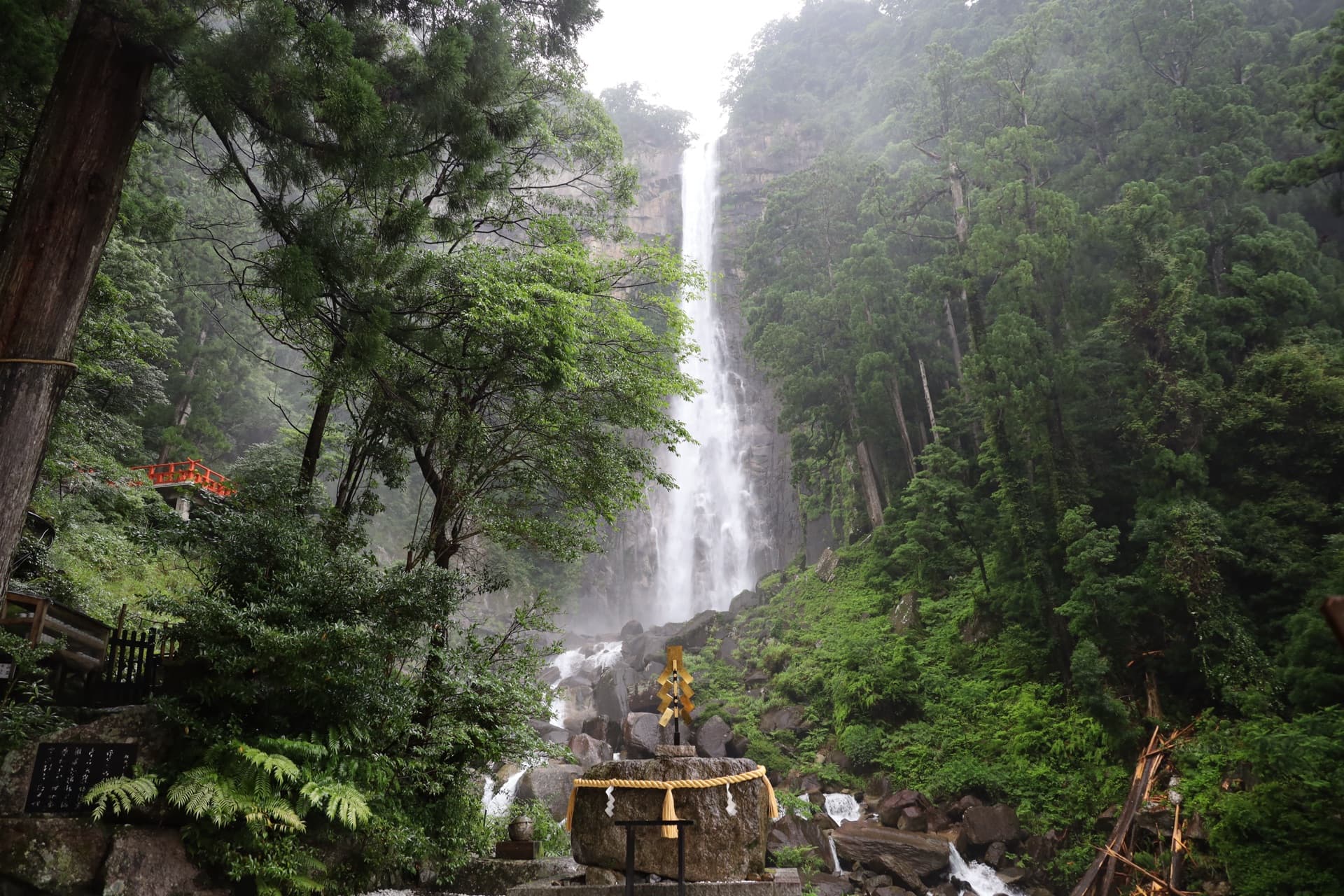
Before Nachi Falls, First Walk the 'Slope'
There are several routes to Mount Nachi, but the one that lets you savor the unmistakable atmosphere of the Kumano Kodo is Daimon-zaka. This path once served as the entrance to Mount Nachi for pilgrims, and its stone pavement, wrapped in cedar groves, winds quietly up the mountain.
The name is said to come from a gate called 'Daimon' (Great Gate) that once stood in this area. You can drive straight up to Mount Nachi, but if you have the time, we recommend climbing on foot just as pilgrims once did—letting your feet set the pace and your mind settle.
Switching Gears at the Meoto-sugi at the Entrance
Greeting you at the foot of the slope are the Meoto-sugi (Husband-and-Wife Cedars), standing side by side as if leaning on each other. They are so thick you must crane your neck to see the top, and the air begins to shift from here on.
- Take a close look at the roots and the thickness of the trunks
- Look for shafts of light falling through the cedar needles
- Put away your phone and take a deep breath first
For the first few minutes, prioritize 'feeling over photos.' Doing so will make the stone-paved walk that follows feel all the richer.
Mossy Stone Pavements and the Stillness of the Cedar Grove
Walk 'Slowly, with Small Steps'
The greatest appeal of Daimon-zaka is, without question, its stone pavement. The stones have weathered countless years and each has its own character; on damp days, the green of the moss deepens. That also means some spots can be slippery, so take small steps and keep an eye on your feet. Be especially careful after rain.
The More You Pause, the More You Hear
With tall cedars lining both sides, the wind, the birdsong, and your own footsteps all resonate clearly on this path. When you're out of breath, don't push through—stop and look up at the trees. Rather than hurrying up, this feels like the way the path was meant to be walked.
Touching the 'Air of the Old Road' at Tafuke-oji
Partway up the slope stands Tafuke-oji, considered one of the Kujūkyū-ōji (Ninety-Nine Oji shrines). It's a small, unassuming spot, but it brings home the fact that 'this, too, was a pilgrimage road.' The oji served as both waymarkers and places of prayer and rest. If there is an information board, give it a read—it adds a bit of depth to the story behind the path.
Beyond the Climb
Once you climb the stone pavement to the top, the path connects to the approach of Mount Nachi. From there, the 'main event' unfolds: Seiganto-ji Temple, Kumano Nachi Taisha, and Nachi Falls itself. Because your body is warmed from the climb and your mind has grown still, the impression of the falls and the shrine halls runs all the deeper.
Things to Keep in Mind Before Walking
- Footwear: Shoes with non-slip soles are safest
- Time: Plan with plenty of room, including stops for photos and rest
- Weather: On rainy days the stones become even more slippery, so don't push yourself
- Access: Bus and road conditions vary by season, so check the latest information in advance
In Closing
Daimon-zaka is not a 'road to a destination'—it's a place where 'the road itself becomes the destination.' Pass through the gate of the Meoto-sugi, climb the mossy stone pavement slowly, and continue on to Nachi Falls. Even over a short distance, it's a small gateway to pilgrimage that lets you carry home a real sense of having come to Kumano.
Image: 那智の滝 (via (公社)和歌山県観光連盟)


