 LOCAL FIT KUMANOBack to list
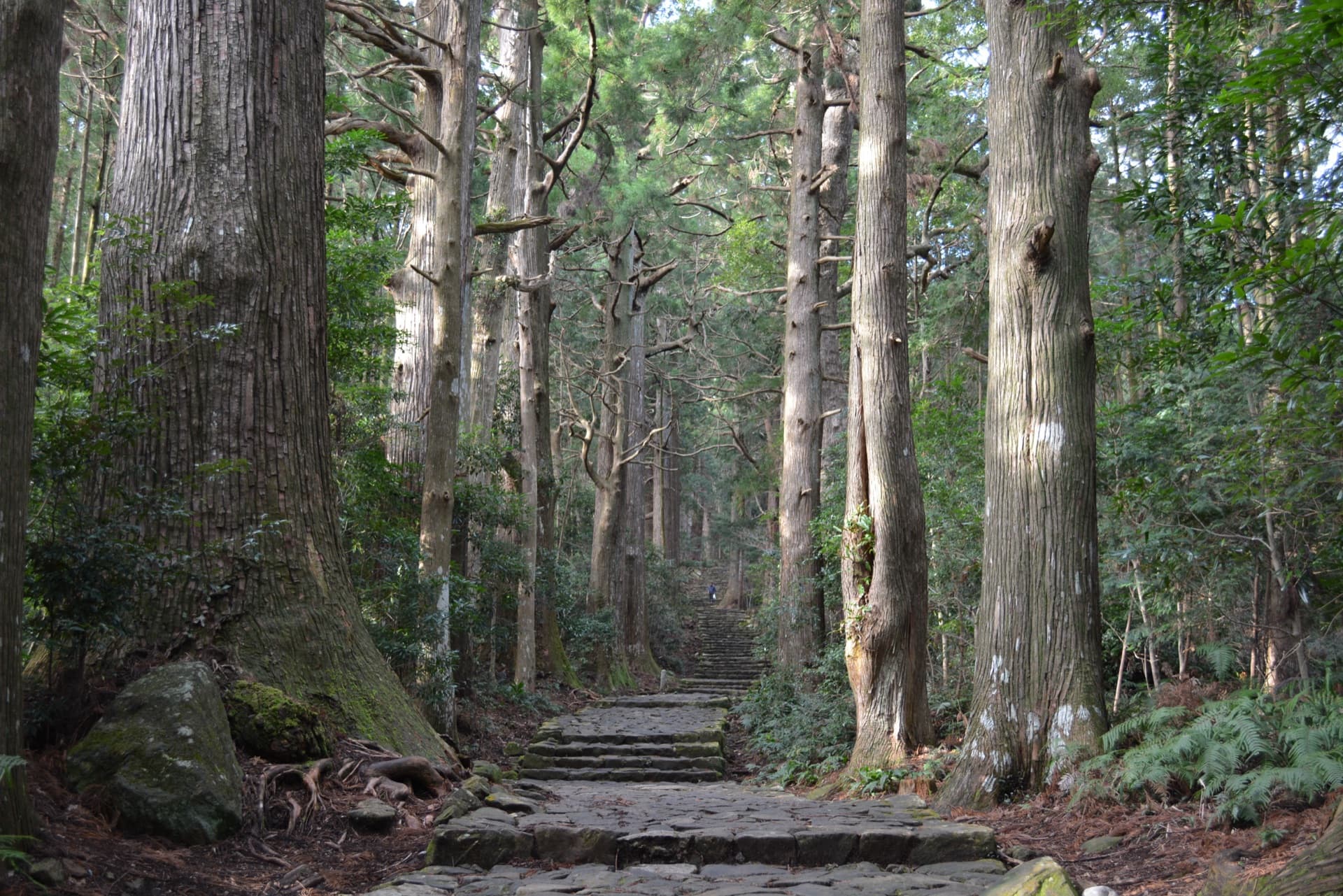
Daimonzaka: The "Gateway" to Nachisan
The path travelers have trodden for centuries on their way to Nachi Falls and Kumano Nachi Taisha is Daimonzaka. As part of the Kumano Kodo, it winds through a grove of cedars along a moss-covered stone pavement.
The name "Daimon" (Great Gate) is said to come from a gate that once stood in this area. Today, rather than the gate itself, it is the rows of cedars towering on either side of the path that feel like a signal that you are entering the sacred realm of Nachisan.
First Encounter at the Entrance: the Meoto Sugi
Near the entrance to the slope stand two massive cedars leaning toward each other, known as the Meoto Sugi (Husband-and-Wife Cedars). Said to be around 800 years old, they are so tall that your neck will ache looking up at them.
Before setting off, take a moment to notice the thickness of their trunks and how far their branches reach. The stone pavement ahead will look a little different afterward.
Climb or Descend? Choosing How to Walk
Daimonzaka gives a different impression depending on the direction you walk.
Walking Downhill: For Those Who Want to Savor the Scenery
Descending from the Nachisan side has the appeal of putting less strain on your feet. Since you can more easily raise your gaze, you'll have room to admire the cedar trunks and the light filtering through the branches. That said, the stone pavement can be slippery when wet or damp, so take each step carefully—downhill especially.
Walking Uphill: For Those Who Want to Feel Like a Pilgrim
Climbing up from the foot of the slope lets you experience the sensation of a traveler approaching Nachisan. The continuous stone steps will leave you out of breath, but each time you pause to take a deep breath, the scent of cedar and the humid air will feel wonderfully refreshing. Don't push yourself—rest at benches or flat spots along the way.
Small Highlights Along the Path
Partway along, you'll find the site of Tafuke-oji, one of the ninety-nine oji shrines that line the Kumano pilgrimage route. There are no grand buildings here, but when you imagine, "People in ages past also joined their hands in prayer at this spot," what seems like a simple walking path transforms into a pilgrimage route.
Don't miss the worn edges of the stone paving or the way cedar roots creep between the stones. The texture of a path layered with centuries of time comes through from the soles of your feet.
A Few Small Preparations Before You Walk
- Wear shoes with non-slip soles. Even when dry, the stone pavement can be deceptive.
- After rain, the moss becomes especially slippery, so allow yourself extra time.
- Bus schedules and services may vary by season, so check the latest information in advance for peace of mind.
- Water and a small towel will come in handy.
What Awaits After Daimonzaka
Once you emerge from the slope, the path leads to the heart of Nachisan—Nachi Falls, Seiganto-ji Temple, and Kumano Nachi Taisha. From the quiet cedar path, the view suddenly opens onto grand shrine grounds and approaches. This contrast is what makes Daimonzaka feel like a "prelude."
If you have time to spare, stop once on the stone pavement and listen carefully. The wind, the distant call of birds, and the sound of your own footsteps—nothing more. This kind of stillness, too, is one of Kumano's finest offerings.
Image: 熊野古道中辺路 大門坂 (via (公社)和歌山県観光連盟)


